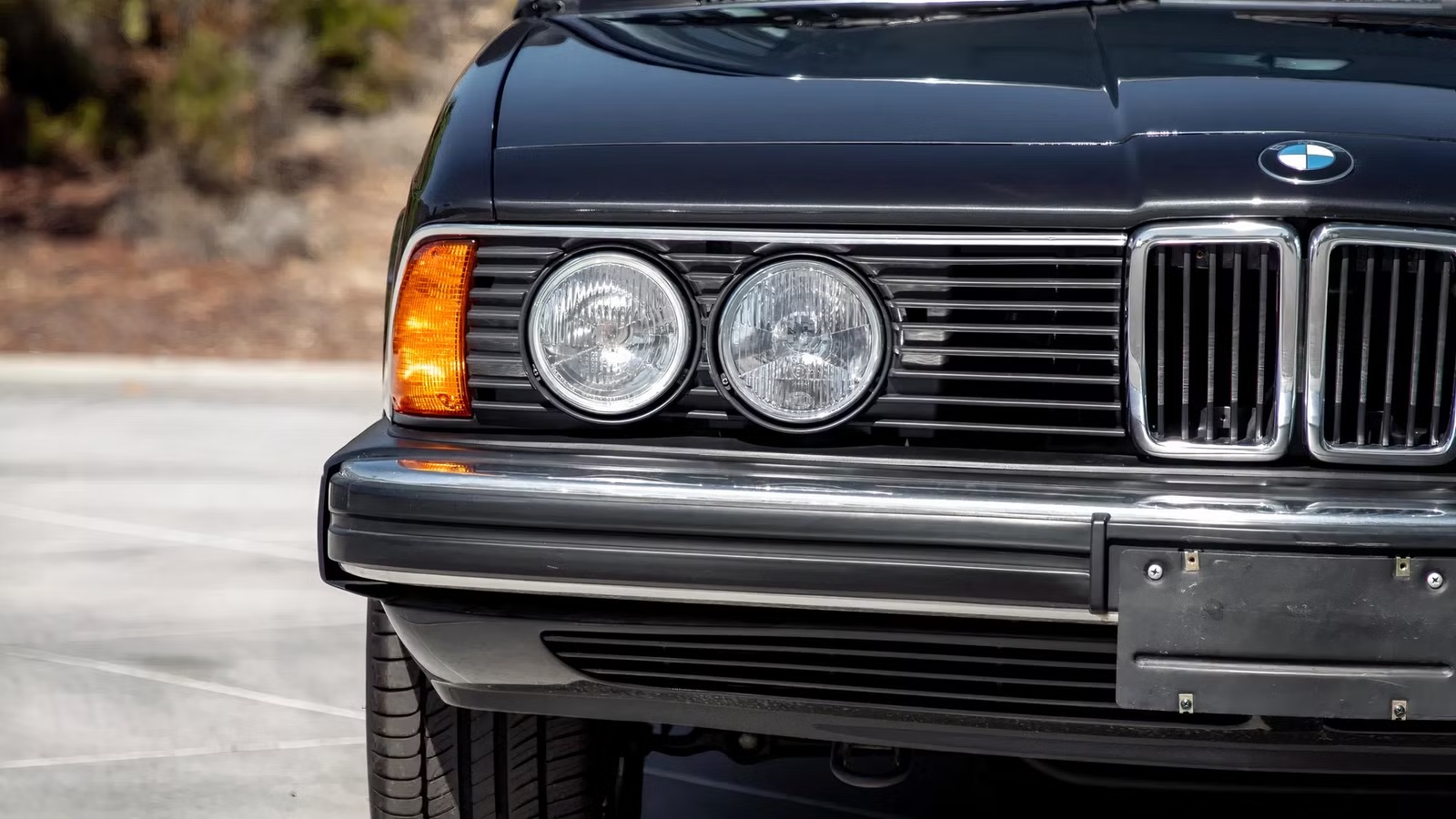
A 1986 BMW L7 — one of the rarest, most expensive luxury cars ever sold in the United States — has turned up in a Denver junkyard, either already crushed or next in line for the compactor. The discovery, surfaced this week by The Truth About Cars, is the kind of find that stops automotive historians cold: a car built in such small numbers that most BMW enthusiasts have never seen one in person, let alone watched one get destroyed.
Follow and Like top authors, topics, and trends
Browse with fewer ads across the site
Personalize your profile to showcase your activity
Get a content feed tailored to your interests
By creating an account, you agree to our Terms of Use and Privacy Policy. You also agree to receive our newsletters; you can unsubscribe any time.
*Required: 8 chars, 1 capital letter, 1 number
The L7 arrived in American showrooms in 1986 as BMW's answer to a specific kind of buyer: someone who found the standard 745i insufficiently theatrical. Built on a long-wheelbase version of the E23 platform, the car was finished by Alpina with an interior that leaned heavily into the decade's appetite for excess—deep rear seating, burl wood trim, and the general atmosphere of a private jet that had learned to drive itself. Alpina's involvement wasn't cosmetic badge engineering; the company has held full vehicle manufacturer status in Germany since 1983, and its work on the L7 reflected that standing.
Pricing placed the L7 well above the Mercedes 560SEL and the Jaguar XJ12, both of which were already expensive by any reasonable standard. Exact production numbers for US-market L7s are difficult to pin down precisely—the cars were sold in genuinely tiny quantities through select BMW dealers—but surviving examples are rare enough that a junkyard sighting qualifies as news. That's not hyperbole. It's just the math of a low-volume car from 40 years ago.
The 1980s German luxury segment occupies an odd position in the collector market. Cars from that era—the W126 S-Class, the E23 and early E32 7 Series, and the Jaguar XJ40—are old enough to be classics by any reasonable definition, but they haven't yet crossed into the price territory where serious preservation money follows. The result is a generational gap: too recent for the prewar and postwar crowd, too old and expensive to maintain for buyers who came of age with them.
The L7 compounds this problem. Its rarity should theoretically make it desirable, but rarity alone doesn't drive collector values—community does. The Alpina L7 has almost no enthusiast infrastructure around it: no dedicated registries with wide public profiles, no marque-specific clubs running concours classes for it, no auction house that has recently put a well-documented example in front of serious money. Without that ecosystem, even genuinely scarce cars can slip through the cracks and into the crusher.
The uncomfortable truth the Denver L7 exposes is that rarity and survival are not the same thing. Collector culture tends to organize around cars with strong marque communities, accessible parts ecosystems, and a clear auction track record. The L7 has none of those in meaningful quantity. Its Alpina-specific components—interior trim pieces, badging, and any bespoke mechanical work—are effectively unobtainable at this point, which raises restoration costs to a level that discourages all but the most committed buyers.
What a surviving L7 might fetch at auction today is genuinely unclear, because so few have traded publicly in recent years. The broader E23 market remains affordable—clean 733i and 735i examples regularly change hands in the low-to-mid five figures—but the L7's Alpina provenance and US-market exclusivity should command a significant premium over that baseline. Whether the collector market is currently paying that premium is another question. The Denver car, whatever its condition, represents a data point that will never make it to any auction catalog.
For anyone with the resources and the inclination to chase down surviving L7s, the Denver discovery is a reminder that the window for preservation doesn't stay open indefinitely. These cars aren't getting easier to find, and the ones that remain are aging in garages and driveways where the next owner may not know—or care—what they have.
Sources: TTAC (The Truth About Cars)
Source: https://www.topspeed.com/200k-1986-bmw-l7-ended-up-crushed-in-denver/
BMW
How A $200K 1986 BMW L7 Ended Up Crushed in Denver
Article Top Ad Zone
Article Middle Ad Zone
Article Bottom Ad Zone
Original Source: www.topspeed.com
Share
Comments
Comment system is currently disabled.