Comfort and performance are opposite ends of the spectrum when it comes to motorcycles. For uncompromising performance, sportbikes and certain naked bikes take the podium. But for the utmost comfort, it's the low-slung and stretched-out cruiser bikes or the upright yet relaxed adventure bikes that score high. But what if one wants a sporty yet comfortable motorcycle? One that can do triple-digit speeds all day long without giving you back or shoulder aches?
Well, this is where the less appreciated sport-tourers come into the picture. Most motorcycles in this segment are parts-bin projects that mix and match components from tourers, ADVs, and sportbikes to create a practical yet fun-inducing motorcycle. And a specific middleweight Yamaha nails the balance of performance, comfort, and even daily rideability.
This is very tough because comfort and performance generally require opposing engineering strategies. Comfort needs compliance, a relaxed riding posture, and added stability with enough damping elements to keep vibrations at bay. Here, curb weight is not given the utmost importance. But when it comes to performance, it's all about the power-to-weight ratio, an aggressive and lightweight chassis layout, and a forward-leaning riding posture to maintain weight distribution and reduce drag.
The suspension setup is a key factor here, as performance bikes often use a stiffer spring setup for improved stability in high-speed corners. But comfort-oriented bikes use suspension tuned as soft as possible to help glide over undulations without feeling bumps. As mentioned above, performance motorcycles require a hardcore rider triangle that improves speed and reduces drag, but also puts more stress on the rider's wrist, back, and neck. But a comfort-oriented motorcycle goes for a more upright stance to help with longer saddle times.
With the rising popularity of crossovers, Honda has jumped aboard the bandwagon with an impeccable new sport-touring machine
While blending 100 percent of performance and comfort is impossible on a motorcycle, a middle ground is very much doable. Sport-touring motorcycles prove it by offering a balance of performance, comfort, and practicality. Sure, there are a few trade-offs, like letting go of a hardcore riding stance and placing less importance on the power-to-weight ratio. But sport-tourers offer impressive riding dynamics given their tall-riding stance.
Speaking of which, the tall stance also helps create a fairly relaxed, upright rider triangle, which is further improved by a windscreen for comfortable long rides. Some even get standard weatherproof side cases to enhance their touring capabilities. Finally, it is the clever suite of electronics that stitches together comfort and performance with features like quickshifters, cruise control, switchable traction and ABS, ride modes, and even heated grips.
The top end of this segment is populated with comfortable, touring-ready sport-tourers that share their engines and underpinnings with hardcore liter-class sportbikes. Notable examples include the Suzuki GSX-S1000GT+ and the Kawasaki Ninja 1100SX SE, among others. On the other end of the spectrum, the affordable bunch includes the Kawasaki Versys 650 and the Triumph Tiger Sport 660. Interestingly, it is the affordable middleweight bunch that offers the better balance of comfort and performance.
This is also why we are seeing a lot of buzz in the middleweight sport-touring segment. Triumph has introduced a larger Tiger Sport 800, which also comes in a Tour model with standard side cases and a top box. Suzuki has launched a brand-new model for Europe—the SV-7GX that packs the same engine as the SV650 streetfighter.
Other examples include the Honda NT1100 with an automatic transmission and the underrated BMW F 900 XR. All of these add daily rideable practicality to the mix, thanks to a relatively compact form factor and more tractable performance. However, the Yamaha Tracer 9 offers the best balance of performance and comfort.
The Yamaha Tracer 9 is a sport-tourer that, with its versatile packaging, shows us that multiple bikes are unnecessary. Its touring-focused construction prioritizes comfort, adds a tall windscreen, an upright riding stance, and a seat that puts the rider "in" the motorcycle. On the performance front, an engine shared with a sportbike, a flexible chassis, and long-travel suspension with the right amount of stiffness give this Yamaha a stable, sporty character. Its starting price of $12,599 slots it right in the middle of the evolving middleweight sport-touring segment.
Apart from a spacious seat and relaxed riding triangle, the Tracer 9's comfort is also dictated by its compact form factor. Despite packing a chunky three-cylinder engine, this sport-tourer has an accessible design with a wheelbase of 59.1 inches. It measures 85.6 inches long, 35.4 inches wide, and 57.5 inches high. Despite having standard lockable weatherproof side cases, the Tracer 9 weighs just 483 pounds. The combination of low weight and slim dimensions makes this Yamaha relatively easy to maneuver.
The quick-release nature of the side cases makes the Yamaha Tracer 9 more comfortable when navigating busy urban roads. The tall windscreen might not be everyone's cup of tea and, frankly, it does not blend well with the Tracer 9's slim, sporty design. But it offers commendable wind protection and reduces fatigue during touring duties.
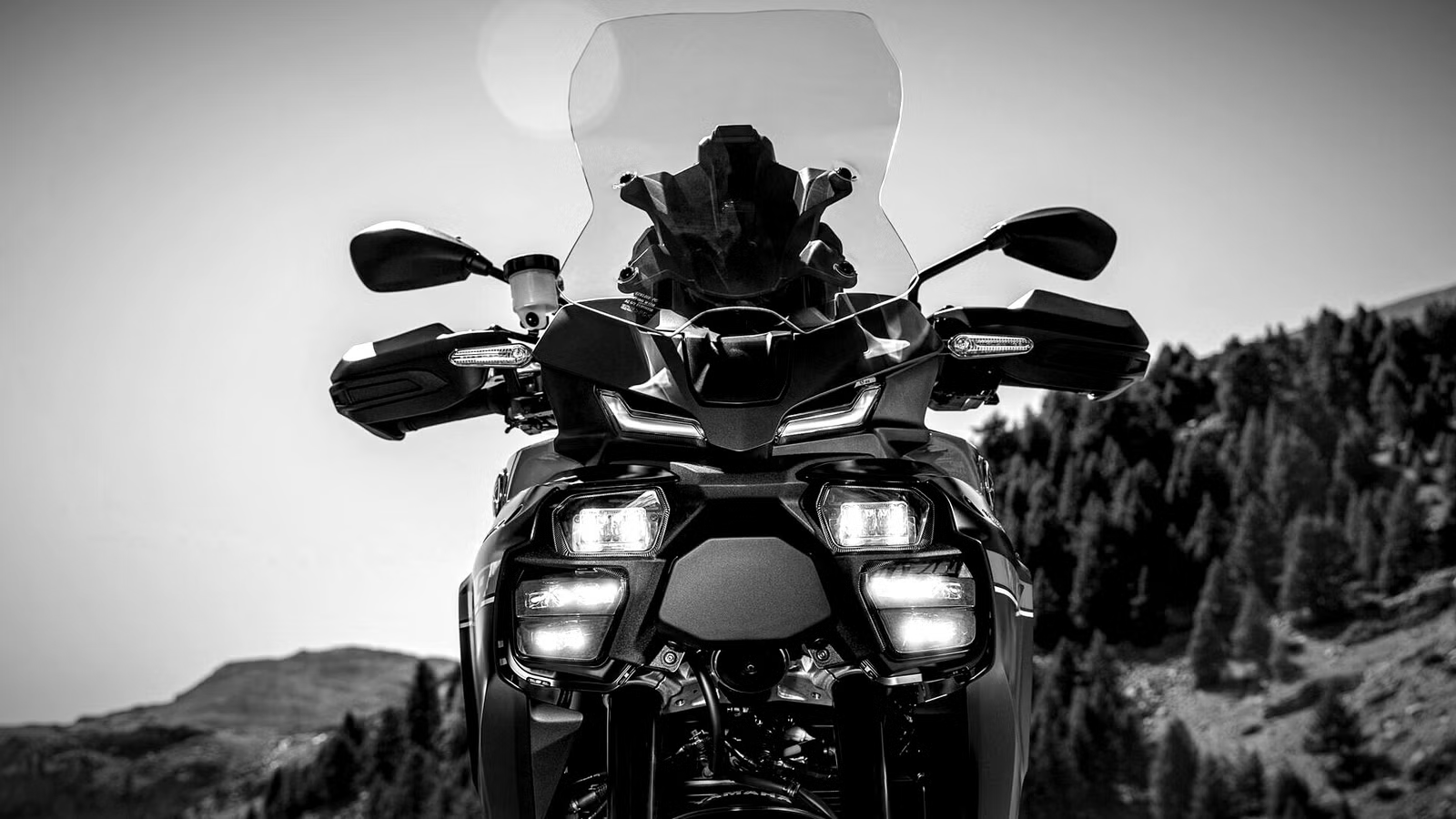
We guess that it is a visual sacrifice worth making. Yet another visually odd component is its alien-looking headlamp design. The front end looks very busy with four primary lighting elements. But this allows the Tracer 9 to include LED cornering lights. All of these features help elevate the riding comfortof the Tracer 9, be it on city roads or highways.
The Tracer 9 offers power, comfort, tech and reliability all in a single package
The seasoned CP3 engine powers the Yamaha Tracer 9. This 890 cc inline-3 mill is very versatile, as is evident from its shared usage. It also powers the Yamaha MT-09 streetfighter, the recently introduced Yamaha R9 sportbike, and the classic-vibing Yamaha XSR900 roadster.
On the Tracer 9, this mill produces 117 horsepower at 10,000 RPM and 68.6 pound-feet of torque at 7,000 RPM. Power is sent to the rear wheel via a six-speed manual gearbox. A slipper and assist clutch is standard here. Yamaha has tuned the CP3 to strike a balance between sportiness and consistent touring performance.
Thanks to our friends at Cycle World, we know that the performance curve is well-spread. The Tracer 9 develops about 70 percent of its peak torque at just 3,000 RPM, making it a peppy urban runabout. This nature also helps with quick overtakes when on the highway.
The power steadily increases from just under 2,000 RPM to 10,000 RPM. This helps the Tracer 9 be calm and composed. Also, the strong surge of power, even at the top rev band, helps maintain steady triple-digit speeds on the highway.
The engine sits in a lightweight aluminum diamond main frame. It is attached to a sturdy bolt-on subframe designed for greater load-bearing capacity to accommodate two side cases and an adult pillion. The chassis is suspended on 41 mm inverted KYB front forks (with preload and rebound damping adjustability) that offer 5.1 inches of travel. The rear gets a preload and rebound-damping-adjustable monoshock with 5.2 inches of travel.
Braking duties are taken care of by dual 298 mm discs coupled to radially mounted four-piston calipers at the front. The rear gets a 267 mm disc coupled to a single-piston floating caliper. Aiding in its sporty dynamics are tarmac-focused 120/70 front and 180/55 rear tires wrapped around 17-inch aluminum wheels. The lighter wheels reduce unsprung mass, which translates to a nimbler, more flickable ride.
The Tracer 9 gets a crisp 7-inch TFT screen. This is the window to controlling various comfort, performance, and ride-enhancing electronic features. It has five ride modes (Sport, Street, Rain, and two user-defined ones), a variable speed limiter, and ride-by-wire to add to its sporty side. It has a six-axis IMU that helps an array of safety and assistive features work seamlessly.
Notable features include ABS, lean-angle-sensitive traction control, adjustable slide control, adjustable lift control, lean-sensitive brake control, and a back slip regulator, among others. Many of these assistive features are derived from MotoGP. There is a healthy dose of optional features, such as a bidirectional quickshifter and heated grips, to help improve its sporty and comfort quotients.
This middleweight Yamaha naked bike prioritizes fun and engagement above all else.
Despite its borderline premium pricing, the Yamaha Tracer 9 remains one of the most value-packed sport-tourers in its segment. Sure, the Honda NT1100 with a bigger, Africa-Twin-shared engine is more affordable at $11,999. But the sporty side is comparatively weaker with lower power and torque ratings and a much higher curb weight.
Coming very close in value to the Yamaha is the BMW F 900 XR, an underrated sport-tourer. It has similarly sized engines and torque figures, but the Tracer 9 still has an edge in power ratings. However, the Beamer is notably lighter.
But the F 900 XR falls short on practicality, with no standard luggage options. Then there's the Triumph Tiger Sport 800 Tour, a fairly new middleweight sport-tourer that offers immense value. Its sporty side matches the Tracer 9's brawn, with similar power and torque ratings despite its smaller three-cylinder engine.
It also has a more accessible seat height. But the weight is considerably higher at over 500 pounds. This is primarily due to its standard fitment of not just the side cases but also a top box. However, the Tiger Sport 800, with its added practical features, is the most expensive of this lot at over $14,500.
Found an error? Send it info@www.topspeed.com so it can be corrected.
Sources: Yamaha Motorsports, Honda Powersports, and Triumph Motorcycles.
Source: https://www.topspeed.com/yamaha-nails-sweet-spot-comfort-performance/
Cars
The Yamaha That Nails The Sweet Spot Between Comfort And Performance
Article Top Ad Zone
Article Middle Ad Zone
Article Bottom Ad Zone
Original Source: www.topspeed.com
Share
Comments
Comment system is currently disabled.