Electric motorcycles have spent years trying to prove they can be fast, futuristic, and exciting. That part isn’t hard anymore. Even relatively affordable electric bikes can deliver face-melting acceleration and enough torque to embarrass gas-powered superbikes off the line. But excitement alone has never been the problem. The real challenge has always been practicality. Riders want to know if they can actually live with one every day without changing their lifestyle around the bike.
A lot of electric motorcycles still feel like rolling tech demos instead of proper motorcycles. They’re often designed around shock value first. Massive torque figures, spaceship styling, giant touchscreens, and marketing buzzwords usually take center stage. Then you start asking normal rider questions. How far can it actually go? How long does charging take? Can it carry luggage? Is it comfortable for more than an hour? Suddenly, the answers get vague really fast.
Range anxiety is still the elephant in the room for motorcyclists. Unlike cars, bikes don’t have room for giant battery packs, and riders are more exposed to weather, traffic, and fatigue. That means stopping frequently to charge can completely ruin a ride. Plenty of electric bikes look impressive on paper, but once highway riding enters the equation, range figures shrink hard. Riders know this, and it’s why many electric motorcycles still feel better suited to short urban hops than actual adventures.
There’s also the charging conversation. Most riders don’t want to build their lives around charging stations and smartphone apps. They want something simple. Ride it to work, run errands, maybe disappear for a weekend ride, then plug it in at home without thinking too much about it. The more complicated the ownership experience becomes, the harder it is for electric motorcycles to feel normal. And honestly, “normal” is exactly what this segment needs right now.
Some electric motorcycles also lean way too hard into trying to feel futuristic. That sounds cool initially, but motorcycles have always been emotional machines rooted in familiarity. Riders like tactile controls, predictable handling, and machines that communicate clearly underneath them. When a bike starts feeling more like consumer electronics than transportation, it creates distance between rider and machine instead of a connection.
Then there’s the issue of purpose. Many electric bikes either go full commuter or full halo product. You end up with tiny urban runabouts that struggle outside city limits or hyper-expensive performance bikes most riders will never realistically own. The middle ground has been strangely empty for years. There haven’t been many electric motorcycles that genuinely feel versatile enough to replace a normal gas-powered bike without major compromises.
This electric dual-sport is a capable, off-road-ready touring bike with performance and hardware specs to compete with ICE-powered middleweights.
That’s probably the biggest misunderstanding surrounding electric motorcycles. Most riders aren’t looking for the most revolutionary thing on two wheels. They’re looking for something dependable and easy to live with. A bike that starts every morning, handles traffic without drama, carries luggage when needed, and still feels fun when the road opens up. The best motorcycles have always balanced excitement with usability, and electric bikes need to do the exact same thing if they want broader acceptance.
Adventure bikes actually make a lot of sense here. Think about it. Adventure riders already value comfort, practicality, torque delivery, luggage capability, and long-term usability over outright top speed. They’re used to bikes being multi-tools instead of specialized weapons. That philosophy lines up surprisingly well with electric powertrains, especially since electric motors deliver smooth torque instantly and eliminate a lot of maintenance headaches associated with traditional engines.
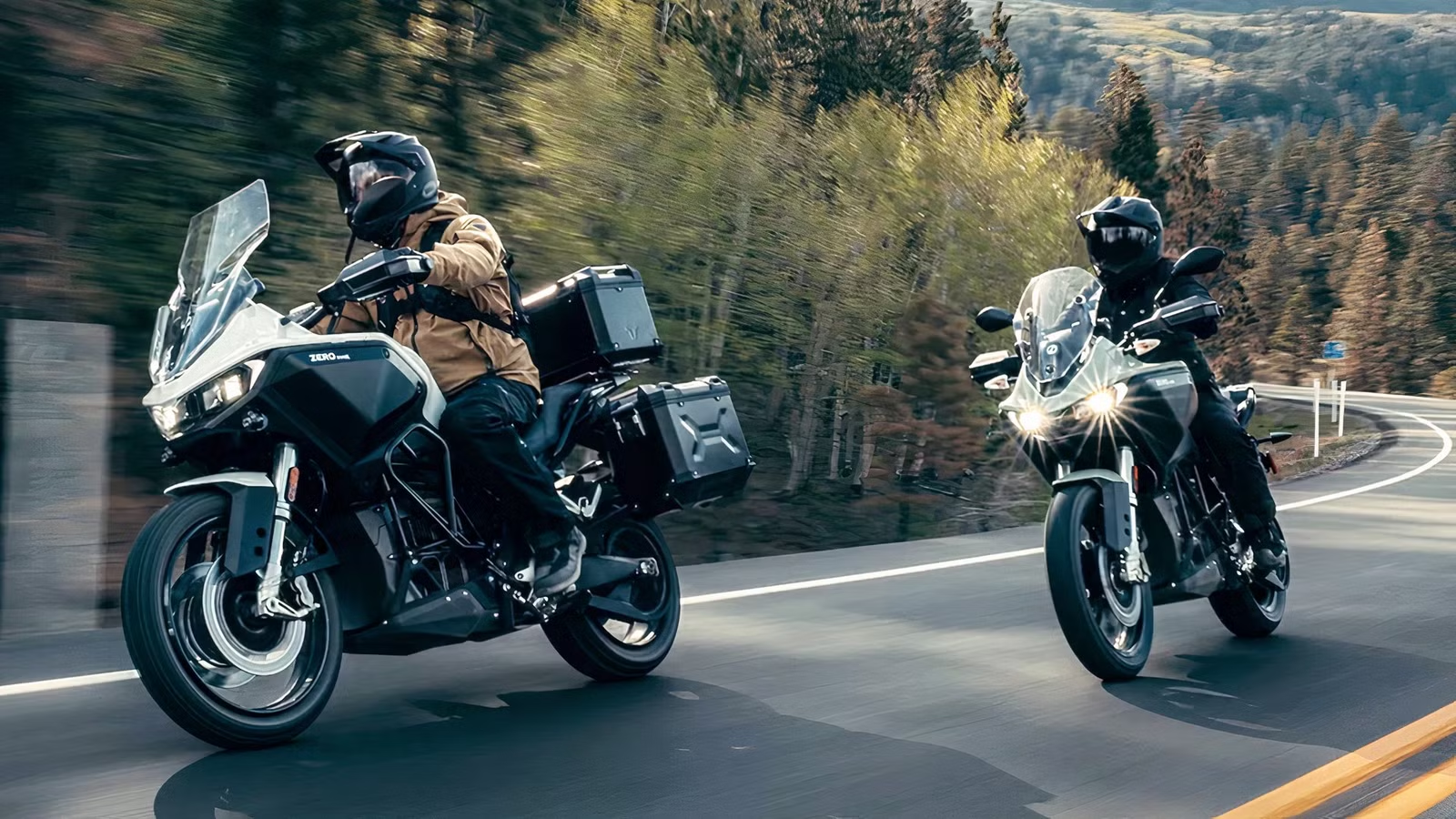
This is where the Zero DSR/X starts making a whole lot of sense. Instead of trying to reinvent the motorcycle entirely, Zero basically built an electric adventure bike that behaves like a normal motorcycle first and an EV second. And honestly, that’s probably why it works so well. The DSR/X feels grounded in real-world riding rather than Silicon Valley fantasy.
Z-Force 75-10X Permanent Magnet AC Motor
The bike makes use of Zero’s Z-Force 75-10X direct-drive motor, producing 100 horsepower and a hefty 166 pound-feet of torque. Those numbers are absurd in typical EV fashion, but unlike some electric bikes that feel twitchy or overwhelming, the power delivery here is surprisingly manageable. The throttle calibration feels mature, and the bike delivers torque smoothly instead of trying to rip your arms off every time you twist the grip.
The DSR/X is powered by a 17.3-kWh battery pack and offers up to 180 miles of city riding range depending on conditions. Highway range naturally drops, but the bike still manages a claimed 107 miles at 70 mph, which is a lot more usable than many riders expect. More importantly, it supports Level 2 charging and can recharge from 10% to 95% in roughly one hour with the optional Rapid Charge system.
Physically, it looks and feels like a proper adventure motorcycle. You get long-travel suspension from Showa with 7.48 inches of travel front and rear, a relaxed upright riding position, and enough room to comfortably spend hours in the saddle. The bike rides on a 19-inch front wheel and 17-inch rear wheel wrapped in Pirelli Scorpion Trail II tires, which immediately signals that Zero wanted genuine versatility here instead of building another urban commuter pretending to be adventurous.
Steel trellis frame with integrated coaxial power pivot
Front: Showa 47 mm inverted fork, fully adjustable, 7.48 inches travel | Rear: Showa piggyback reservoir shock, fully adjustable, 7.48 inches travel
Front: Dual 320 mm discs with J.Juan radial four-piston calipers | Rear: Single 265 mm disc with J.Juan caliper
Front: 19-inch wheel / 120-70 tire | Rear: 17-inch wheel / 170-60 tire
At 544 pounds, the DSR/X isn’t featherweight, but it carries its mass low thanks to the battery placement. That helps the bike feel surprisingly manageable at low speeds. There’s also an impressive amount of technology working quietly in the background. Bosch supplies the Motorcycle Stability Control system, which includes cornering ABS, traction control, drag torque control, and off-road modes. The electronics package feels more premium ADV bike than startup experiment.
One of the smartest things Zero did was avoid overcomplicating the riding experience. Yes, the DSR/X has ride modes, smartphone connectivity, and customizable settings through the Cypher III+ operating system, but none of it feels intrusive. You can interact with the bike as deeply as you want, or you can simply ride it without obsessing over menus and software updates every five minutes. There are also practical details everywhere. The frame-mounted aluminum cases available through Zero’s accessory lineup make the bike genuinely useful for commuting or touring. Heated grips, a tall windscreen, hand guards, and cruise control all contribute to making the DSR/X feel like a mature touring machine rather than an experimental EV with adventure styling pasted on afterward.
And honestly, one of the most underrated things about electric motorcycles is how relaxing they can feel. No vibration. No heat pouring onto your legs in traffic. No clutch work, crawling through congestion. No oil changes or valve adjustments hanging over your head. The DSR/X still feels engaging because motorcycles are about more than noise alone. The smoothness actually suits the adventure bike character surprisingly well.
With more power than the Ducati Diavel V4 and well over 200 miles of riding range, this electric bike is truly one-of-a-kind.
The funny thing about the Zero DSR/X is that it probably won’t convert hardcore skeptics overnight. Riders who believe motorcycles absolutely need combustion noise and shifting will likely remain unconvinced. But that’s fine. This bike is aimed at a different kind of rider. Someone who already values practicality, versatility, and ease of ownership just as much as raw emotion.
And that’s what makes the DSR/X important. It doesn’t feel like an electric motorcycle trying desperately to justify itself. It just feels like a good motorcycle that happens to be electric. That distinction matters a lot. Because once the novelty wears off, that’s what riders actually care about. Whether the bike fits naturally into their lives.
The DSR/X won’t work for everybody. Cross-country touring in remote areas still requires planning, and charging infrastructure remains inconsistent in many parts of the world. But for commuters, weekend explorers, canyon riders, and even light adventure touring, the bike starts making a surprising amount of sense once you stop viewing it as a tech experiment and start viewing it as transportation.
And with a base MSRP of $22,995, the Zero DSR/X isn’t cheap, but it starts making sense once you factor in its premium electronics, adventure-ready capability, and dramatically lower long-term maintenance costs compared to many similarly priced gas-powered ADV bikes.
Found an error? Send it info@www.topspeed.com so it can be corrected.
Source: https://www.topspeed.com/electric-bike-feels-practical/
Cars
The Electric Bike That Actually Feels Practical
Article Top Ad Zone
Article Middle Ad Zone
Article Bottom Ad Zone
Original Source: www.topspeed.com
Share
Comments
Comment system is currently disabled.