Walk into any dealership today and you'll find no shortage of options. The motorcycling space in America has swelled with contenders — trail bikes, naked roadsters, budget adventure tourers — each one pitching itself as the answer to a question most riders are still figuring out how to ask. And yet, despite all that choice, genuinely balanced motorcycles remain surprisingly rare.
Follow and Like top authors, topics, and trends
Browse with fewer ads across the site
Personalize your profile to showcase your activity
Get a content feed tailored to your interests
By creating an account, you agree to our Terms of Use and Privacy Policy. You also agree to receive our newsletters; you can unsubscribe any time.
*Required: 8 chars, 1 capital letter, 1 number
A truly balanced motorcycle does not demand constant correction from the rider. It does not punish you in traffic, feel like a compromise on the highway, or turn every gravel detour into a wrestling match. Instead, balance comes from a mix of approachable ergonomics, a manageable curb weight, a broad-torque engine, and electronics that help rather than interfere.
The mid-displacement adventure segment is littered with near-misses. Some options lean hard into the off-road fantasy — tall, narrow, rally-style geometry that punishes shorter riders in traffic and makes highway miles genuinely tiring. Others go the opposite direction: heavy, uninspired commuters with adventure styling pasted on as an afterthought, more concerned with a low sticker price than any real capability.
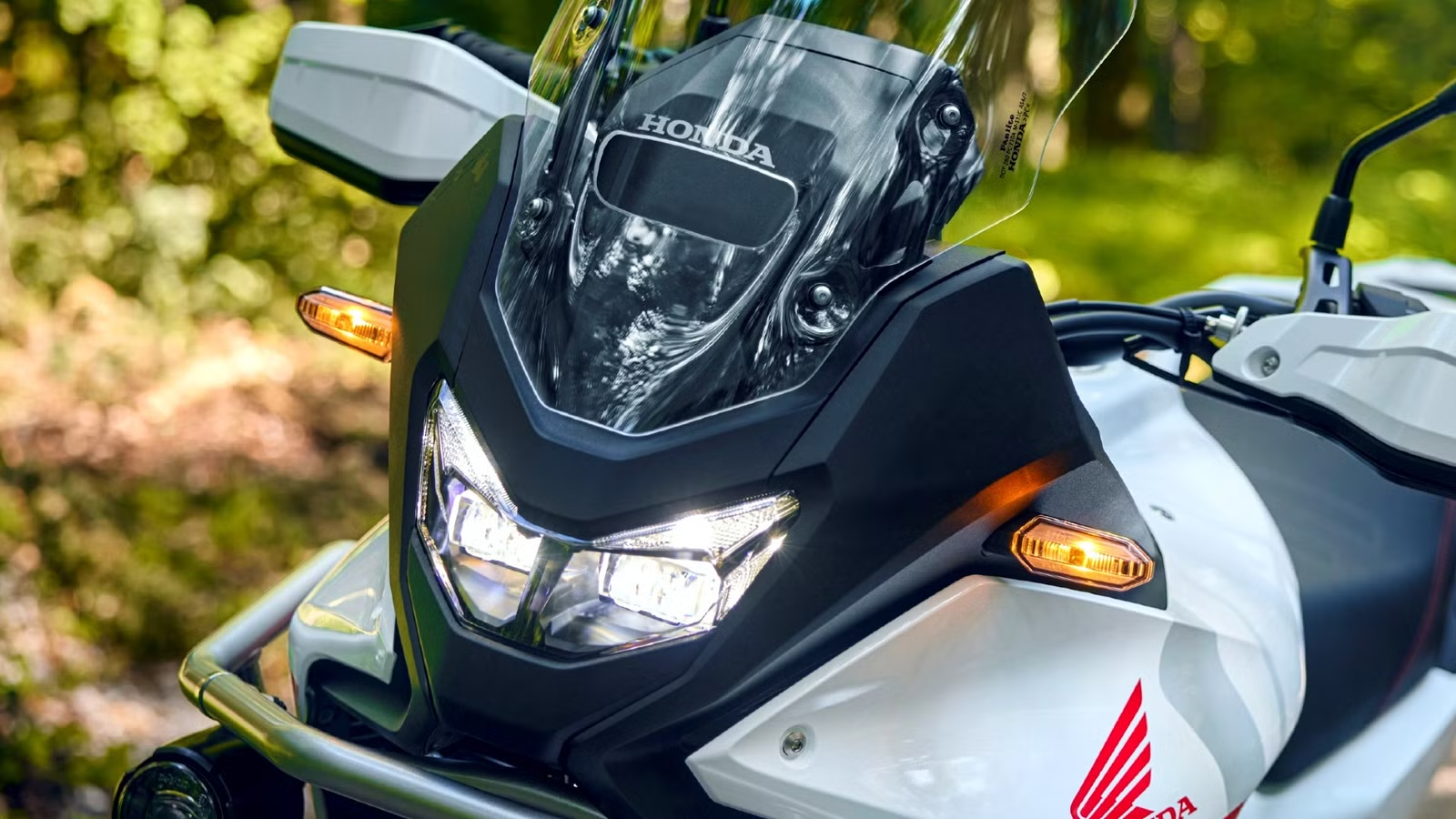
Honda lists the 2026 Transalp E-Clutch at $10,199 before destination, and positions it as the latest version of a long-running adventure-touring nameplate that dates back to Honda’s late-1980s Transalp lineage. It sits in that smart middle zone where Honda usually does its best work. For the money, you get the new E-Clutch system, a 755cc twin, adjustable front and rear suspension, a rally-style fairing, Honda RoadSync connectivity, and the kind of chassis hardware that suggests Honda expects this bike to be used for more than coffee runs.
Honda also lists a 33.7-inch seat height, a 4.4-gallon fuel tank, and a 468-pound curb weight, all of which help define the bike’s everyday usability. The Transalp name carries some credibility, too. Honda’s original Transalp models earned a reputation for being civilized adventure bikes rather than rough-edged dirt tools, and that basic personality still fits the badge today. The 2026 model does not chase some grand reinvention of the idea; instead, it sharpens the formula with better suspension adjustment, a skid plate, and the E-Clutch system.
This is a bike blending sport, comfort, and chaos into one ride that can commute, tour, and carve corners without breaking a sweat.
The Transalp’s engine is one of its biggest strengths because it is built for usable performance rather than headline numbers. Honda uses a 755cc liquid-cooled parallel-twin with a 270-degree crank and a Unicam SOHC valve train. In plain language, that means the motor should feel lively without being frantic, with a character that is more flexible and friendly than peaky. Honda says the engine delivers torque throughout the rev range and favors easy cruising on the open road.
That engine layout also makes sense for long-distance riding. A broad spread of torque is more valuable in the real world than chasing peak horsepower, especially when you are overtaking traffic, climbing grades with luggage, or just trying to maintain a relaxed rhythm on a cross-state run. Further, the E-Clutch adds only a modest price increase over the previous manual model, which suggests Honda sees the drivetrain as a strong core platform worth improving rather than replacing.
The Transalp’s riding position is a major part of its appeal. It is upright without feeling overly tall, and the wide handlebars give the rider natural leverage at low speeds and on loose surfaces. Honda’s fairing design is meant to provide rally-inspired wind protection without turning the bike into a full-dress tourer, and that is a useful compromise. Honda also highlights the bike’s 5.0-inch full-color display and RoadSync connectivity.
A good adventure bike should not require a mental pep talk every time you stop at a signal or back it into a parking space. The Transalp helps here with a 33.7-inch seat height and an optional 32.6-inch accessory seat, which makes it easier to tailor the fit to different riders. The 61.5-inch wheelbase and 4.4-inch trail also point to a chassis that is stable without being sluggish. In practice, that combination should make the bike feel composed on the interstate and still manageable in town.
Honda gives the Transalp a 21-inch front wheel and 18-inch rear wheel, a setup that remains one of the clearest signs that the bike is meant to be used beyond asphalt. Add the 43mm Showa SFF-CA inverted fork up front, and the Pro-Link rear shock, both with adjustable compression and rebound damping, and the bike starts to look far more serious than a casual commuter wearing adventure styling. The front suspension offers 7.9 inches of travel, and the rear 7.5 inches. At the same time, the 468-pound curb weight is not featherlight, but the steel frame and sensible packaging should help it feel less bulky than the number suggests.
There are no wrong situations when it comes to the Honda Africa Twin Adventure Sports!
Honda’s electronics package is one of the reasons the Transalp feels modern without becoming complicated. The bike offers five ride modes: Sport, Standard, Rain, Gravel, and a custom setting. These adjust power delivery, engine braking, and ABS behavior, so the rider can shift the personality of the bike without diving into a maze of menus. The quiet genius of a good rider aid system is that you notice it most when it is not getting in the way.
Honda Selectable Torque Control adds traction management across dirt, gravel, and pavement, and Honda says its settings can be customized in the two User modes. The Transalp also includes ABS, and the E-Clutch is designed to make starts and shifts smoother without fully taking over the bike. You can switch it off, too. That makes the Transalp more confidence-inspiring without stripping away the directness riders want.
That blend of assistance and control is the real story here. The bike is not trying to remove the rider from the equation. Instead, it removes some of the friction that makes big, do-everything motorcycles tiring in daily use. That is probably why the Transalp makes such a strong case for itself on paper. It promises enough performance to feel alive, enough comfort to be genuinely usable, and enough intelligence to make mixed-surface riding less intimidating. Public forum chatter around the Transalp family has long leaned toward the same idea: it is a comfortable, manageable, highly usable all-rounder rather than an all-out specialist.
Found an error? Send it info@www.topspeed.com so it can be corrected.
Source: https://www.topspeed.com/motorcycle-balances-comfort-performance-everyday-riding/
Cars
The Motorcycle That Balances Comfort, Performance, And Everyday Riding
Article Top Ad Zone
Article Middle Ad Zone
Article Bottom Ad Zone
Original Source: www.topspeed.com
Share
Comments
Comment system is currently disabled.