Modern sports bikes have become so fast and extreme that many riders are starting to realize they don’t actually need 200 horsepower to have fun on the street. The modern liter bike arms race has created motorcycles with MotoGP-level acceleration, winglets, launch control systems, and top speeds that belong on racetracks, not highways packed with traffic and potholes. Somewhere along the way, usable performance stopped being the priority.
The funny thing about modern liter bikes is that they’re objectively incredible machines. They accelerate harder than most supercars, brake like race bikes, and pack more electronics than luxury sedans. But that capability comes with compromises that become obvious the moment you leave a smooth racetrack and ride on an actual public road. Massive power outputs, aggressive ergonomics, and razor-sharp throttle response can quickly turn everyday riding into work instead of fun.
Many modern 1,000cc superbikes can comfortably exceed highway speeds without even leaving first gear. That sounds impressive on paper, but in practice, it means riders rarely get to explore the upper end of the rev range without risking jail time. You end up riding a motorcycle with world-class performance while only using a tiny fraction of what it can actually do. The experience becomes less about wringing out the engine and more about constantly holding the bike back.
There’s also the reality that bigger numbers don’t always translate into a better experience. A 200-horsepower superbike can feel intimidating in traffic, twitchy on uneven pavement, and exhausting during longer rides. Heat management becomes an issue, fuel economy suffers, insurance costs climb, and tires disappear at alarming rates. For riders who spend more time canyon carving or commuting than setting lap records, all that excess can start feeling unnecessary.
Modern liter bikes are expensive to buy and even more expensive to live with. Between premium tires, aggressive maintenance schedules, and increasingly sophisticated electronics packages, ownership costs can escalate quickly. Then there’s the riding position. Clip-ons mounted low, rearsets mounted high, and stiff suspension setups make sense for chasing tenths on a circuit, but not everyone wants their wrists and knees punished during a Sunday ride.
That’s why more riders are starting to appreciate motorcycles that focus on balance instead of outright domination. Bikes that still feel exciting, still sound aggressive, and still deliver high speed, but without demanding MotoGP-level commitment from the rider. That middle ground used to be filled by an entire category of motorcycles. Today, very few bikes still occupy that space.
Some might say it's outdated, but we feel that performance on a budget never goes out of style
Traditional 600cc supersports are thrilling, but they can also feel peaky and unforgiving on the street. Their engines often need to be revved relentlessly to access meaningful power, which works brilliantly on track but can feel frustrating in everyday riding. On the other side of the spectrum, liter bikes deliver effortless torque and massive acceleration, but often overwhelm riders with sheer intensity and physical demands.
For years, riders wanted something that combined the best parts of both worlds. Something with the agility and precision of a 600, but with enough midrange and torque to feel muscular outside a racetrack. Most manufacturers eventually abandoned that idea entirely, choosing instead to focus on either entry-level middleweights or flagship superbikes. One company, however, quietly kept building the answer.
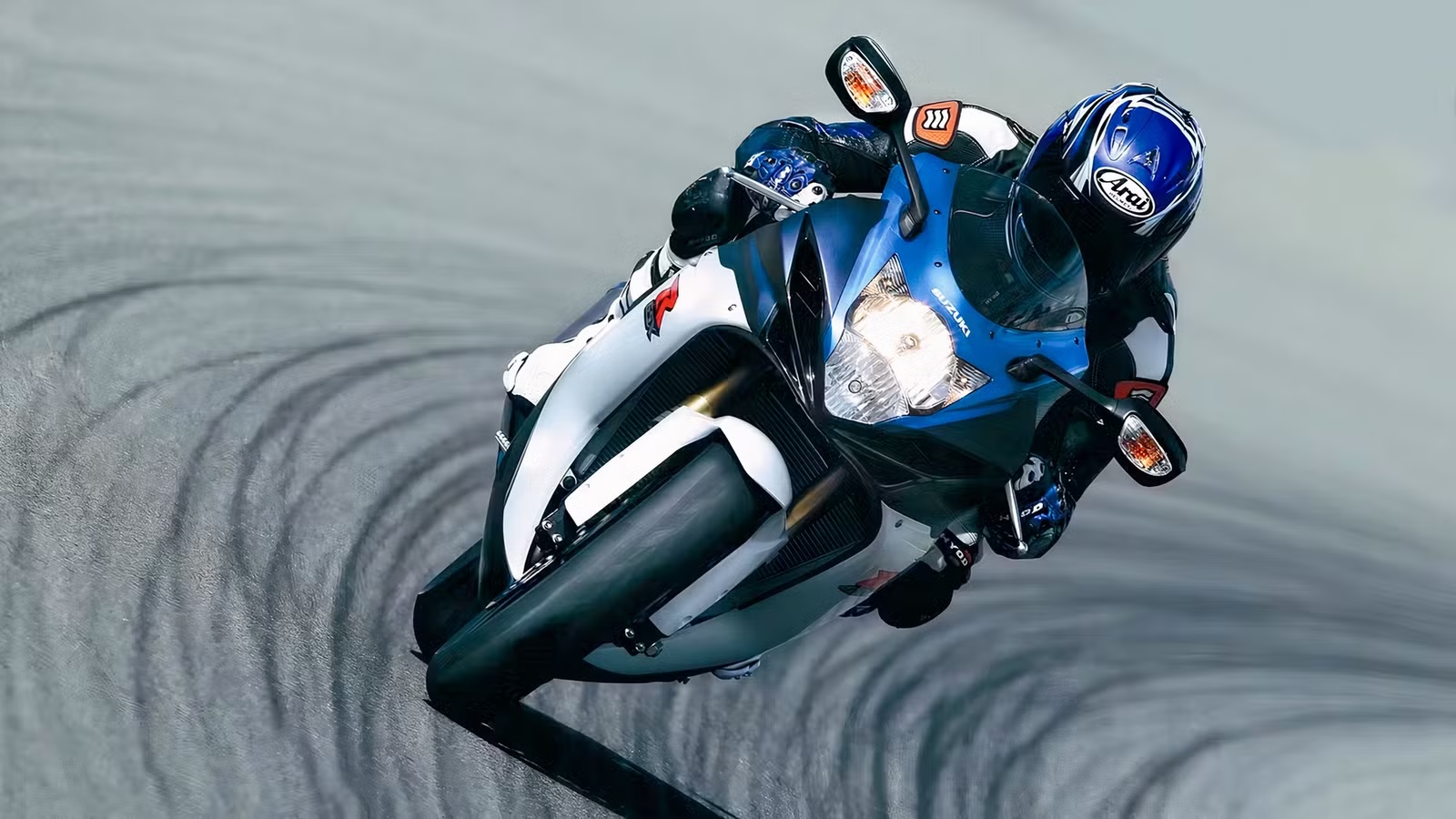
The current Suzuki GSX-R750 remains one of the strangest and most brilliant motorcycles still on sale today. It sits between the GSX-R600 and GSX-R1000 in Suzuki’s lineup, using a 750cc inline-four that produces 148 horsepower and 64 pound-feet of torque. Those numbers are paired with a wet weight of just 419 pounds, which gives the bike an exceptional power-to-weight ratio without pushing into absurd territory.
Unlike many modern superbikes, the GSX-R750 still feels approachable. It uses a twin-spar aluminum frame, fully adjustable Showa suspension, Brembo monoblock front brake calipers, and lightweight 17-inch wheels wrapped in Bridgestone Battlax Hypersport tires. The riding position is sporty without being unbearable, and the bike’s narrower proportions make it feel significantly lighter and more manageable than most liter bikes.
Showa fully adjustable inverted front fork / Showa fully adjustable rear shock
17-inch wheels; 120/70 front and 180/55 rear Bridgestone Battlax Hypersport S22 tires
The magic of the GSX-R750 has always been how it disguises its performance. Twist the throttle, and it accelerates with enough urgency to embarrass plenty of bigger motorcycles, yet it never feels overwhelming or hostile. The engine loves revs, pulling hard toward its 14,500 rpm redline, but it also delivers a healthier spread of midrange torque than a traditional 600cc supersport.
That balance transforms the riding experience. Riders can actually use more of the motorcycle more often, whether they’re attacking canyon roads or merging onto a freeway. The bike feels sharp and eager without becoming physically exhausting. Even at its $13,249 MSRP, it occupies a weirdly unique place in today’s market because almost nobody else still makes a machine like this.
The most powerful inline-4 motorcycle here is a gorgeous-looking Italian naked bike with 208 horsepower.
The GSX-R750 traces its roots back to the original 1985 model, which essentially created the modern race replica formula. At the time, Suzuki realized that riders wanted a lightweight chassis combined with serious engine performance, and the 750cc category became the sweet spot for both road riders and racers. While competitors gradually shifted toward either 600cc or 1,000cc platforms, Suzuki stubbornly kept the GSX-R750 alive.
That stubbornness now looks strangely visionary. The motorcycle world has spent years chasing bigger horsepower numbers and more extreme performance targets, yet the GSX-R750 still feels refreshingly honest. It doesn’t rely on massive electronics suites, aerodynamic winglets, or headline-grabbing horsepower figures to be exciting. Its appeal comes from balance, simplicity, and the fact that riders can genuinely enjoy the motorcycle without constantly feeling intimidated by it.
In many ways, the GSX-R750 feels like a motorcycle from an alternate timeline where the superbike horsepower war never fully took over. It reminds riders that speed alone isn’t what makes a great sports bike. Accessibility matters. Confidence matters. Fun matters. And sometimes the best motorcycle isn’t the one with the biggest dyno number, but the one that encourages riders to push harder, ride longer, and smile more often.
Ironically, part of the GSX-R750’s charm is that Suzuki hasn’t aggressively reinvented it in years. While rivals went for bigger electronics packages, aerodynamic gimmicks, and ever-higher horsepower numbers, the GSX-R750 stayed largely true to the same balanced formula that made it legendary in the first place.
That’s what makes the GSX-R750 so compelling even today. It occupies a space the industry largely abandoned, yet it still makes perfect sense the moment you ride it. Modern liter bikes may dominate spec sheets and social media clips, but the GSX-R750 continues to prove there’s still something deeply satisfying about a middleweight sports bike that gives riders just enough of everything without going completely overboard.
Found an error? Send it info@www.topspeed.com so it can be corrected.
Source: https://www.topspeed.com/japanese-sports-bike-makes-literbikes-feel-excessive/
Cars
The Japanese Sports Bike That Makes Liter Bikes Feel Excessive
Article Top Ad Zone
Article Middle Ad Zone
Article Bottom Ad Zone
Original Source: www.topspeed.com
Share
Comments
Comment system is currently disabled.