Adventure riding used to mean accepting discomfort as part of the deal. Riders layered themselves in bulky rain gear, fought freezing winds for hours, and treated bad weather like some sort of rite of passage. But modern adventure bikes have changed the equation entirely. The best ones no longer just survive ugly weather conditions. They make riding through them feel routine, almost effortless, and sometimes even enjoyable.
Follow and Like top authors, topics, and trends
Browse with fewer ads across the site
Personalize your profile to showcase your activity
Get a content feed tailored to your interests
By creating an account, you agree to our Terms of Use and Privacy Policy. You also agree to receive our newsletters; you can unsubscribe any time.
*Required: 8 chars, 1 capital letter, 1 number
There was a time when touring motorcycles and adventure bikes occupied completely different worlds. Touring machines were plush highway couches built for asphalt, while ADV bikes were tall, rugged, and compromised. Now, the line between the two has almost disappeared. Modern adventure tourers come loaded with adaptive rider aids, heated components, electronically adjustable suspension, and aerodynamic bodywork that can rival dedicated luxury touring bikes in long-distance comfort.
Cold-weather riding used to be a test of mental toughness more than anything else, but manufacturers finally realized that riders would rather stay comfortable than prove a point. Heated grips and adjustable windscreens dramatically reduce fatigue during long highway rides, while better fairing designs keep wind and rain from wearing riders down over time. Add cruise control and multiple ride modes into the mix, and these bikes begin to feel more like high-tech grand tourers than dirt-oriented machines.
The biggest difference is how these features change your willingness to ride. A motorcycle that shields you from wind buffeting, keeps your hands warm in the rain, and smooths out rough pavement through semi-active suspension becomes a bike you’ll happily ride year-round. Instead of checking the forecast and debating whether it’s worth the hassle, you simply grab your helmet and go. That shift in mentality is exactly what separates truly great adventure tourers from merely capable ones.
This Italian heavyweight masters comfort and reliability, setting a new adventure benchmark for globe-trotting.
The problem is that many flagship ADV motorcycles still carry a sense of intimidation that never fully disappears. They’re physically massive, loaded with technology, and often carry curb weights well north of 550 pounds before luggage or accessories even enter the picture. That bulk can make them exhausting in parking lots, awkward in traffic, and nerve-wracking for riders who aren’t six-foot-four adventure gods with endless off-road experience.
A lot of modern ADV bikes also feel overly complicated. Menus buried inside menus, endless suspension settings, traction modes, hill-hold systems, and electronically linked everything can become overwhelming for riders who simply want to travel comfortably. There’s also the issue of seat height. Many adventure motorcycles prioritize off-road ground clearance so heavily that average-sized riders struggle to feel confident during slow-speed maneuvers or uneven stops.
That’s why balance matters more than outright capability in the real world. Most owners will never ride through the Sahara or tackle a jungle expedition. They’ll commute, tour, ride through changing weather conditions, and maybe take the occasional gravel road. The best adventure bikes recognize this reality and focus less on fantasy scenarios and more on delivering confidence during everyday riding situations. That’s exactly where one particular British machine stands out.
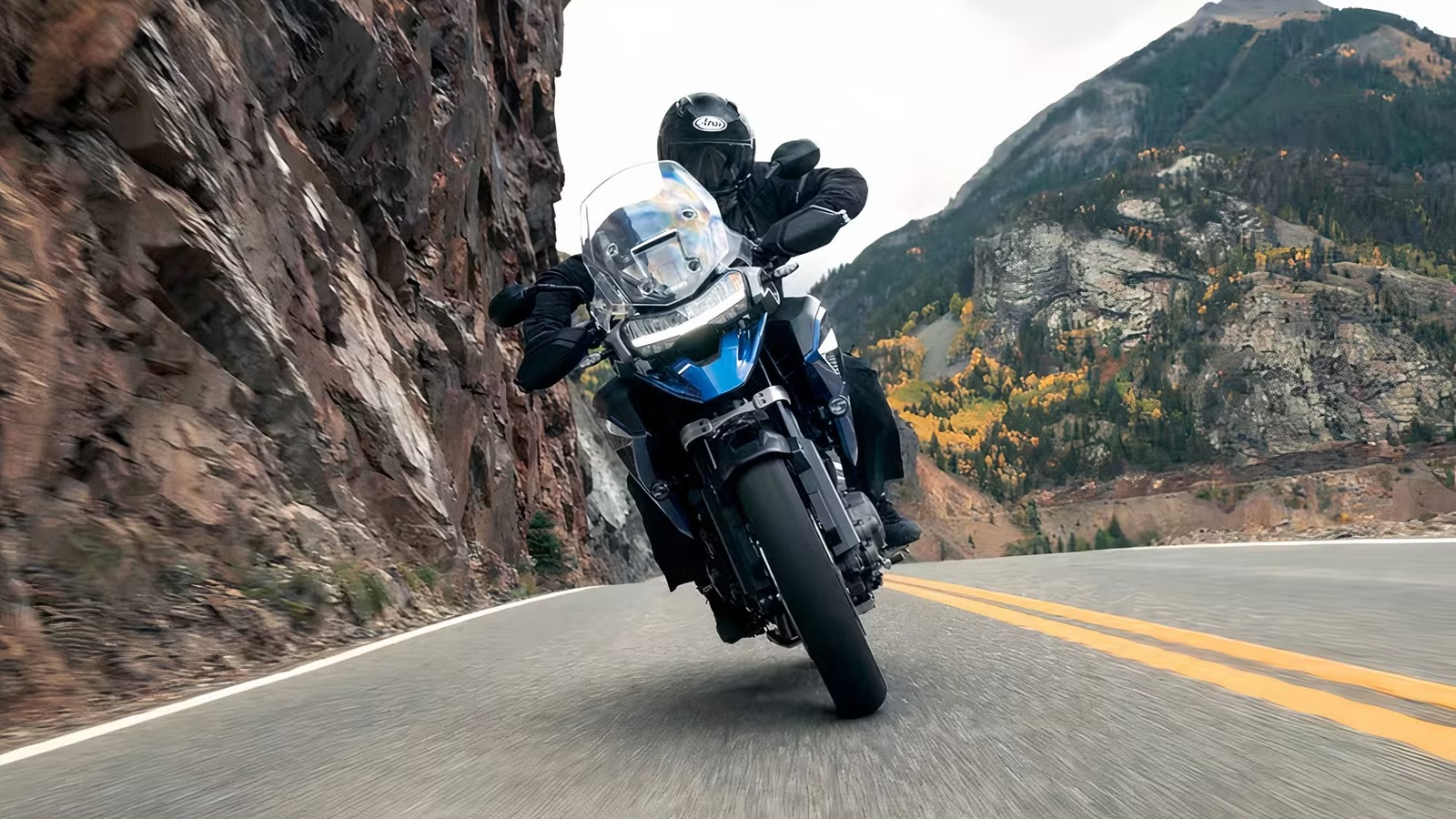
The Triumph Tiger 1200 GT Pro is one of the clearest examples of an adventure motorcycle designed around real-world comfort without sacrificing personality. Instead of chasing extreme off-road credentials, the GT Pro leans heavily into road-focused touring performance while still retaining enough versatility for occasional dirt and gravel exploration. It’s powered by Triumph’s 1,160cc liquid-cooled inline triple producing 148 horsepower and 95 pound-feet of torque, paired to a six-speed transmission and shaft final drive. Triumph also significantly refined this powertrain, updating the crankshaft and alternator rotor to increase engine inertia and dramatically improve low-speed smoothness and clutch control.
What makes the Tiger particularly impressive is how manageable it feels despite its size. Triumph worked aggressively to reduce weight compared to the previous generation, and the bike now comes in at around 547 pounds wet. That’s still substantial, but it carries its weight lower and feels noticeably less intimidating than some of its direct competitors. The riding position is upright and relaxed, while the electronically adjustable windscreen does an excellent job of keeping windblast off the rider during long highway stretches.
Combined with massive weather protection from the bodywork, the Tiger creates an almost cocoon-like touring experience. It feels planted during highway crosswinds, composed over uneven pavement, and remarkably confidence-inspiring in cold or rainy conditions. That sense of stability is what ultimately makes the bike so approachable despite its size and premium positioning.
Modern touring bikes got too big and complicated. One Yamaha proves comfort, agility, and real-world usability still matter.
A lot of big adventure bikes can feel clinical and appliance-like despite their impressive capabilities, but Triumph’s triple-cylinder engine injects genuine character into the experience. It combines the low-end torque of a twin with the top-end smoothness of an inline four, giving the Tiger a uniquely flexible personality. Around town, the engine feels tractable and relaxed, but open the throttle on a mountain road, and it transforms into something genuinely entertaining.
Unlike some rivals that prioritize sheer brute force, the Tiger’s power delivery feels refined and usable. There’s strong pull throughout the rev range without the abruptness or vibration that sometimes creeps into large-displacement ADV bikes. The T-plane crank also gives the engine a slightly uneven firing order that adds character without sacrificing smoothness. It’s the sort of engine that encourages long days in the saddle because it never becomes tiring or monotonous.
1,160cc liquid-cooled inline three-cylinder, DOHC, 12-valve
6-speed manual with shaft final drive
The Tiger’s chassis plays a massive role in its versatility as well. It rides on a lightweight aluminum frame paired with 19-inch front and 18-inch rear cast wheels, reinforcing its road-biased personality while still allowing light off-pavement capability. Brembo Stylema brakes provide immense stopping power with excellent feel, while touring-focused tires offer a strong balance between wet-weather grip and touring durability.
Technology integration is also remarkably polished. The seven-inch TFT display is clear and intuitive, while Bluetooth connectivity allows navigation, calls, and media control without feeling overly distracting. Multiple riding modes, including Rain, Road, Sport, Off-Road, and Rider-customizable settings, allow the bike to adapt instantly to changing conditions. Combined with adaptive cornering lights and an optional tire pressure monitoring system, the Tiger 1200 GT Pro constantly works in the background to reduce rider stress during unpredictable rides.
Tubular steel trellis frame with bolt-on aluminum rear subframe
Showa semi-active suspension; 49mm USD fork (7.9 inches travel) / rear monoshock with electronic preload and damping adjustment (7.9 inches travel)
Dual 320mm front discs with Brembo Stylema monoblock calipers / single 282mm rear disc with Brembo caliper
19-inch front / 18-inch rear cast aluminum wheels; Metzeler Tourance tires
The biggest compliment you can give any motorcycle is that it makes you want to ride more, and that’s exactly what the Tiger 1200 GT Pro accomplishes. It removes many of the excuses riders use to leave their bikes parked in the garage. Cold morning? Heated grips. Long highway ride? Electronic suspension and cruise control. Sudden rainstorm? Excellent wind protection and rider aids. Instead of feeling like a machine you need to prepare yourself for, it feels like one that’s always ready to go.
At a starting MSRP of $22,095, the Tiger 1200 GT Pro sits firmly in premium territory, but it earns that price through refinement rather than gimmicks. It isn’t trying to be the most extreme adventure motorcycle on the planet. Instead, it focuses on making real-world riding more enjoyable, more comfortable, and less intimidating. For riders who want an ADV bike capable of crossing states in terrible weather without turning the experience into a survival challenge, that approach makes an awful lot of sense.
Found an error? Send it info@www.topspeed.com so it can be corrected.
Source: https://www.topspeed.com/adventure-motorcycle-makes-weather-feel-irrelevant/
Cars
The Adventure Motorcycle That Makes Weather Feel Irrelevant
Article Top Ad Zone
Article Middle Ad Zone
Article Bottom Ad Zone
Original Source: www.topspeed.com
Share
Comments
Comment system is currently disabled.