Adventure bikes used to be about simplicity. A decent windscreen, long-travel suspension, enough luggage to disappear for a week, and an engine tough enough to survive terrible fuel and worse roads. But somewhere along the way, the category turned into an arms race. Today’s flagship ADVs are packed with radar cruise control, giant TFT screens, semi-active suspension systems, and horsepower figures that would embarrass superbikes from just a decade ago.
Follow and Like top authors, topics, and trends
Browse with fewer ads across the site
Personalize your profile to showcase your activity
Get a content feed tailored to your interests
By creating an account, you agree to our Terms of Use and Privacy Policy. You also agree to receive our newsletters; you can unsubscribe any time.
*Required: 8 chars, 1 capital letter, 1 number
There’s no denying how impressive modern adventure motorcycles have become. The latest generation of flagship ADVs can accelerate harder than old sportbikes while carrying aluminum panniers, heated seats, and enough electronic rider aids to rival luxury cars. Manufacturers know buyers love numbers, so every new model arrives with even more horsepower, larger screens, and increasingly aggressive styling.
But once the novelty wears off, many riders start asking themselves a simple question: how much of this stuff do they actually need? Adventure riding isn't always about going fast. Sometimes it’s about crossing state lines without stress, surviving bad weather, or riding for eight hours straight without feeling beaten up afterward. In those situations, smoothness, comfort, and reliability matter far more than quarter-mile times or top speed bragging rights.
That realization is part of why older and simpler middleweight ADVs continue to hold their value so well. Riders who spend serious time on the road understand that dependability becomes increasingly important the farther you travel from civilization. A bike that starts every morning, shrugs off abuse, and can be serviced almost anywhere in the world becomes a lot more attractive than one loaded with cutting-edge tech that may or may not age gracefully.
This old-school do-it-all adventure bike still manages to hold its own against newer rivals.
There’s been a noticeable shift in the adventure segment over the past few years. More riders are downsizing from giant liter-class machines and rediscovering the appeal of motorcycles that prioritize usability over outright performance. Mid-sized ADVs are easier to maneuver in traffic, less intimidating off-road, cheaper to maintain, and generally more approachable for everyday riding.
That’s especially true for riders who actually pile on miles. Once you’ve spent enough time traveling on motorcycles, reliability becomes part of the riding experience itself. You stop obsessing over spec sheets and start appreciating things like predictable throttle response, comfortable ergonomics, reasonable fuel economy, and engines with proven long-term durability. There’s a reason why certain motorcycles consistently show up in stories about cross-country tours and round-the-world adventures.
Some bikes become popular because they’re exciting. Others become popular because they earn trust over years of ownership. The second category tends to develop much deeper loyalty. Riders recommend those bikes to friends not because they’re trendy, but because they know the machine will still be running long after flashier competitors have moved on to their next generation redesign.
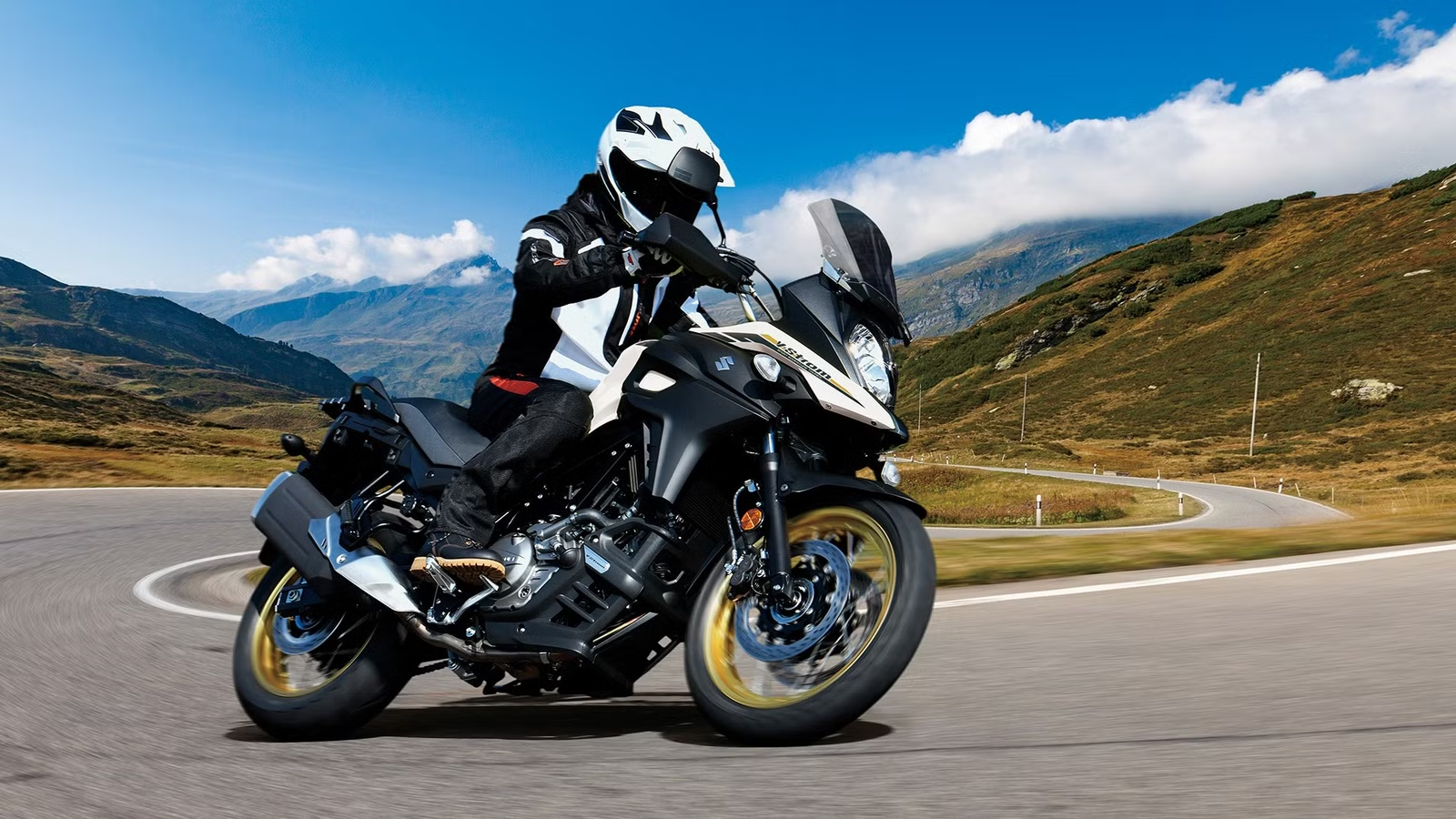
The Suzuki V-Strom 650 XT sits firmly in that second category. It’s not the fastest bike in the segment, nor is it the newest or most technologically advanced. But after more than two decades of evolution, the V-Strom has become one of the most respected middleweight adventure motorcycles on the market precisely because it avoids chasing trends and focuses on doing the fundamentals exceptionally well.
At the heart of the V-Strom 650 XT is Suzuki’s long-running 645cc 90-degree V-twin engine. The liquid-cooled DOHC motor produces 70 horsepower at 8,800 rpm and 46 pound-feet of torque at 6,500 rpm. More importantly, it delivers that performance with smooth, predictable power that works beautifully in real-world riding conditions. The six-speed transmission is paired with Suzuki’s Low RPM Assist and Easy Start System, making the bike unintimidating for newer riders while still satisfying experienced tourers.
645cc liquid-cooled 90-degree V-twin, DOHC
The XT trim adds several upgrades that reinforce the bike’s adventure-focused personality. Wire-spoke wheels improve durability on rough terrain, while handguards, an engine cowl, and tapered aluminum handlebars add extra practicality and protection. Suspension duties are handled by a conventional telescopic fork up front and a link-type rear shock with adjustable preload. The setup isn’t flashy, but it’s tuned well for touring comfort and rough-road versatility.
One of the V-Strom’s biggest strengths is how approachable it feels. With a curb weight of 476 pounds and a seat height of 32.9 inches, it strikes an excellent balance between long-distance capability and manageable everyday usability. Riders don’t need to wrestle with excessive bulk in parking lots or fear dropping a giant 600-pound machine on a gravel road. It’s substantial enough for highway touring without becoming exhausting in urban environments.
Rear: Link-type monoshock with adjustable preload
Front: Dual 310 mm discs with Tokico two-piston calipers
Front: 19-inch wire-spoke wheel / 110-80 tire
Rear: 17-inch wire-spoke wheel / 150-70 tire
The touring practicality is also a huge part of the package. The upright riding position, adjustable windscreen, and relaxed ergonomics make long rides surprisingly comfortable. Suzuki claims a fuel economy rating of around 53 miles per gallon, and paired with its 5.3-gallon fuel tank, the V-Strom offers impressive range between fill-ups. That matters a lot more on actual adventures than shaving a few tenths off a zero-to-60 run.
The V-Strom’s reputation for reliability didn’t happen by accident. Suzuki has spent years refining this V-twin platform, and owners routinely rack up enormous mileage with minimal drama. The 90-degree engine layout naturally reduces vibration, which not only improves comfort but also contributes to long-term mechanical durability. It’s one of those motorcycles that develops a reputation for simply refusing to quit.
That durability also extends to ownership costs. Maintenance is straightforward, parts availability is excellent, and the aftermarket support is massive thanks to the bike’s popularity worldwide. Riders can outfit the V-Strom for commuting, cross-country touring, light off-road travel, or even two-up adventure riding without reinventing the wheel. It’s the kind of motorcycle people buy intending to keep for years instead of trading in after a single season.
The most affordable 300+ mile adventure touring bike on this list is priced under $7,000 and is powered by a single-cylinder engine.
The Suzuki V-Strom 650 XT succeeds because it understands what many adventure riders eventually figure out on their own: reliability and usability matter far more than flashy specs once the miles start adding up. It may not dominate comparison charts with massive horsepower figures or futuristic electronics, but it delivers something arguably more valuable. Confidence.
For $9,799, the V-Strom 650 XT offers a proven engine, practical touring capability, genuine long-distance comfort, and a reputation for durability that few motorcycles in the segment can match. In an era where many adventure bikes seem designed more for social media than actual travel, the V-Strom continues to stand out by doing exactly what riders need it to do, year after year, mile after mile.
Found an error? Send it info@www.topspeed.com so it can be corrected.
Source: https://www.topspeed.com/adv-to-choose-when-reliability-matters-more-than-horsepower/
Cars
The ADV Riders Choose When Reliability Matters More Than Horsepower
Article Top Ad Zone
Article Middle Ad Zone
Article Bottom Ad Zone
Original Source: www.topspeed.com
Share
Comments
Comment system is currently disabled.