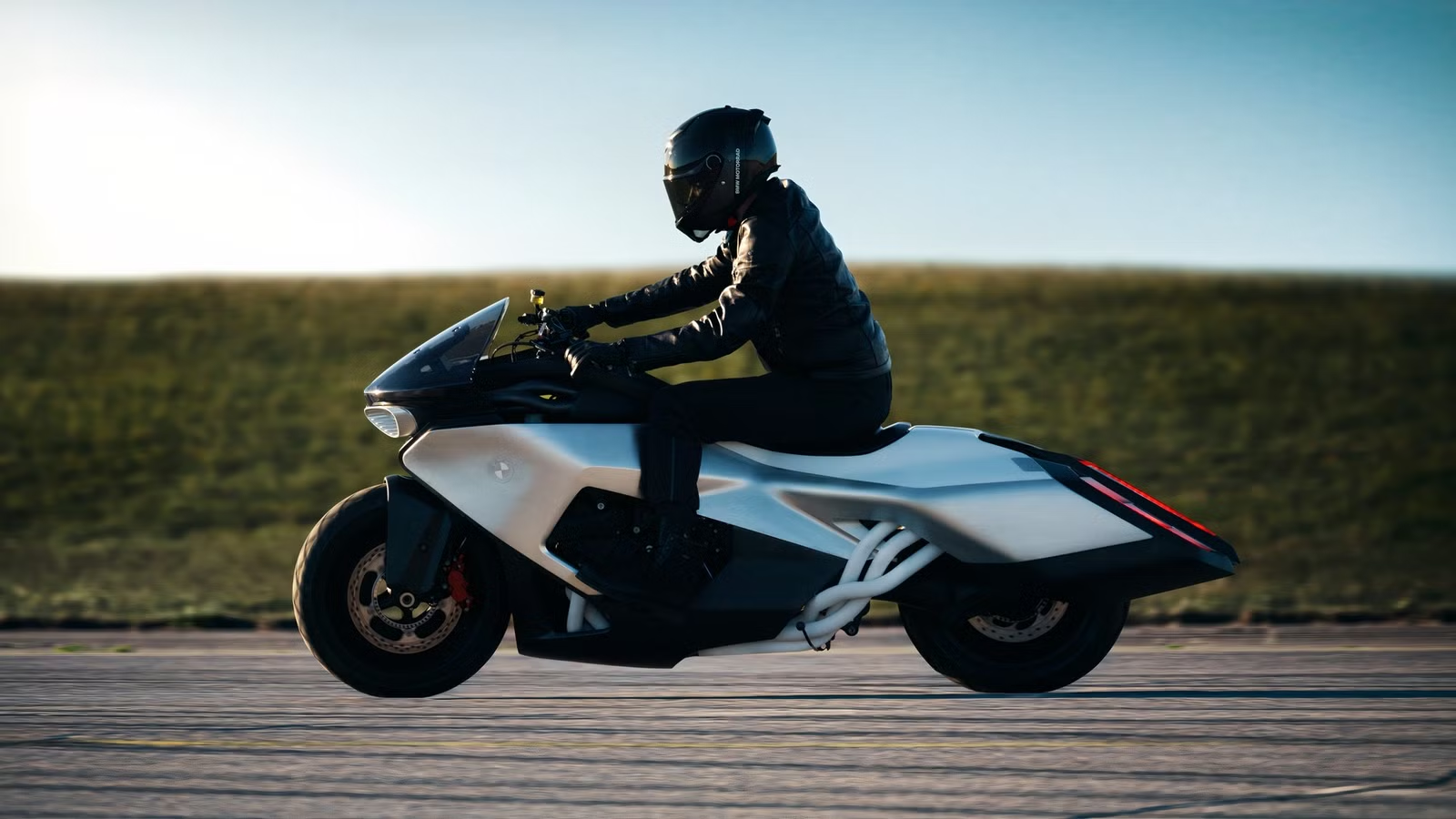
BMW unveiled the Vision K18 Concept, and the first thing you notice isn't the engine—it's the exhaust. Massive, sculptural, and woven directly into the rear bodywork, the pipes don't hide at the bumper's edge the way they do on virtually every other production car or concept on the market right now. They erupt from the body like thrusters, and that is entirely the point.
In an era when most automakers are quietly shrinking tailpipes, rounding them off, or eliminating them altogether, BMW has done the opposite with the Vision K18. The exhaust architecture isn't a packaging solution bolted on after the real design work was finished. It's a load-bearing element of the car's visual identity—combustion treated not as an engineering necessity to be concealed, but as something worth celebrating out loud.
The Vision K18's exhaust system is integrated into the rear bodywork at a structural level, blurring the boundary between powertrain and coachwork in a way that's almost unprecedented for a modern concept. Where most cars route exhaust through a tunnel and terminate it at a discreet exit point, the K18 treats the routing itself as a design surface. The pipes emerge as prominent, intentional forms — wide, symmetrical, and clearly sized and positioned for visual weight, not just gas flow.
This kind of integration has real engineering implications beyond aesthetics. When exhaust outlets are built into the body structure rather than appended to it, heat management becomes a central design constraint from day one. The surrounding bodywork has to account for thermal expansion, surface temperatures, and airflow management simultaneously—disciplines that are usually handled in sequence, not together. That BMW chose to design around these constraints rather than away from them says something about how seriously the Vision K18's team took the combustion system as a starting point.
BMW has been vocal about maintaining combustion engines alongside its EV lineup, but design language is often a more honest signal than press releases. The Vision K18 makes a case that the brand's internal combustion future isn't just a product-planning hedge—it's something the design team is actively building a philosophy around.
There's a long tradition in BMW's history of treating the engine as the emotional core of the car. The S54 straight-six in the E46 M3, the S85 V10 in the E60 M5, the S58 twin-turbo inline-six in the current M3—these were engines you bought the car around, not engines that happened to come with it. The Vision K18 extends that thinking to the exhaust system itself, arguing that every component connected to combustion deserves the same design attention as a door handle or a headlight cluster. The exhaust isn't plumbing. It's sculpture.
Concepts are easy to dismiss. They show up, generate headlines, and rarely survive contact with production reality. But the Vision K18 is making a specific enough argument—exhaust-as-design-element—that it's worth taking seriously as a directional signal. BMW didn't need to design the pipes this way. A more conventional approach would have been simpler, cheaper to render, and easier to explain to a general audience. The choice to make exhaust integration the visual centerpiece of the concept is a deliberate editorial decision.
For combustion purists watching BMW's EV pivot with some anxiety, that decision matters. It suggests there are people inside the company who believe gas engines deserve aesthetic prominence—not apology—and who have enough influence to put that belief into a concept car revealed publicly in May 2026. Whether the Vision K18's design language reaches a production model is an open question. But as a statement of intent, it's one of the clearest BMW has made in years.
Source: https://www.topspeed.com/vision-k18-bmw-exhaust-pipes-are-design-not-afterthought/
Cars
The Vision K18 Is BMW's Radical Statement: Exhaust Pipes Are Design, Not Afterthought
Article Top Ad Zone
Article Middle Ad Zone
Article Bottom Ad Zone
Original Source: www.topspeed.com
Share
Comments
Comment system is currently disabled.