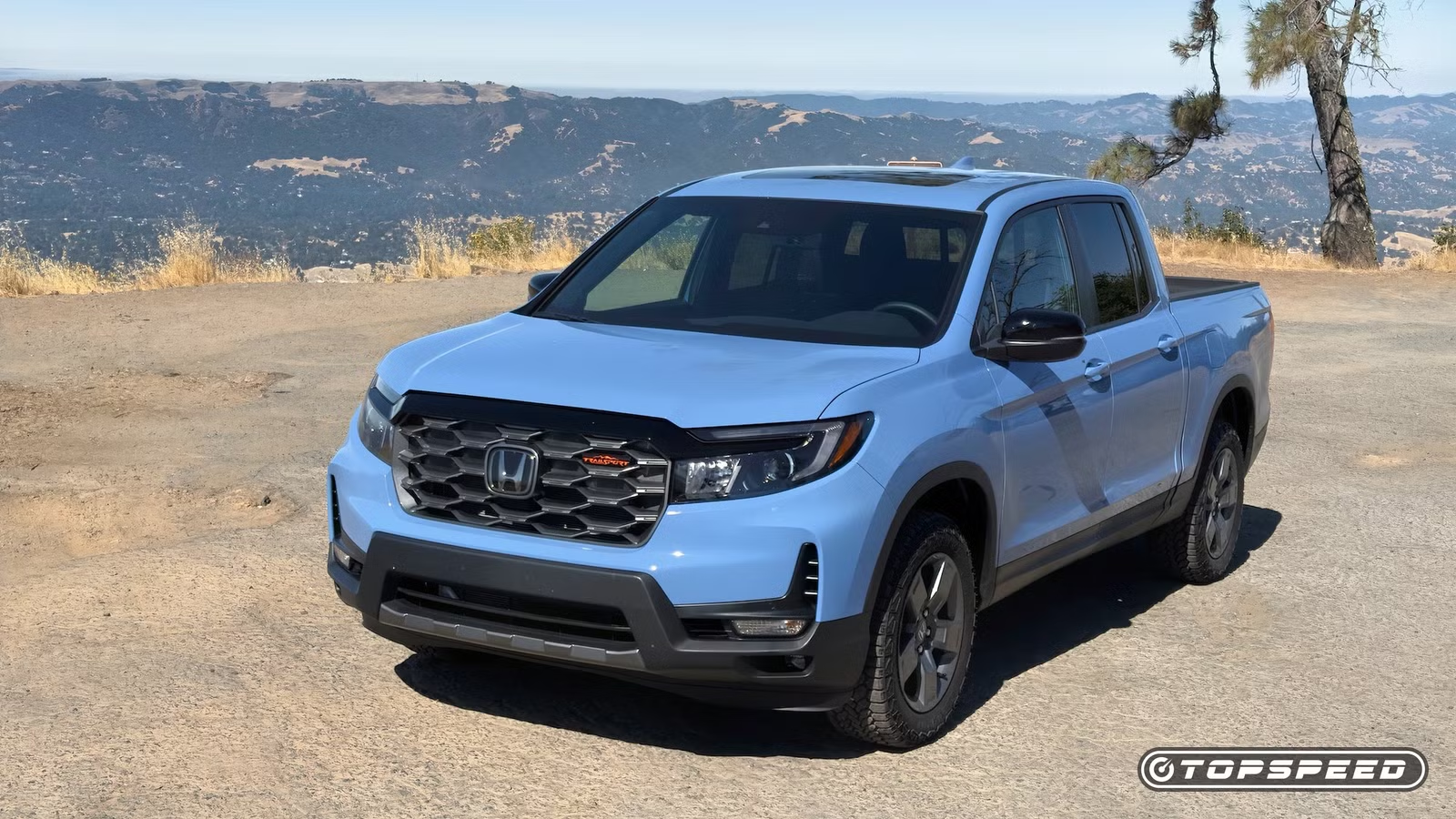
Honda's Alabama plant will stop building the Ridgeline in late 2026, and the truck won't return until late 2028 — a production gap of roughly 18 months to two years that is genuinely unusual for any mainstream nameplate in the North American truck segment. The pause isn't a quiet refresh cycle; Honda is calling it a major reboot, and a V6 hybrid powertrain is reportedly at the center of the plan.
Follow and Like top authors, topics, and trends
Browse with fewer ads across the site
Personalize your profile to showcase your activity
Get a content feed tailored to your interests
By creating an account, you agree to our Terms of Use and Privacy Policy. You also agree to receive our newsletters; you can unsubscribe any time.
*Required: 8 chars, 1 capital letter, 1 number
Production of the current second-generation Ridgeline is set to wind down at Honda's Lincoln, Alabama facility in late 2026. The next-generation truck is then expected to arrive in late 2028, according to reports published this week. That's a window of somewhere between 18 months and two years with no Ridgeline on dealer lots—a stretch that's long enough to lose casual buyers to competitors but short enough that Honda clearly intends to keep the nameplate alive.
The powertrain detail is the most concrete piece of information to surface so far: the returning Ridgeline is reportedly slated to receive a V6 hybrid system. Honda has been expanding its hybrid lineup aggressively across the Accord, CR-V, and Passport, so a hybrid Ridgeline isn't a stretch. The Passport already shares significant platform DNA with the Ridgeline, and its recent refresh gave it a more rugged visual identity—a direction the next Ridgeline may follow.
The Ridgeline has always divided truck buyers, and that division is worth understanding before speculating about what Honda might change. Owners who love it cite the ride quality on long highway runs, the frunk-style in-bed trunk that locks and drains, the all-wheel drive system's behavior in light off-road conditions, and the fact that it parks and drives like a large SUV rather than a truck. Payload and tow ratings have never been the point.
The critics — and there are plenty — argue that a truck built on a car platform is a compromise too far. Towing capacity on the current Ridgeline tops out around 5,000 pounds, which trails the Tacoma and Colorado by a meaningful margin. The bed is shorter than most midsize competitors. And in a segment where brand identity is tied to capability theater as much as actual capability, the Ridgeline has always had an image problem with buyers who want a truck that looks like it could survive something. Honda has never fully resolved that tension, and the reboot will have to take a position on it.
A hybrid V6 would be a meaningful upgrade over the current 3.5-liter naturally aspirated V6, which makes 280 horsepower in the outgoing truck. Honda's two-motor hybrid system, as deployed in the Accord Hybrid and the larger Passport, adds torque low in the rev range and improves fuel economy without requiring a full EV architecture. For a truck used primarily as a daily driver and weekend hauler — which describes most Ridgeline buyers — that's a sensible direction.
It also fits Honda's broader product strategy. The company recently delayed several next-generation models while pulling back on a $15 billion Canadian EV plant investment, signaling a recalibration away from full electrification and toward hybrid-first development. A V6 hybrid Ridgeline lands squarely in that strategy: it gets better efficiency numbers, satisfies tightening emissions regulations that Automotive News flagged as part of the production pause rationale, and doesn't require Honda to build an entirely new EV-specific platform for a relatively low-volume truck.
Whether the platform itself changes—a move to something with more traditional truck capability—remains unconfirmed. The smart money says Honda keeps the unibody architecture and upgrades what's around it, rather than rebuilding from scratch for a segment where it has never competed on raw capability.
Two years is a long time to leave a loyal customer base without a replacement option. Some Ridgeline buyers will cross-shop the Pilot or Passport during the gap; others will wait. Honda's bet is that the reboot will be compelling enough to bring them back — and to finally settle, one way or another, the argument about what kind of truck the Ridgeline is supposed to be.
Sources: Carscoops, The Drive, Automotive News, Car & Driver
Source: https://www.topspeed.com/ridgeline-disappearing-until-2028-what-honda-reboot-could-mean/
Cars
The Ridgeline Is Disappearing Until 2028—Here's What Honda's Reboot Could Mean
Article Top Ad Zone
Article Middle Ad Zone
Article Bottom Ad Zone
Original Source: www.topspeed.com
Share
Comments
Comment system is currently disabled.