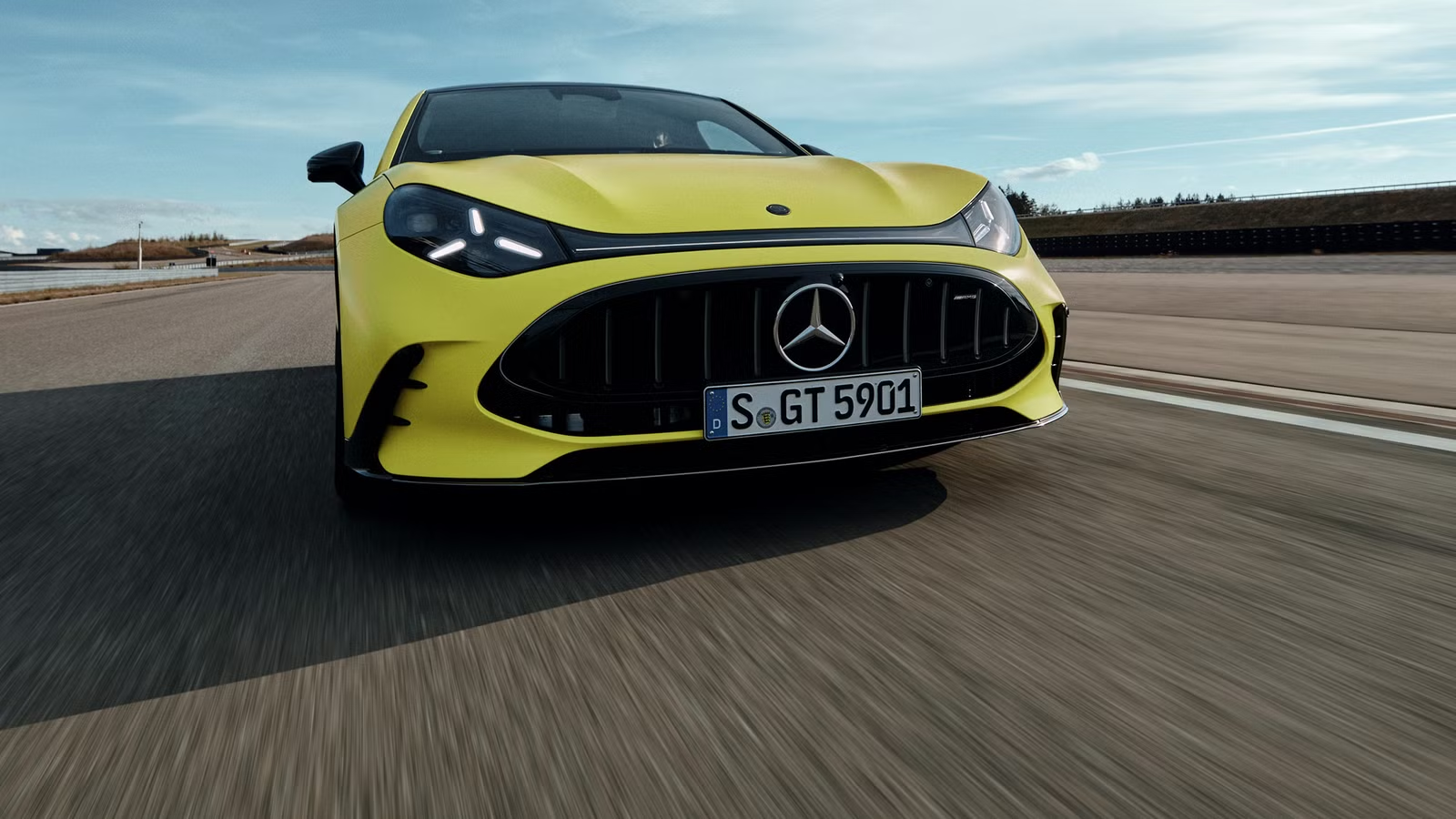
Mercedes-AMG's most powerful production car ever hasn't turned a wheel in customer hands, and someone is already trying to redesign its face. The 2027 AMG GT 4-Door Coupe—a three-motor, fully electric super-sedan producing 1,153 horsepower—debuted on May 20th to a wave of coverage that was equal parts impressed and unsettled. Within days, at least one designer had posted custom bodywork renderings aimed at correcting what enthusiasts are calling an acquired taste at best.
Follow and Like top authors, topics, and trends
Browse with fewer ads across the site
Personalize your profile to showcase your activity
Get a content feed tailored to your interests
By creating an account, you agree to our Terms of Use and Privacy Policy. You also agree to receive our newsletters; you can unsubscribe any time.
*Required: 8 chars, 1 capital letter, 1 number
The GT 4-Door Coupe is AMG's answer to a question the brand has been circling for years: what does a proper AMG look like when there's no engine to anchor the identity? The answer involves three axial-flux electric motors, a 186-mph top speed, and 600-kW DC fast charging—figures that comfortably embarrass the Tesla Model S Plaid and Audi RS e-tron GT on paper.
To soften the blow of losing the V8 soundtrack, AMG engineered a synthetic engine note into the cabin—a simulated V8 rumble piped through the speakers. It's a detail that tells you everything about the tightrope the brand is walking: the performance numbers are genuinely hypercar territory, but the emotional connective tissue still needs to be manufactured. The car has been described by multiple outlets as a concept car you can actually buy, which is either high praise for its ambition or a polite way of saying the design doesn't quite read as production-ready.
AMG called the styling 'audacious.' Enthusiasts had other words. The front end in particular—featuring an aggressive, heavily sculpted fascia with a dense cluster of intakes, vents, and lighting signatures—struck many observers as overwrought. The Drive noted that it's hard to say which is larger: the car's horsepower output or the number of Mercedes logos on it. InsideEVs flagged the design as 'out-there' in its headline. These aren't fringe takes; they reflect a consistent thread across coverage from the moment the car broke cover.
The aftermarket response followed quickly. A designer posted renderings proposing a revised front end—cleaner, less busy, pulling back some of the visual aggression that AMG's team apparently felt was necessary to signal the car's performance intent. Whether the rendering improves on the original is subjective, but the fact that it exists at all—for a car that hasn't reached a single customer yet—says something pointed about the gap between AMG's design direction and what its core audience was hoping to see.
Aftermarket restyling is usually a second- or third-year phenomenon. A car ships, owners live with it, a tuner identifies the weak points, and the rendering community goes to work. The timeline compressing to days—before deliveries, before a single press drive—is unusual enough to be meaningful.
It puts the AMG GT 4-Door in a specific and uncomfortable category: halo cars whose design ambition outran their audience's appetite. The Lexus LFA had its detractors at launch. The BMW i8 was polarizing from the moment it arrived. Both are now regarded as design landmarks. Whether the AMG GT 4-Door earns the same retrospective rehabilitation depends partly on whether the car's performance credentials eventually overshadow the front-end controversy—and partly on whether AMG's design team holds its nerve through the criticism.
What makes this moment distinct is the EV context. AMG is asking its most loyal customers to accept not just a new powertrain philosophy but a new visual language to go with it. When those customers respond by immediately commissioning alternative faces, it suggests the visual language isn't landing the way the brand intended. That's a harder problem to solve than a software update.
The 2027 AMG GT 4-Door Coupe is, by any objective measure, an extraordinary machine. But extraordinary performance has never been enough to silence design critics—and in AMG's case, the design is now the story running alongside the specs. The aftermarket community moving this fast is less a verdict on the car's quality than a verdict on how well AMG communicated its vision. That's the conversation the brand will be managing from here.
Sources: Autoblog, Autoweek, Carbuzz, Carscoops, InsideEVs, The Drive
Source: https://www.topspeed.com/amg-most-powerful-production-car-ever-already-has-critics-redesigning-its-face/
BMW
AMG’s Most Powerful Production Car Ever Already Has Critics Redesigning Its Face
Article Top Ad Zone
Article Middle Ad Zone
Article Bottom Ad Zone
Original Source: www.topspeed.com
Share
Comments
Comment system is currently disabled.