Modern adventure bikes have become a whole lot more aggressive, and many riders are beginning to realize that they prefer comfort and long-distance capability more than outright off-road performance. Long suspension travel, rally-inspired styling, and dirt-focused ergonomics look great in press photos, but after hundreds of miles in the saddle, priorities tend to shift fast. Riders focus more on wind protection, smooth power delivery, and how relaxed a bike feels after a full day on the road.
Adventure motorcycles used to be about versatility first. They were supposed to handle highways, rough roads, commuting, and touring all at once. But over the last few years, many middleweight ADV bikes have started leaning heavily into performance and off-road image. Taller suspensions, firmer setups, sharper ergonomics, and more aggressive riding positions have become normal even on bikes that will probably spend most of their lives on pavement.
That hardcore focus can be exciting during short rides. Bikes like the BMW F 900 GS feel light, athletic, and eager when the road gets twisty, or the terrain turns loose. But once riders start loading luggage, spending six or seven hours on the highway, or riding through traffic every day, the compromises become more noticeable. Taller seat heights, minimal wind protection, and stiffer suspension setups start feeling less adventurous and more tiring.
Modern ADV bikes are also getting physically larger and more specialized. Riders who originally bought them for do-everything versatility sometimes realize they’re adapting themselves to the motorcycle instead of the other way around. A bike that feels thrilling for a weekend blast can become exhausting halfway through a multi-state road trip. That’s usually when priorities begin to change.
The funny thing is that many adventure bike owners barely ride off-road in the first place. Most spend the majority of their time commuting, touring, riding canyon roads, or exploring occasional gravel paths. Very few riders are regularly attacking technical terrain hard enough to fully exploit long-travel suspension or aggressive chassis geometry. Yet many still end up buying motorcycles designed around that exact purpose.
That doesn’t mean bikes like the BMW F 900 GS, KTM 890 Adventure, or even the bigger Honda Africa Twin are flawed motorcycles. In many ways, they’re still among the most capable ADV machines on the market, especially for riders prioritizing aggressive off-road riding and lighter-feeling chassis dynamics. But after several long highway days loaded with luggage, some riders begin realizing their actual usage leans far more toward touring than technical terrain.
This middleweight ADV made many big-bike riders realize lighter, sharper, and dirtier might actually be better.
Long-distance riding exposes weaknesses quickly. Wind buffeting that seemed minor during a 45-minute test ride becomes annoying after 300 miles. A narrow seat suddenly feels punishing. Buzziness through the handlebars starts getting old. Riders also begin appreciating things like cruise control, heated grips, smoother fueling, and suspension that absorbs broken pavement without constantly reminding you how “sporty” the bike is supposed to be.
Touring also changes how riders think about power delivery. Sharp throttle response and aggressive gearing can feel exciting in short bursts, but smoother torque delivery becomes far more valuable during all-day riding. Bikes that are calmer and more planted at highway speeds often end up being the ones riders actually want to keep riding farther. That’s where certain motorcycles begin standing out from the crowd.
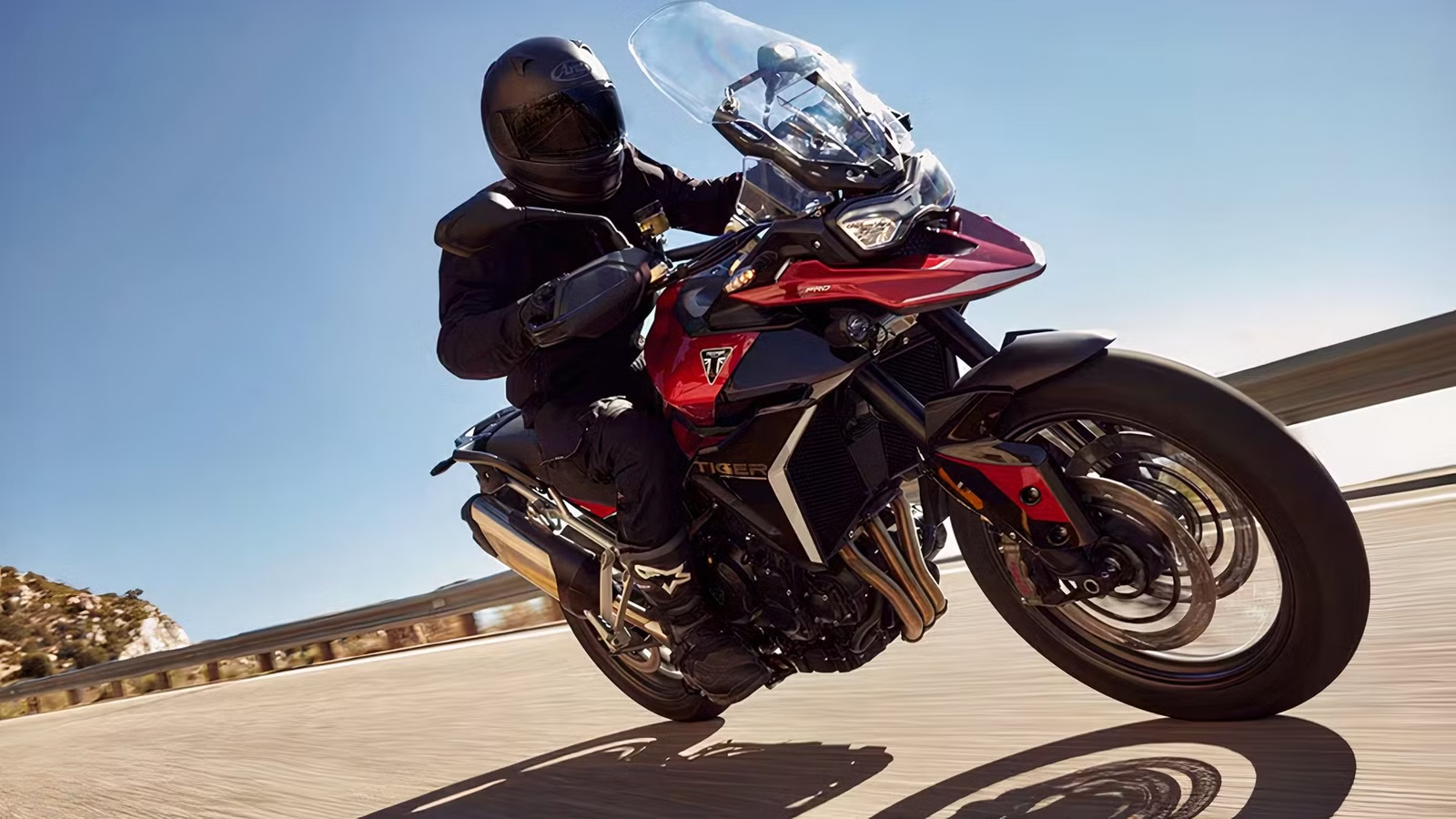
The Tiger 900 GT Pro sits in an interesting position because it doesn’t try to out-rally the hardcore adventure bikes anymore. Instead, Triumph leaned heavily into real-world usability and touring comfort while still keeping enough capability for dirt roads and light trail riding. The current model uses an 888cc inline-three engine making 106 horsepower and 66 pound-feet of torque, paired with a six-speed transmission and Triumph’s slip-and-assist clutch.
The GT Pro also comes loaded with touring-friendly equipment straight from the factory. Riders get electronically adjustable Marzocchi suspension, heated seats for both rider and passenger, heated grips, cornering ABS, switchable traction control, cruise control, Bluetooth connectivity, tire pressure monitoring, and a seven-inch TFT display. Triumph clearly designed this motorcycle around long-distance usability rather than pure off-road aggression.
A huge part of the Tiger’s appeal comes from the engine itself. Triumph’s T-plane triple delivers a character that feels very different from the parallel twins dominating the middleweight ADV segment. It has strong low-end torque, smooth highway manners, and a unique exhaust note that gives the bike personality without becoming tiring during long rides. The engine feels relaxed at speed while still pulling hard when needed.
That smoothness matters more than many riders expect. Independent long-distance reviews consistently point toward the same strengths: strong weather protection, excellent long-haul ergonomics, and an engine that stays smooth at highway speeds. That’s also why some riders cross-shop it against machines like the Africa Twin or KTM 890 Adventure after spending time with more dirt-focused setups. The choice ultimately depends on where and how the motorcycle will actually be ridden most of the time.
888cc liquid-cooled inline-3 cylinder
The comfort-oriented focus becomes obvious the moment riders spend serious time in the saddle. The GT Pro uses a more road-biased 19-inch front wheel and 17-inch rear setup wrapped in tubeless tires, helping improve stability and road feel compared to more dirt-focused alternatives. The electronically adjustable suspension also allows riders to soften or firm up the ride depending on conditions, making the bike adaptable without becoming harsh.
Triumph also paid close attention to practical touring details. The adjustable windscreen works well during highway riding, the seat remains comfortable over long distances, and the overall ergonomics are neutral instead of demanding. Wet weight comes in around 487 pounds, while seat height ranges between 32.3 and 33.1 inches. The 5.3-gallon fuel tank also gives the Tiger a legitimate touring range without requiring constant fuel stops.
Steel trellis frame with bolt-on rear subframe
Electronically adjustable Marzocchi suspension; 45 mm USD fork front, rear monoshock with electronic preload and damping adjustment
19-inch front / 17-inch rear cast wheels; 100/90 front and 150/70 rear tubeless tires
Dual 320 mm front discs with Brembo Stylema monobloc calipers; single 255 mm rear disc with cornering ABS
Adjustable from 32.3 to 33.1 inches
70 horsepower might not sound like a lot, but when you have a punchy delivery, it is enough for serious fun all over
That’s ultimately why some riders start gravitating toward motorcycles like the Tiger 900 GT Pro after spending time with more hardcore ADV machines. It’s not necessarily because they suddenly dislike off-road riding or performance-focused bikes. It’s because experience changes what people value. After enough miles, many riders realize the motorcycle they enjoy riding every single day matters more than the one with the most aggressive spec sheet.
Pricing is another reason the Tiger 900 GT Pro ends up on so many touring-focused shortlists. In the US, it starts at around $17,000, placing it right in the middle of the premium middleweight ADV segment. That means it isn’t dramatically cheaper than rivals like the BMW F 900 GS or Honda Africa Twin, but Triumph backs that price with a long list of standard equipment that many competitors either reserve for higher trims or charge extra for.
Adventure riding itself has also evolved. For most people, it’s less about conquering impossible terrain and more about comfortably covering huge distances while still being able to explore wherever the road turns rough. Bikes like the Tiger 900 GT Pro understand that balance extremely well. They prioritize the parts of adventure riding that owners actually experience most often, and for many riders, that turns out to be exactly what they wanted all along.
Found an error? Send it info@www.topspeed.com so it can be corrected.
Source: https://www.topspeed.com/adventure-bike-gs-owners-switch-to-after-long-trip/
Cars
The Adventure Bike GS Owners Switch To After One Long Trip
Article Top Ad Zone
Article Middle Ad Zone
Article Bottom Ad Zone
Original Source: www.topspeed.com
Share
Comments
Comment system is currently disabled.