Although the Mercedes-Benz ML was the first of its kind, the BMW X5 also shared a similar distinction for totally different reasons. Instead of the lumbering body-on-frame design that most were used to, the X5 offered a Sports Activity Vehicle. It was designed to be superior in all things SUV, including on-road performance and driving dynamics. It debuted with a massive 4.4-liter V8 and a full-time all-wheel drive drivetrain. Looking at X5s today, they are BMW's top-selling vehicles they make.
Follow and Like top authors, topics, and trends
Browse with fewer ads across the site
Personalize your profile to showcase your activity
Get a content feed tailored to your interests
By creating an account, you agree to our Terms of Use and Privacy Policy. You also agree to receive our newsletters; you can unsubscribe any time.
*Required: 8 chars, 1 capital letter, 1 number
Albeit not the actual flagship of the brand — that title belongs to the 7-Series or the X7 if we're talking SUVs — it could be considered the flagship in spirit. You can see it in the fact that it lines dealerships like it's the only thing BMW has on sale. The X5 is in Car and Driver's top three mid-size two-row luxury SUV segment list (with the Genesis GV80 and Porsche Cayenne in the one and two spots). The X5 is also just downright one of the best amalgamations of everything BMW has to offer, from performance, looks, luxury, and technology.
Because the X4 stopped selling after the 2025 model year, we're going to focus on this model year for comparison between that and the X5. There's also not a huge difference between the 2025 X5 and the 2026. Even though these two (X4 and X5) are in the same segment, have the same technology, the same design language, so on and so forth, they are priced like they're not even in the same category. The delta widens even further when you get to the top end of trim levels, when the X5 comes out over six figures. Meanwhile, the X4 has a stopgap at around $76,000 when the 2025 model was new.
2025 Starting MSRPs: BMW X5: $67,750 BMW X4: $56,650
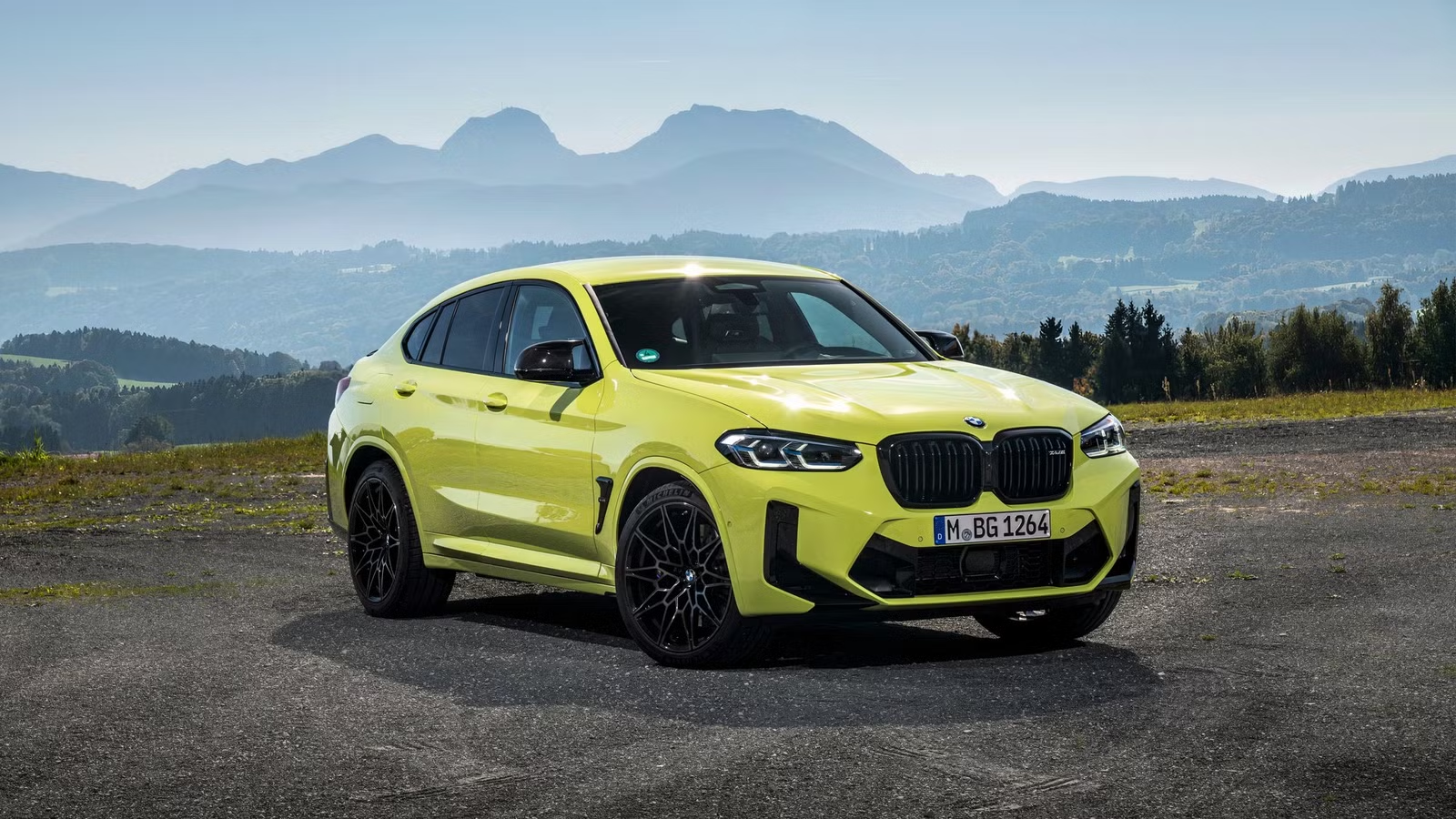
Pricing is a good argument by itself, but driving might be the closest. Don't get us wrong, the X5 is a landmark tourer that most SUVs can't hold a candle to, but tourer doesn't always equal corner carver. The X4 was designed with corner carving in mind, thanks to its near 50/50 front-to-rear axle weight distribution, double wishbone suspension, and a wider rear track. Not to mention some of these other comparable specs:
X4 M40i Curb Weight: 4,403 lbs compared to the X5's 4,860 lbs.
Front legroom: X4: 40.7 inches X5: 39.8 inches
Max Cargo Volume With Seats Folded: Identical with 50.5 cubic feet
There's not a lot of difference in size between the interiors of these two vehicles. One of the major, most notable differences is in the curb weight. Other outlets are constantly praising the X4 for its handling capabilities, even though it's a taller vehicle.
We may love a good turbo today, but they had to start somewhere - here are the first 10 production cars to boast a turbocharged engine under the hood.
We'll be honest — it's difficult cross-shopping these two vehicles, especially because you're going to end up with a lot of the same features and feelings that one brand is going to elicit. Both the BMW X4 and the X5 ride on the CLAR platform, have the same iDrive OS, the same xDrive all-wheel drive drivetrain, and are both built in Spartanburg, South Carolina. The X5 charges more for a higher premium, available third row seat, and just the general road commanding presence it offers over the X4.
Comparing the two prices of the 2025 models immediately brings the gap in pricing into focus. Out of the gate, the biggest differentiating factor in price is the powertrain. While the X4 starts out with a smaller twin-turbocharged 2.0-liter inline 4-cylinder, the X5 benefits from a twin-turbocharged 3.0-liter six-cylinder with a mild hybrid architecture and 127 more horsepower. The X4 M40i really picks up the pace with a twin-turbocharged 3.0-L V6 that makes 382 horsepower, which could potentially outperform the base X5. Unfortunately, the X5 does come with the largest of them all, the granddaddy twin-turbo V8 in the X5 M Competition spec.
2025 BMW X4 Starting MSRPs xDrive30i: $56,650 M40i: $68,050
2025 BMW X5 sDrive40i: $67,750 xDrive40i: $70,050 M60i $92,300
If slightly newer isn't your thing, you could always opt for one of the three-year-old models that truly showcase the differences in price. If you also don't want an all-electric version of the X4 in the iX4, then you will definitely want to look at certified pre-owned or pre-owned vehicles in general. Here are the price differences according to Kelley Blue Book's Fair Purchase Price:
2023 BMW X4 xDrive30i: $37,500 M40i: $46,300
2023 BMW X5 sDrive40i: $40,000 xDrive40i: $43,100 xDrive45e: $44,100 M50i: $54,500
Since we are exclusively talking about slightly used vehicles in this article, the 2025 model's depreciation has already been in full swing the minute they rolled off the lot. Depreciation, however, is one of the single biggest factors that anybody should make in buying a car if they care about wanting to trade cars often. It trumps fuel savings, maintenance, and even insurance costs. Being that these are German luxury automobiles of the same brand, they depreciate aggressively, but the X4, less so.
All the data that is about to be exposed comes from iSeeCars. This data tells quite a shocking story when it comes to depreciation, where the X5 and X4 are concerned:
3 years: X4 loses 34.7% of value vs. X5's 28.4%
5 years: X4 loses 53.3% vs X5's 56.1%
7 years: X4 loses 67.7% vs X5's 68%
10 years: X4 loses 76.5% vs X5's 79%
Either way, you swing these numbers, there really isn't that clear of a winner to be had. However, what is clear is that there's a $12,000 gap in depreciation between the two vehicles.
It is absolutely true that the X5 is going to have a higher dollar value at the dealership when you trade it in. Yet, when you look at it long term, the X4 owner spent less money up front for slightly less in depreciation. Additionally, the X5 will live on for the foreseeable future, while the X4 is discontinued. Therefore, while the X5's numbers continue to grow, the X4's will not, which will add eventual value to the proposition of owning a used one.
Listen, if you have to buy an X5, there are absolutely dozens of arguments you could make over the X4 in the sense that it doesn't have a bigger engine option, it doesn't have a plug-in hybrid, nor does it come with an optional third-row seat. If you don't need any of those aforementioned features, however, then pricing might be what you're needing to focus on, and the X4's got you covered with the frugality of it all. However, there are some things that you can't just shake off with the X5.
Let's look at the biggest difference between the two — the space. The BMW X5 offers 33.9 cubic feet of trunk space compared to the X4's much smaller 18.5 cubic feet. The X5 and X4 have similar rear legroom, at 37.4 inches and 35.5 respectively. This, of course, is due to the overall size difference, with the X5 being slightly larger at 194.3 inches in length compared to the X4's 187.5 inches in total length.
At the end of the day, the BMW X4 shares the same platform as the X5, has the same drivetrain architecture (not everybody's going to need the illustrious V8), and has the same warranty. It beats the X5 on front legroom, handling, agility, depreciation, insurance cost, and total five-year ownership. Then again, if coupe styles aren't for you, then maybe you should reconsider.
Found an error? Send it info@www.topspeed.com so it can be corrected.
Sources: BMW, RepairPal, CarEdge, Kelley Blue Book, iSee Cars
Source: https://www.topspeed.com/why-smart-bmw-buyers-choose-x4-over-x5/
BMW
BMW X4 vs X5: Why the Discontinued X4 Is the Smarter Buy
Article Top Ad Zone
Article Middle Ad Zone
Article Bottom Ad Zone
Original Source: www.topspeed.com
Share
Comments
Comment system is currently disabled.