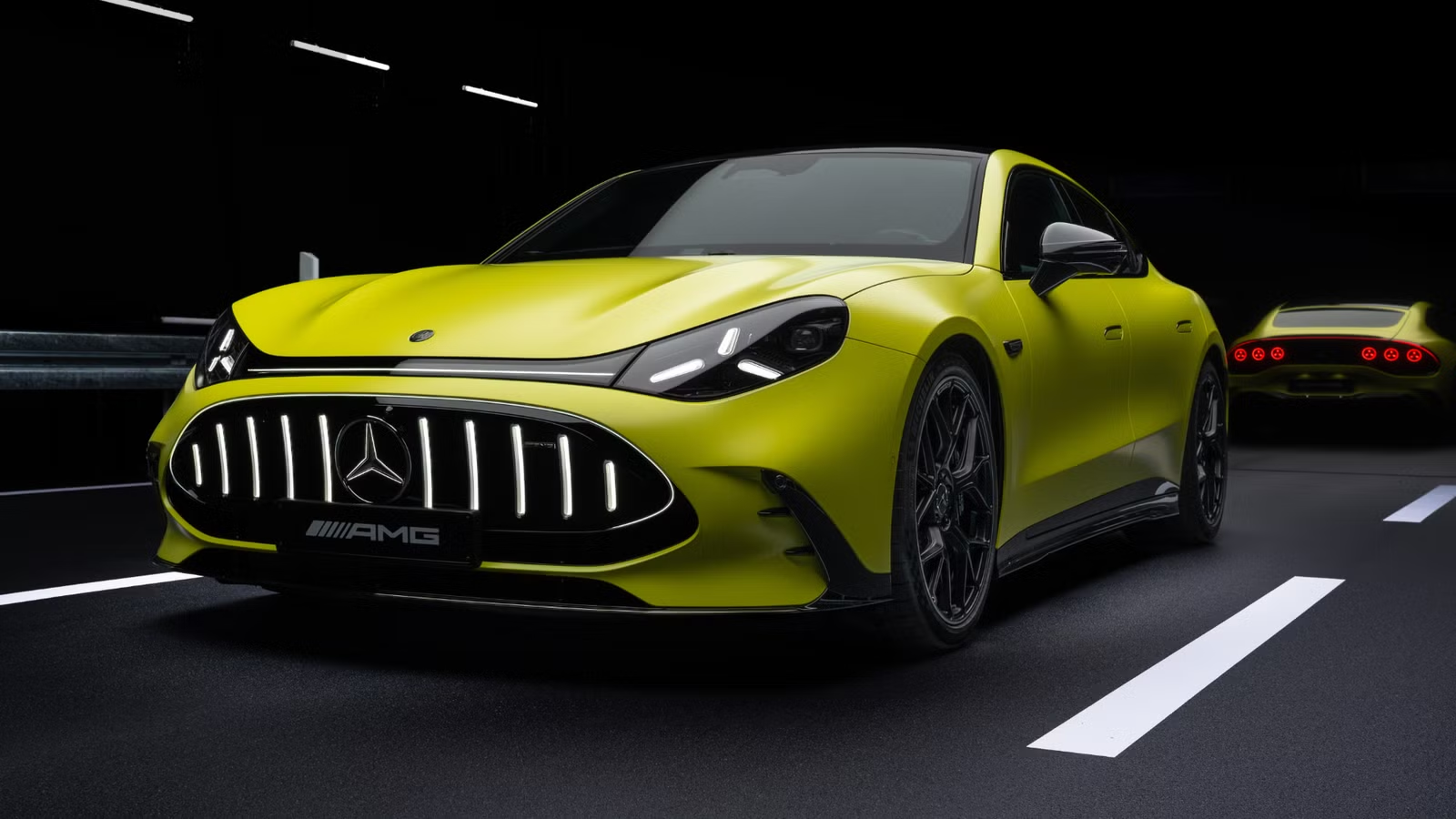
Mercedes-AMG revealed the 1,153-horsepower 2027 AMG GT 4-Door EV this week, and the headline numbers are hard to dismiss: 600-kW peak charging and a motor architecture the brand describes as a meaningful departure from anything in the current AMG EV lineup. For enthusiasts who have watched electric grand tourers promise the world and then strand them at a 150-kW charger for 45 minutes, those two claims are exactly the right ones to lead with.
This isn't a full production reveal with a window sticker and a delivery date—it's a halo-spec confirmation, the kind of technical statement AMG uses to plant a flag before the details fill in. But the powertrain specifics that have surfaced are substantive enough to explain why this car matters, and why it lands squarely in conversation with the Porsche Taycan Turbo GT.
It even has an insane name to match.
To put 600 kW in context: the Porsche Taycan Turbo GT is one of the fastest-charging production cars at 320-kW peak on 800-volt architecture. The 2027 AMG GT 4-Door is targeting nearly double that figure, which, if the battery and thermal management can sustain it, would represent a step change in how quickly a hard-driving enthusiast can recover range between legs of a long trip.
In practical terms, a 600-kW peak charge rate on a usable 100-kWh-class battery pack could theoretically add 200-plus miles of range in under 15 minutes under ideal conditions. Real-world charging curves are never flat, and peak rates are only sustained for a portion of the session, but even at a sustained average of 400 kW across a 20-minute stop, the math starts to look like a fast-fill gas stop rather than a coffee-and-wait situation. That's the threshold where electric grand-touring stops being a compromise and starts being a genuine alternative for drivers who cover 400 to 600 miles in a day.
The infrastructure caveat is real: 600-kW charging requires stations that can actually deliver it, and those remain sparse outside of a few high-power corridors. But the car being capable sets the ceiling; the network catches up to the hardware, not the other way around.
Mercedes hasn't published a full technical white paper on the new motor yet, but the framing around it is deliberate: this is not the axial-flux-adjacent setup found in the EQE 53 or EQS 53, and AMG is positioning the departure as meaningful rather than incremental. The existing AMG EV motors—shared across the EQE and EQS performance variants—are capable units, but they were engineered primarily around the passenger-car platforms they sit in, with performance as a secondary objective layered on top.
The GT 4-Door's motor is described as purpose-built for the performance application first. What that likely means in practice—though Mercedes hasn't confirmed specifics—is a higher continuous power ceiling (sustained output under track or hard road conditions, not just peak burst), improved thermal headroom, and a power delivery character tuned for the kind of driver who actually uses the performance envelope. AMG's history with the combustion GT suggests the brand understands that a grand tourer needs to feel alive at 80% throttle, not just at full send.
Efficiency gains from the new architecture would also feed directly into real-world range—a motor that converts more of the battery's energy into forward motion extends the distance between those 600 kW charging stops.
This luxury performance sedan strikes the perfect balance between AMG aggression and daily usability.
The Taycan Turbo GT is the current benchmark for electric performance credibility—it's the car that finally convinced skeptical enthusiasts that an EV could be a driver's car rather than a tech demo. AMG's answer with the GT 4-Door isn't to copy that formula but to escalate it on the charging front while bringing its own motor story to the table.
For the cross-shopper sitting between Stuttgart and Affalterbach, the 2027 AMG GT 4-Door makes that conversation genuinely competitive for the first time. The charging advantage, if it holds up in production form, is a real differentiator—not a spec sheet number that evaporates in use. The motor architecture claim needs more detail before it can be fully evaluated, but the direction is clear: Mercedes is building this car for the driver who wants to cover ground quickly, charge fast, and not feel like they've made a sacrifice to do it.
Source: https://www.topspeed.com/600-kw-charging-motor-nobodys-used-before-2027-amg-gt-ev-explained/
Cars
2027 Mercedes-AMG GT EV: What 600-kW Charging Actually Means
Article Top Ad Zone
Article Middle Ad Zone
Article Bottom Ad Zone
Original Source: www.topspeed.com
Share
Comments
Comment system is currently disabled.