Analysts say the remarks are less a sign of closer US-Taiwan ties than another example of Trump’s unpredictability.
Will Trump kill the $14bn Taiwan arms deal?
President Donald Trump has twice suggested, since his summit with China’s President Xi Jinping in Beijing last week, that he may speak with Taiwan’s President William Lai Ching-te.
That would mark the first direct contact between leaders of the governments since the US switched diplomatic recognition from Taipei to Beijing in 1979. It remains committed, however, under the 1979 Taiwan Relations Act to supporting the defence of the self-governing democracy.
list 1 of 4‘Iron brothers’: How China and Pakistan built an unlikely 75-year bond
list 2 of 4Flooding in southern China washes away cars and destroys bridge
list 3 of 4How Chinese, Iranian companies profit in Russia-occupied Ukrainian regions
list 4 of 4Maths behind Hormuz toll: Is paying Iran for transit cheaper than blockade?
In a foreign affairs ministry statement on Wednesday, Taiwan’s President responded to Trump’s comments, saying he would be “happy” to talk to him.
Taiwan was committed to maintaining a stable status quo in the Taiwan Strait, he added, but “China is the disruptor of peace and stability”. Beijing regards Taiwan as part of Chinese territory.
The statement comes as the White House considers a $14bn arms deal with Taiwan.
China’s foreign ministry responded saying it “firmly opposes official exchanges” between the US and Taiwan, as well as US arms sales to the island.
Trump’s comments suggest he may be willing to break with decades of diplomatic protocol, which will likely jar with Beijing, say analysts.
Based on past events, Beijing will not be happy if Trump does meet with or talk to Taiwan’s president.
Al Jazeera’s Katrina Yu, reporting from Beijing, said that when the former US House Speaker Nancy Pelosi visited Taiwan in 2022, her two-day visit sparked heightened tensions between the two countries.
Shortly afterwards, China ramped up large-scale military drills around Taiwan and, Yu said, China-US relations “reached rock bottom”, indicating that “China is serious about not wanting to see any sort of communication between Washington and Taipei”.
In 2016, shortly after his first election victory, President-elect Trump accepted a phone call from then-Taiwanese President Tsai Ing-wen.
Beijing lodged a formal diplomatic protest, accusing Trump of undermining the “One China” policy under which Washington officially recognises Beijing over Taipei. Chinese state media warned that the call could damage relations.
The incident caused “an enormous hoo-ha” in Beijing, Steve Tsang, director of the SOAS China Institute in London, told Al Jazeera. He added that Trump may have forgotten the call and the “very hostile” response from Beijing.
Trump “will probably be reminded by his staff… and he probably would therefore not speak to President Lai”, he said.
If he does speak to Lai, Beijing’s response “will depend partly on how Donald Trump presents it”, Tsang said.
If Trump were to simply state he spoke to Lai, Beijing “will react very strongly”; however, if he were to say he spoke to Lai as Chinese leader Xi Jinping “asked me to do so”, it may temper Beijing’s response.
Analysts say that included in its response is an awareness in Beijing that Trump is unreliable and unpredictable.
“Trump’s signature is to problematise the previously unproblematic; breaking new grounds or crossing ever so elusive red lines is par for the course,” Wen-ti Sung, a nonresident fellow with the Atlantic Council’s Global China Hub, told Al Jazeera.
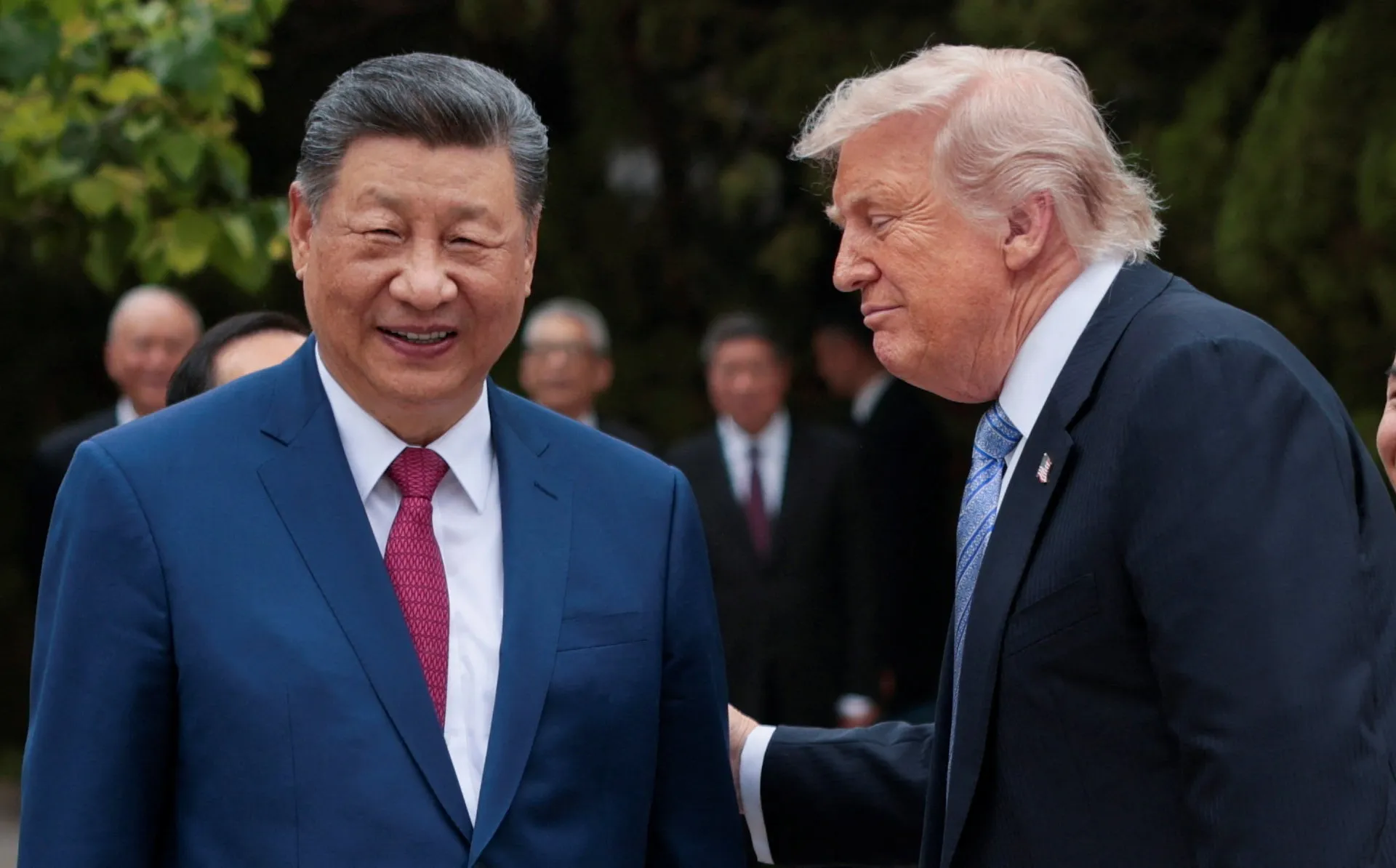
Trump visited Beijing last week to meet with Xi accompanied by a delegation of American business leaders, including the heads of Apple, Nvidia, BlackRock and Goldman Sachs.
Trump lavished praise on Xi, stating: “It’s an honour to be your friend, and the relationship between China and the USA is going to be better than ever before”.
Trump came away from the summit boasting of multiple trade deals, but Chinese statements made no mention of any such agreements. Trump also took care to publicly steer clear of Taiwan, at one point ignoring a reporter’s question about it.
But analysts say whether this sentiment is undone by his apparent openness to Taipei depends on his next move, something they say, given his erratic diplomatic overtures, can be hard to predict.
If Trump calls Lai and announces that the US will “continue to support Taiwan and provide a large arms package; all hell will break loose”, Tsang said.
However, he said, the very fact that Trump even entertained the idea of speaking with Xi about whether the United States would sell weapons to certain countries was a win for Beijing.
Any other US president “would have said it is not a subject that we can have a conversation about”, he said.
The US is Taiwan’s most important backer for providing weapons. Trump announced a weapons package worth more than $11bn last December, – the largest in history.
However, since his Beijing visit, Trump has signalled a couple of times that he may not be so supportive of Taiwanese independence.
“I’m not looking to have somebody go independent. And, you know, we’re supposed to travel 9,500 miles to fight a war. I’m not looking for that. I want them to cool down. I want China to cool down,” he told Fox News.
Taipei will not see Trump’s suggestion that he may talk to theirleader as an attempt to warm relations with the island, Sung said.
“Trumpian diplomacy can be very improvisational; think of him acting on what he thinks are his winning instincts, rather than him playing grand-strategic, three-dimensional chess.”
Taiwan will be concerned by Trump’s unpredictability, Tsang said.
“He is not anti-Taiwan…but do you trust your future in the hands of Donald Trump? Even when he loves you, he can kill you,” he said.
“I may do it. I may not do it,” Trump told Fox News on Friday.
Since his Beijing trip, he has also suggested that it is a bargaining chip with China, as the US weighs whether to approve the new arms sales package.
Lai’s government has insisted that US policy on Taiwan “remains unchanged”.
“I think we remain cautiously optimistic about arms purchases,” Taiwan Defence Minister Wellington Koo has stated.
Source: https://www.aljazeera.com/news/2026/5/21/trump-says-hell-speak-to-taiwans-leader-why-that-is-significant?traffic_source=rss
World
Trump says he’ll speak to Taiwan’s leader: Why that is significant
Article Top Ad Zone
Article Middle Ad Zone
Article Bottom Ad Zone
Original Source: www.aljazeera.com
Share
Comments
Comment system is currently disabled.