Cesar HernandezJun 1, 2026, 09:18 AM ET
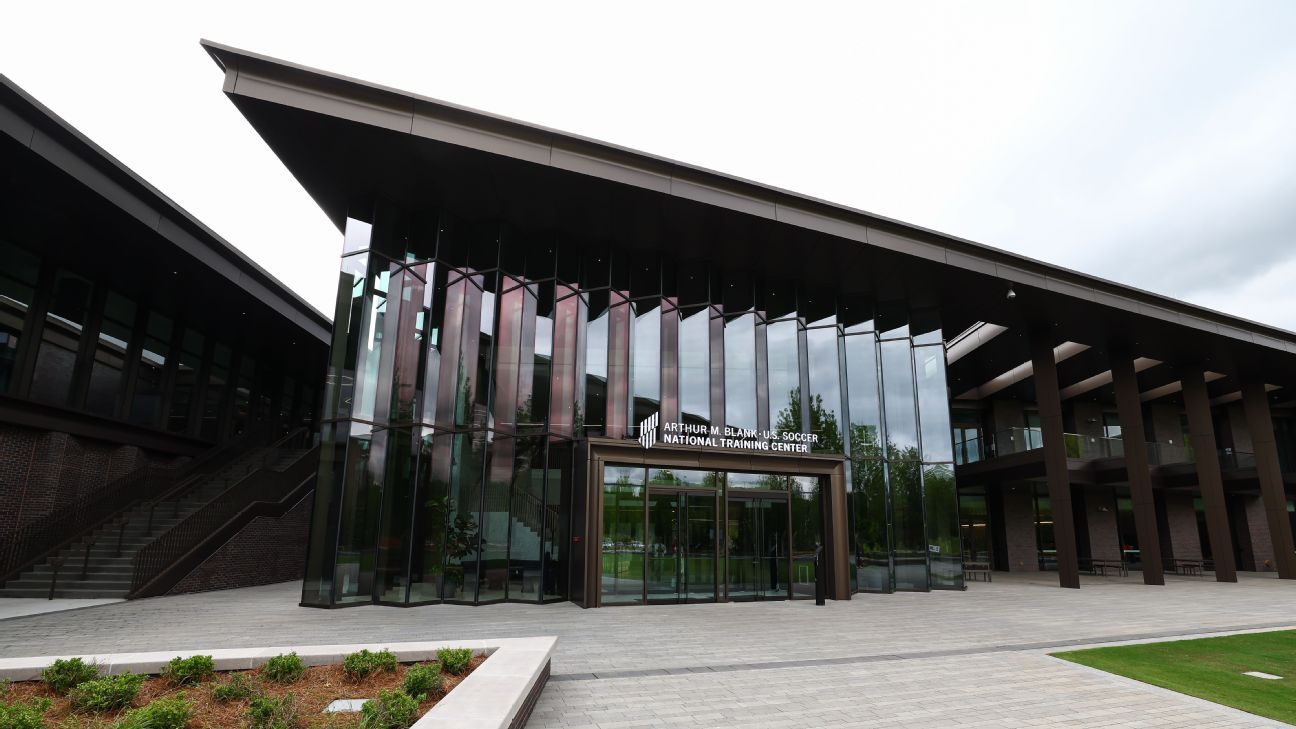
U.S. Soccer has a new home. Situated on a 200-acre site south of Atlanta, the Arthur M. Blank National Training Center officially opened its doors in early May, marking a new chapter for the country's soccer federation.
Currently hosting the U.S. men's national team as it prepares for this summer's FIFA World Cup, the NTC boasts 17 outdoor playing surfaces, 20 locker rooms, 19 meeting rooms, two indoor courts, a 10,000-square-foot gym, and more, in a space that has more than 400,000 square feet of facilities and hundreds of staff, all of it tailored to players' every need.
"It is best in the world, in my opinion," then-sporting director Matt Crocker told ESPN earlier this year, before departing the federation in April. "It's going to be pretty incredible from our national teams' perspectives, but obviously also coach education, refereeing, community usage; we want it to be the home of soccer in America."
With ambitious goals to become a "catalyst" for everyone who walks through its doors, there's much that the NTC hopes to achieve, from supporting the likes of Christian Pulisic at this World Cup, to creating opportunities and memories for local organizations that will be able to use the center.
In order to get a better sense of the facility, ESPN spoke with Crocker, among others, about the inner workings of the NTC: how it was established, what it hopes to accomplish, and notably, how it can support soccer nationally and locally.
Before the opening of the NTC, U.S. Soccer was, as Crocker put it, a "traveling circus." Players and staff would regularly rely on rented facilities to prepare for matches, and although they do have a small space in Southern California that was opened in collaboration with the LA Galaxy, its primary use is for the MLS club.
There's a similar development center in Kansas City, built within Sporting Kansas City's training grounds. The federation's former headquarters was in Chicago.
Opening up the NTC wasn't just about having a landing spot for national team players; it was also about having a true headquarters for everyone. According to U.S. Soccer, the federation will have more than 350 employees on site daily.
"All of our national coaches, all of our high-performance staff, all of our administrative staff are now based in Atlanta," said Crocker, whose successor at U.S. Soccer has yet to be named.
When researching possible sites, a few things worked in favor of Atlanta: direct flight options from a major airport nearby, an East Coast location within reach for opponents and players from abroad, and suitable year-round weather. Coupled with a $50 million donation from local NFL/MLS owner Arthur Blank, corporate sponsors (like Atlanta's Coca-Cola) and land donated by Chick-fil-A CEO Dan Cathy, ground was broken on the site in 2024.
Now open, many have marveled at the size of the new and permanent home that's much larger than their co-shared facilities in Los Angeles.
"It's a huge, huge space. We're just under 400,000 square feet under roof," said NTC general manager Tom Norton. "Even just running down the hall to grab a coffee takes a little bit."
U.S. Soccer is, of course, much more than just the senior national teams from the men's and women's programs. And while they get most of the media and fan attention, especially ahead of World Cups, they represent just two of 27 national teams that will get to utilize the NTC.
"The one key when we're talking about the soccer fields and gyms that's important to remember is now we can host more than one team at a time, so we have 20 locker rooms; we don't just have a locker room, we have 20," Norton said. "There will be soccer here almost every day."
When listing what he hoped to achieve with the NTC, Crocker first noted that he wanted "no stone unturned" when it came to a player-first approach that will provide anything that's needed for all 27 teams.
That includes the nine "extended national teams," that have been front of mind for U.S. Soccer when it came to making the NTC accessible. Some of the details noted by the federation: elevated viewing decks for wheelchairs, dedicated areas to charge chairs for power soccer, customized locker rooms and tactile audio/visual designs.
Another thing Crocker hopes to achieve is "to become almost like the Harvard of coach education and refereeing."
Along with players, coaches and referees can enroll in courses at the center. According to Crocker, the idea is to have education that will run throughout the year. Others from state associations and local teams will also be invited in.
"It gives us an opportunity to make sure that this facility is operational 365 days of the year, and whether that's through games, through training opportunities, through education opportunities," Crocker said. "We want the facility to feel like buzzy and full all the time, not just when the national teams are in."
No longer a "traveling circus," all 27 national teams, and guests, will now be under one roof.
"When you have a home, you're able to do more," Norton said. "It's just going to feel more comfortable ... which will allow us to focus more on getting better on the field and growing the game."
At the national level, the potential benefits are clear for U.S. Soccer. In addition, its impact is already felt locally.
"It really puts the spotlight on soccer in Georgia," said Neil McNab, the executive director of Atlanta's Rush Union Soccer, which runs teams for boys and girls. "It also means that the best of the best, not just in players, but coaches, referees, the brightest minds in our game, will be drawn to our area."
McNab, who said that local youth players have already been invited in for events, recently visited to help support a "soccer in schools" initiative.
"There's so much going on," he said. "If they're doing a coaching education or trying to build out some resources, they need players and coaches to go and execute, and that's what's already beginning."
Jim Walker, executive director of the Georgia State Soccer Association, highlighted that his group will get a chance to host its semiannual general meeting at the building this summer.
"We're taking advantage of that right away," he said. "It's a great opportunity for us to bring our members in to see the NTC."
Although there are no guarantees just yet, Walker also remarked on the possibility of fielding the organization's "State Cup" tournament at the new center.
"At a state association level, there may be opportunities for State Cup, there may be opportunities for [the Olympic development program], coaching education, referee training, a lot of those things that ordinarily we're doing anyway, but we're doing it at local high schools and whatnot right now," Walker said. "We've got a really cool crown jewel, so to speak, that we can host these things at."
Locally and at the national level, time will tell the true impact the NTC will make. Gauging its role in soccer development is something that will need to be measured over years, if not decades.
What does remain true, though, after just a few weeks, is the enthusiasm that's emerging from those who have seen the "crown jewel" up close.
"There's an aura around the complex," McNab said. "[You] get excited about what's still to come, because this is not the end line. This is not the finish line. This is a starting point."
Source: https://www.espn.com/soccer/story/_/id/48903308/this-starting-point-us-soccer-new-home-help-grow-game
Football
'This is a starting point': U.S. Soccer's new home...
Article Top Ad Zone
Article Middle Ad Zone
Article Bottom Ad Zone
Original Source: www.espn.com
Share
Comments
Comment system is currently disabled.