The current landscape of affordable compact sports cars in the U.S. is undergoing a significant transition as manufacturers seek to balance engaging driving dynamics with increasingly stringent efficiency standards. The segment has traditionally relied on lightweight, naturally aspirated or turbocharged internal combustion engines to keep entry prices accessible. Now, electrification emerges as a growing mechanical necessity to make cars faster and more efficient.
Despite being a popular fuel-saving measure, gasoline-electric hybridization is becoming a more noteworthy performance enhancer. Manufacturers are learning how to apply small electric motors to provide instantaneous torque fill and sharpen throttle response. This shift allows entry-level performance vehicles to maintain their competitive edge in a market where consumers are increasingly wary of rising fuel costs. In doing so, hybridization effectively bridges the gap between old-school mechanical purity and the inevitable move toward full electrification.
The current-generation Subaru BRZ remains a standout in the affordable performance sector. The brand achieves this thanks to a longstanding collaboration with Toyota that adheres to a traditional formula of mechanical simplicity and driver-centric engineering. Its accessibility is defined by a relatively low entry price of $35,860. It also gains praise for its lightweight, rear-wheel-drive chassis that prioritizes handling precision over raw, overwhelming power.
By maintaining a focus on a connected, analog driving experience and a low center of gravity, the BRZ serves a specific demographic that values engagement and track-day capability over the utilitarian features found in most modern compacts. Through 2026 thus far, Subaru has sold 1,086 units of the BRZ in the U.S. While acknowledging its position as a dedicated enthusiast vehicle rather than a high-volume seller, there is a front-wheel-drive newcomer that has outperformed Subaru's champion in terms of sales.
Over the last five years, Honda has pivoted its U.S. strategy to place hybridization at the forefront of its business model. The Japanese brand treats this technology as a critical bridge toward long-term electrification. This shift in priority has fundamentally reshaped its lineup, with the brand systematically introducing advanced dual-motor hybrid systems. You'll find this option across its most popular models, in an attempt to meet consumer demand for both efficiency and daily performance.
This strategic focus has yielded significant results in sales performance. Based on last year's report, electrified variants accounted for nearly a third of the brand's total U.S. volume. This contributes to its best annual sales performance since 2021. In the first half of 2026, this momentum has accelerated, with hybrid models frequently making up more than 50 percent of the sales mix for core products. Honda has successfully stabilized its market share and achieved record-breaking sales months. It does so despite broader industry volatility and shifting regulatory landscapes.
The Honda Prelude's comeback may be controversial, but its return to market has more meaning than you may assume.
As of April 2026, Honda reports that it has sold 1,152 units of the Prelude this year so far, 357 of which were sold in April. This makes the hybrid sports coupe its lowest-selling model in its catalog by far, but it's still a respectable figure considering its relatively high MSRP. It's also interesting, considering how many people criticized its low power output from the hybrid drivetrain.
For reference, Honda's sales report for April 2026 confirms it has sold 474,236 units at this point in 2026. This means that the Prelude contributes to 0.24 percent of its total volume. The Japanese brand has sold 42,677 units of the CR-V and 25,040 units of the Civic year-on-end. Low sales volume is typical for compact sports cars like the 2026 Honda Prelude.
Despite its $42,000 MSRP, fans favor the Prelude for its incredibly comprehensive standard specification. The 2+2 cabin layout prioritizes advanced features, with a refined and driver-focused cockpit approach. Honda designed this for an engaging compact grand touring experience. Key features include a set of ultra-premium front sport seats that combine soft-touch leather with racing-inspired integrated head restraints and asymmetrical bolstering.
Honda also does not skimp on technological features in the 2026 Prelude. The cabin features a 10.2-inch digital instrument cluster and a nine-inch HD touchscreen with wireless Apple CarPlay, Android Auto, and Google Built-In, along with a wireless smartphone charger as standard. The exclusive digital cluster displays configurable graphics that include a large tachometer and detailed performance data.
The 2026 Honda Prelude blends hybrid performance, sharp design, advanced tech, and a driver-focused cabin into a modern, engaging sports coupe.
Beneath the hood sits the brand's naturally aspirated Atkinson-cycle 2.0-liter four-cylinder engine, producing 141 horsepower at 6,000 RPM and 134 pound-feet at 4,500 RPM. Honda connects this to a pair of electric motors producing 181 horsepower and 232 pound-feet. Combined, the system generates 200 horsepower. Honda also includes four driving modes, consisting of Comfort, GT, Sport, and Individual.
Honda doesn't disclose performance abilities, but real-world tests reveal that it can cover a zero to 60 MPH sprint in 7.2 seconds at best. Naturally, this is not what you'd expect from a performance vehicle, but the Prelude's excitement comes from its handling prowess, which many have applauded.
According to the EPA, the 2026 Prelude is one of the most efficient HEVs ever introduced to the U.S. It consumes an estimated 44/46/41 MPG on the city/highway/combined cycle, and covers 466 miles of range from its 10.6-gallon tank. You can expect to save $4,000 in fuel costs over five years compared to the average new vehicle currently sold in the U.S. It will cost you $1,350 in fuel every year, $2.27 to drive 25 miles, and $42 to fill the tank up.
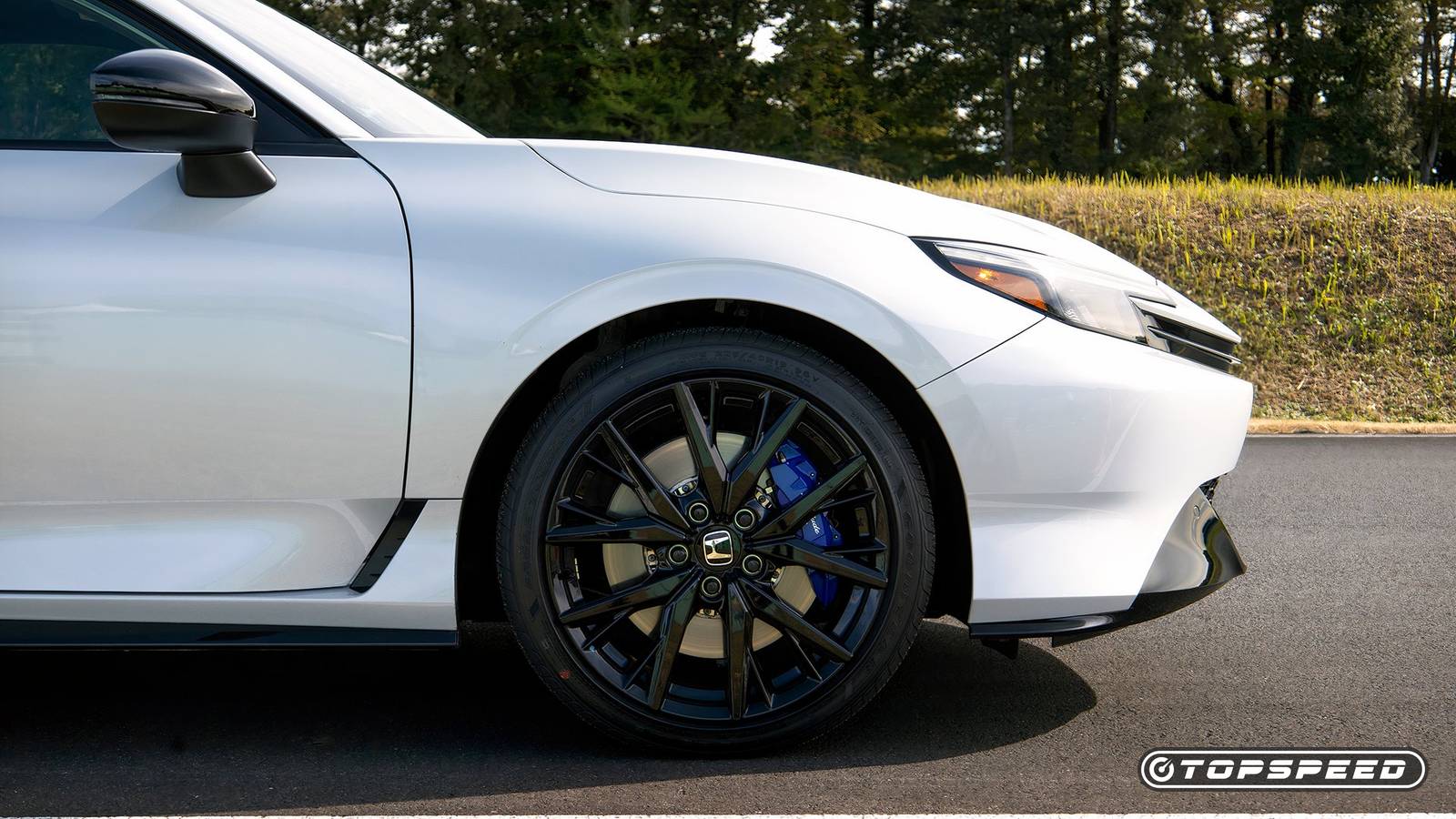
The 2026 Honda Prelude sits on the brand's dual-axis strut front and multilink rear suspension, with some parts sourced from the Honda Civic Type R. Additionally, it inherits the Type R's adaptive dampers, Brembo four-piston aluminum brakes, and an innovative Honda S+ Shift system for the direct-drive eCVT.
The Prelude's eCVT has been the biggest criticism from fans. Thanks to this system, the compact coupe features a responsive and engaging shifting simulation. Honda applies a system that translates virtual rev-matched downshifts in S+ mode and enhanced engine sounds. There are some owners that question why Honda went through the effort of paying so much attention to the chassis without a drivetrain to match. However, this does leave some room for a more powerful flagship to be added, possibly bearing the SiR badge.
While not in the same segment, the Prelude's Japanese counterpart remains the HEV standard in the U.S.
Honda’s aerodynamic design integrates a large front under spoiler and a flat rear liftgate edge, delivering balanced downforce at speed and improving stability without compromising style. A set of 19-inch machine-finished Berlina Black wheels accentuates the profile, while the wide front and rear stance is enhanced by wing-like daytime running lights and the double horizontal lines of its full-width taillights that emphasize its road presence.
Honda's front-end design is precise, with a black chrome grille louver and subtle blue accents along the lower front and rear fascias that highlight its low and planted look. The same blue hue appears on the Brembo front brake calipers. Flush door handles and an antenna embedded in the liftback glass maintain clean, flowing lines, while laser brazing along the roof eliminates the need for roof molding to ensure a smooth finish.
In 2001, Honda decided that it was finally time to put the Prelude name to rest, with no plans to reintroduce a new-generation model. The Prelude had long been an aspirational two-door coupe for those wanting an attractive and engaging compact grand tourer at an affordable price with impressive long-term reliability. Ultimately, the decision to scrap the model line was based on its overall poor market performance.
Fast-forward to today, and we see that the Japanese brand brings the badge back, while maintaining a lot of the original model's principles. It does so while integrating the best of its modern technologies. The 2026 Honda Prelude sources its chassis and drivetrain from the current-generation Civic Hybrid, but with a couple of fine-tuned tweaks to make it a bit more aspirational. If anything, it's more of a spiritual successor to the first-generation Honda Insight, which in turn was a tribute to the Honda CR-X.
Found an error? Send it info@www.topspeed.com so it can be corrected.
Source: https://www.topspeed.com/hybrid-sports-car-outselling-subaru-brz/
Cars
The New Hybrid Sports Car That's Already Outselling The Subaru BRZ
Article Top Ad Zone
Article Middle Ad Zone
Article Bottom Ad Zone
Original Source: www.topspeed.com
Share
Comments
Comment system is currently disabled.