The 90s were a decade defined by color and speed. Motorcycles were faster than ever before, and whichever manufacturer was able to make the fastest superbike didn’t just claim bragging rights; it translated into actual sales. This is something the Japanese manufacturers in particular took to.
It comes as no surprise that this list is dominated by some of the fastest Japanese sport bikes ever built. Naturally, there are a couple of exceptions to this rule, but it was truly a decade that belonged to the superbike. All were emblazoned with the vibrant colors that grabbed attention everywhere they went.
Buying a used motorcycle always has an element of risk attached, so please do your research and proceed with caution. The motorcycles on this list go from oldest to newest.
From the GS to the 916, here are the bikes that defined the '90s.
The Ninja ZX-11 was the fastest production motorcycle in the world from 1989 to 1995 and was very much the bike to beat. As a result, it sold in large numbers, so finding one won’t be particularly difficult. Finding one that is still in respectable condition will be a little more challenging, but well worth the effort. Even by modern standards, this is still an astonishingly fast motorcycle.
For cruisers, chrome was the “vibrant color” of choice back in the 90s. While the chrome-clad metric bikes that proved so popular throughout the decade might not be for everyone, the Fat Boy couldn't possibly be more different. It isn’t just a motorcycling icon, either; it is a genuine icon of 90s pop culture. The moment Schwarzenegger threw a leg over one of these bikes in Terminator 2, lightning was effectively captured in a bottle. Whatever Harley paid for that bit of product placement was money well spent.
The NR750 was a design and engineering masterclass. Developed mostly for Honda’s endurance racing team, this was never meant to sell in large numbers and is exceedingly rare today. Its engine might be listed as a V4, but with its innovative oval pistons, it acts more like a V8 in practice. This was one of Honda’s many rule-bending racing experiments, but its design was even more revolutionary, and it left a lasting impression on one Massimo Tamburini.
The designer who shaped Bimota, Cagiva, Ducati and MV Agusta motorcycles
While there were several incredible race bikes developed through the 90s – the aforementioned NR was a homologation special, not a dedicated race bike – it is the one that was built in New Zealand that really stands out. What makes the Britten so unique is the fact that everything was designed and built in-house, from the engine casings to the suspension. Everything was built by hand, by a small, dedicated team, and the bike wasn’t just there to make up the numbers; it was competitive.
Although there were some amazing sport bikes that came before the original FireBlade, this is the bike that really kick-started the liter-class sport bike arms race. By all accounts, this was supposed to be a 750cc bike, at least in terms of weight. With this particular model not needing to adhere to any race regulations, Honda made the call to increase the displacement in an effort to get one over the competition. Suffice it to say this strategy worked. Original 1992 bikes are hard to come by, but the 1994 model is more or less the same and can be found for a lot less.
Anyone who grew up in the 90s or 00s will be all too familiar with this eye-catching livery. The KDX 200 was an enormously popular model, and pretty much everyone into off-road riding either owned one at one time or another, or had a friend who owned one. Today, these bikes are getting harder to find – at least in running condition – but if you are after a little two-stroke dirt bike, this icon of the 90s is a great option.
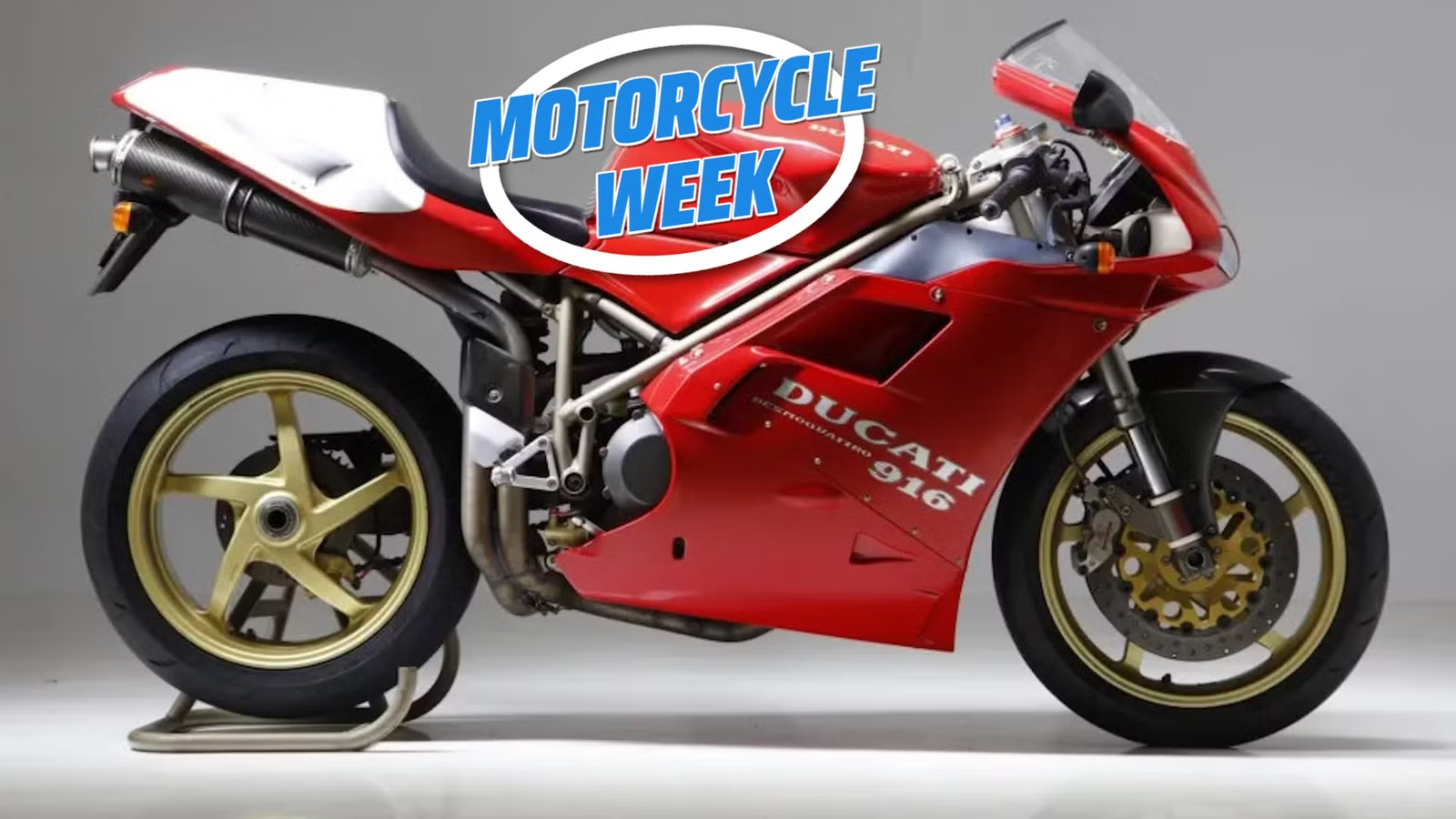
The 916 isn’t just the most iconic bike to come out of the 90s; it is one of the most iconic motorcycles ever. While the performance certainly was right up there, it was its design that effectively reshaped the entire motorcycle industry. Remnants of this bit of design work can still be found everywhere today. While it might be true that the NR750 served as inspiration for Tamburini when he penned this masterpiece, there is no denying the fact that he added something. A little Italian flair, if you will.
The world's most beautiful motorcycle is also one of the most influential
Honda had grown tired of Kawasaki’s dominance. The “Blackbird” was named after the jet, and it certainly lived up to its billing. Clocking in an official run of 177 MPH was good enough to take the Honda to the summit. Just like the aforementioned Ninja, Honda flooded the market with these bikes, and finding one is not particularly difficult. Today, most owners use these bikes as speedy sport tourers thanks to how reliable and comfortable they are.
While the other three Japanese powerhouses focused on top speed, Yamaha continued to invest in all forms of motorsport. This paid dividends in the development of the original YZF-R1. It was as light and nimble as contemporary supersports, yet made almost 150 horsepower. It proved to be a game-changing motorcycle, and while the FireBlade might have been the first bike to break away from the 750cc convention, the R1 firmly established the liter-class as the new benchmark for performance motorcycles.
Technically, the Hayabusa only really became an icon in the 00s, but it came out in the 90s. Its design certainly made it stand out, with aerodynamic efficiency taking center stage. Underneath its plastics, the engineering wasn’t particularly revolutionary; it just had a massive inline-four, which made more than 170 horsepower. It was its slippery shape that made it fast, faster than anything that had come before.
Found an error? Send it info@www.topspeed.com so it can be corrected.
Source: https://www.topspeed.com/most-iconic-bikes-90s/
Cars
The Most Iconic Bikes From The 90s
Article Top Ad Zone
Article Middle Ad Zone
Article Bottom Ad Zone
Original Source: www.topspeed.com
Share
Comments
Comment system is currently disabled.