Modern performance motorcycles are getting absurdly specialized. Naked bikes now make superbike power, electronics packages are more complicated than ever, and even middleweight machines are chasing racetrack credibility. That’s great for riders who want maximum performance all the time, but a growing number of people are starting to appreciate motorcycles that prioritize effortless torque, relaxed ergonomics, and real-world usability instead of outright intensity.
There's also something refreshing about motorcycles that don't constantly demand your full attention to feel enjoyable. Not every ride needs to feel like a qualifying lap or a fight against aggressive ergonomics and razor-sharp throttle response. For many riders, the ideal street bike is one that feels powerful and engaging without becoming exhausting, especially during long commutes, weekend rides, or everyday errands where comfort and character matter far more than outright speed.
There’s a reason torque-heavy motorcycles are making a comeback. Riders are realizing that usable power matters more than massive horsepower figures you rarely access on public roads. A motorcycle that pulls hard from low RPM often ends up being more enjoyable in everyday riding than one that constantly demands aggressive inputs and high revs to feel exciting.
That shift in priorities has also changed the way riders define performance. Instant acceleration, smooth throttle response, and effortless passing power have become more valuable than chasing top-end numbers that only really matter on a racetrack. Bikes that deliver strong low- and midrange torque simply feel more rewarding in normal riding conditions, which explains why muscle bikes and torque-focused machines continue attracting such a loyal following.
Modern muscle bikes thrive because they make riding feel fast and engaging without becoming physically demanding. You don't need to chase peak RPM or constantly work the gearbox to access performance. Broad torque delivery, stable chassis tuning, and relaxed ergonomics simply work better for the kinds of roads most riders actually use every day.
The Harley-Davidson in context here has not only become more powerful and luxurious, but also cheaper in 2026
Today’s riders expect more than just a large engine and aggressive styling. Big, muscular cruisers now need to balance comfort, technology, handling, and personality in ways older cruisers never really attempted. Riders still want visual drama and character, but they also expect modern suspension, proper braking performance, rider aids, and enough practicality to live with daily.
That balance is what separates modern muscle bikes from traditional cruisers. Riders want motorcycles that feel relaxed without becoming sluggish, and powerful without becoming intimidating. The ideal formula combines easygoing ergonomics with enough performance and attitude to keep the experience entertaining long after the novelty wears off.
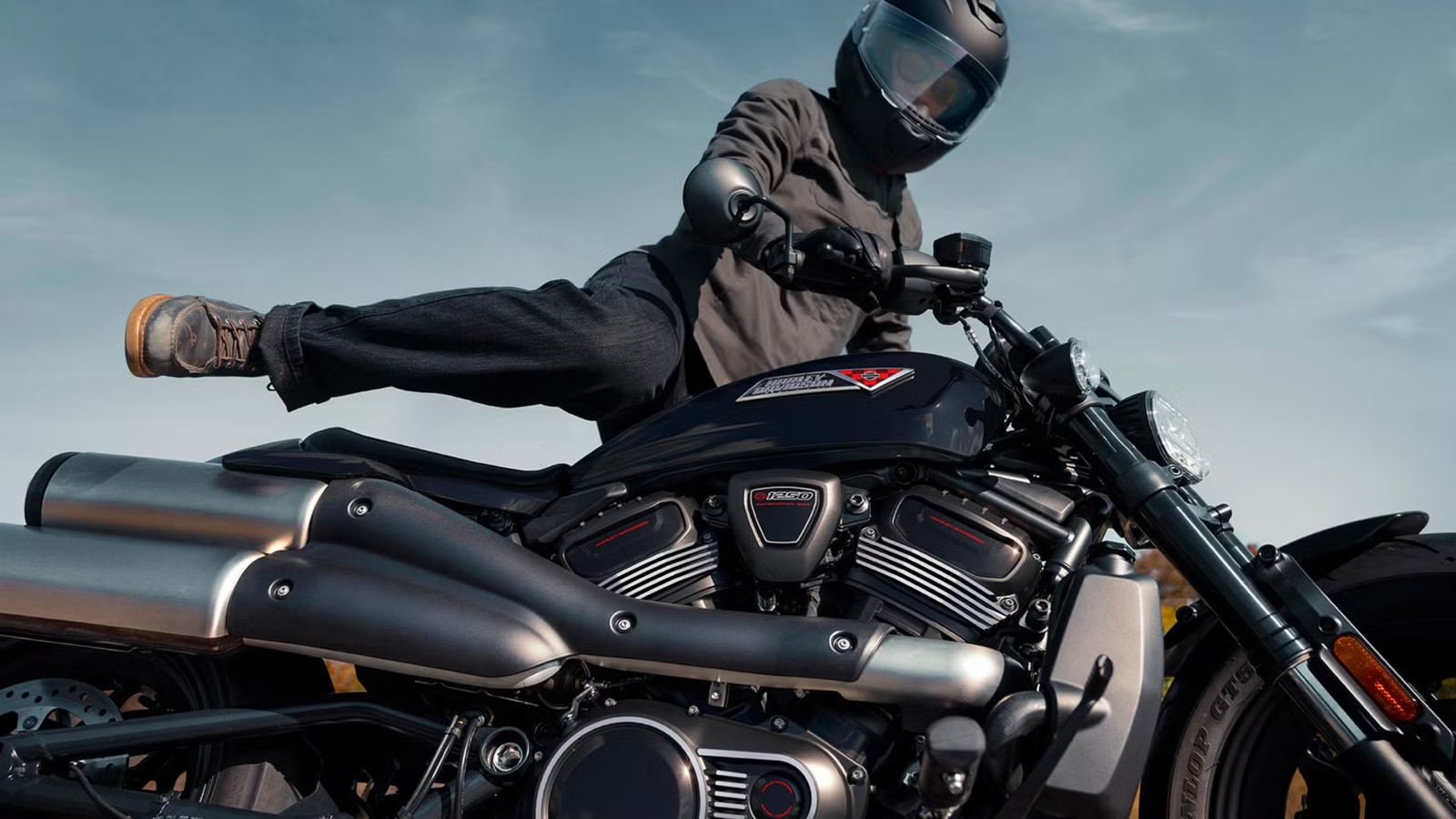
That’s exactly where the Harley-Davidson Sportster S fits in. The motorcycle looks radically different from older Sportsters, with its low stance, fat tires, high-mounted exhaust, and muscular proportions. More importantly, it represents Harley-Davidson’s attempt to modernize the muscle bike formula without abandoning the laid-back personality the brand is known for.
Unlike traditional cruisers that lean heavily into nostalgia, the Harley-Davidson Sportster S was clearly designed to attract riders who still want classic V-twin character but expect modern performance and technology underneath it. The styling is aggressive and contemporary, yet the bike still carries the relaxed attitude that has defined Harley-Davidson muscle bikes for decades.
The biggest shift came from the Revolution Max 1250T engine. The liquid-cooled 1,252cc V-twin produces 121 horsepower and 93 lb-ft of torque, paired with a six-speed transmission and variable valve timing. Unlike older Sportster engines, this platform was designed around modern performance expectations, helping the bike feel significantly more athletic while still retaining strong low-end torque and relaxed street manners.
1,252cc liquid-cooled Revolution Max 1250T 60-degree V-twin
121 horsepower and 93 pound-feet of torque
Harley-Davidson paired the engine with a lightweight chassis, fully adjustable suspension, Brembo brakes, selectable ride modes, lean-sensitive rider aids, cruise control, and a four-inch TFT display with Bluetooth connectivity and navigation support. Altogether, it pushed the Sportster line into territory that older Harley-Davidson cruisers never really occupied.
Despite the performance upgrades, the Sportster S still maintains a relaxed riding position with forward controls, a low 29.6-inch seat height, and a wide handlebar setup. Harley-Davidson clearly wanted the motorcycle to remain approachable and comfortable instead of becoming a pure performance machine. That balance between aggression and accessibility is a major part of what gives the bike its appeal.
Tubular steel trellis frame with the engine as a stressed member
43 mm fully adjustable inverted front fork; fully adjustable piggyback rear monoshock
17-inch front and rear wheels; 160/70 front tire and 180/70 rear tire
It also helps the Sportster S appeal to a much broader range of riders than many modern performance motorcycles. The ergonomics are relaxed enough for casual cruising and daily riding, but the motorcycle still looks and feels muscular enough to stand apart from more traditional middleweight cruisers. That combination of comfort, presence, and usable performance is a big reason why the bike occupies such a unique space in Harley-Davidson’s lineup.
Harley’s Nightster Special balances V‑Twin character with comfort and tech, redefining what a budget modern cruiser should be.
The Sportster S also stands apart because it doesn't follow the traditional Harley-Davidson cruiser formula mechanically. The chassis is noticeably stiffer and more performance-focused, while the suspension and braking components were designed with modern handling expectations in mind. Even the overall riding position and weight distribution feel more compact and athletic than older cruisers from the brand.
In many ways, the Sportster S behaves more like a power naked bike wrapped in muscle cruiser styling. That’s what makes it such an unusual motorcycle within Harley-Davidson’s lineup. It isn’t trying to recreate the past. Instead, it reinterprets the Sportster concept for riders who still want muscle bike character but expect modern engineering underneath it.
The Sportster S starts at $15,999 in the US market, placing it in a strange middle ground between traditional cruisers, performance nakeds, and premium muscle bikes. It doesn’t directly compete with Harley-Davidson’s touring-focused cruisers, but it also doesn’t fit neatly alongside European hyper nakeds or sportbikes either.
That’s ultimately what makes the Sportster S interesting. It blends relaxed ergonomics, strong real-world performance, modern technology, and unmistakable muscle bike styling into something that doesn’t cleanly fit into a single category. At a time when so many motorcycles are becoming increasingly specialized, the Sportster S succeeds by doing the exact opposite.
Instead of focusing on outright supremacy in one area, Harley-Davidson built a motorcycle that prioritizes balance. The Sportster S can cruise comfortably, accelerate aggressively, handle modern roads confidently, and still deliver the visual drama people expect from a muscle bike. That versatility is what gives it staying power in a market filled with increasingly niche motorcycles.
Found an error? Send it info@www.topspeed.com so it can be corrected.
Source: https://www.topspeed.com/laid-back-muscle-bike-still-means-business/
Cars
The Laid-Back Muscle Bike That Still Means Business
Article Top Ad Zone
Article Middle Ad Zone
Article Bottom Ad Zone
Original Source: www.topspeed.com
Share
Comments
Comment system is currently disabled.