Not every motorcycle that feels comfortable for 30 minutes still feels comfortable after 300 miles on the interstate. Highway fatigue has a way of creeping up on riders through constant wind pressure, steering corrections, vibration, weather exposure, and the mental strain of managing it all hour after hour. Some bikes leave you feeling surprisingly fresh at the end of a long day of travel, while others can feel exhausting long before the fuel light comes on.
Follow and Like top authors, topics, and trends
Browse with fewer ads across the site
Personalize your profile to showcase your activity
Get a content feed tailored to your interests
By creating an account, you agree to our Terms of Use and Privacy Policy. You also agree to receive our newsletters; you can unsubscribe any time.
*Required: 8 chars, 1 capital letter, 1 number
Effortless highway riding has very little to do with outright speed. What really matters is how much work the motorcycle demands from the rider mile after mile. The best long-range touring bikes reduce physical strain, mental fatigue, and exposure to the elements so effectively that the interstate stops feeling like a fight against wind, traffic, and vibration.
That starts with the chassis itself. Harley-Davidson's full touring platform delivers a level of planted stability that Softail-based cruisers simply can't match at highway speed. Steering geometry plays a major role here. Generous rake and trail figures calm the steering response and help the bike track straight through crosswinds and turbulent air from surrounding traffic. The less the motorcycle wanders, the less the rider has to constantly make subconscious steering corrections, and that reduction in rider fatigue becomes increasingly noticeable after several hours in the saddle.
Wind management matters just as much. Traditional machines like the Harley-Davidson Road King rely on a large windshield instead of a full fairing, and while that setup offers decent protection, it still leaves the rider far more exposed to fatigue-inducing wind pressure at interstate speeds. Lower fairings also matter more than many riders realize. Without them, cold air, rain, and road spray constantly hammer the rider's legs and lower body, gradually turning a long highway ride into an exhausting one.
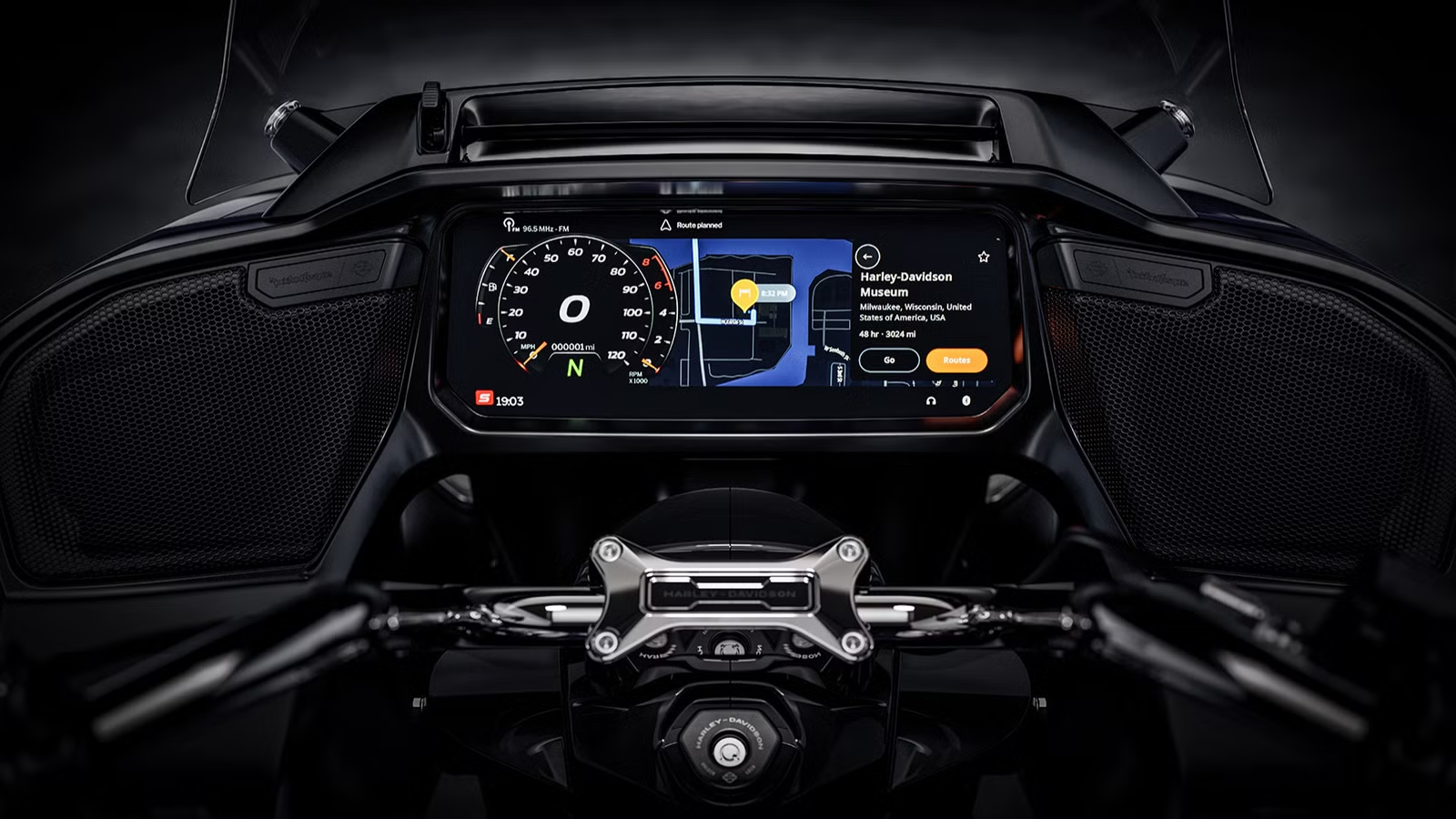
The motorcycle in context is Harley's flagship CVO tourer with an over $50,000 MSRP
If the goal is covering interstate miles with the least amount of rider effort, the Harley-Davidson Road Glide Limited stands above the rest of Harley’s current lineup. This is Harley-Davidson's most planted long-range platform, built to stay composed when the miles, wind, and traffic pressure start piling up. Despite its size, the bike carries its weight low with a 29-inch unladen seat height, while adjustable seating positions and optional suspension tuning allow riders to tailor the ergonomics to their build and comfort preferences.
The chassis geometry plays a major role in the Road Glide Limited's relaxed highway demeanor. A 26-degree steering head angle works with a triple-tree offset that effectively increases the rake to 29.25 degrees, while 6.8 inches of trail helps the bike hold a straight line with remarkably little rider input. Crosswinds, uneven pavement, and the pressure waves from passing tractor-trailers do far less to upset the chassis than they do on lighter or less stable motorcycles. After several hours on the interstate, that reduction in steering corrections translates directly into reduced rider fatigue.
The frame-mounted sharknose fairing is another major reason the Road Glide Limited feels so calm at speed. Unlike Harley's traditional batwing fairings that mount directly to the forks, such as on the Street Glide, the Road Glide's fairing stays fixed to the frame itself. That means the wind pressure hitting the fairing is isolated from the steering system rather than constantly influencing it. The difference becomes especially noticeable in gusty conditions or during long highway stretches where smaller steering inputs and reduced bar pressure help the motorcycle feel settled, predictable, and far less demanding to ride.
The Harley-Davidson Road Glide Limited backs up its relaxed highway manners with an equally effortless powertrain. Its Milwaukee-Eight 117 V-Twin is not about chasing an impressive top-speed number. Instead, it delivers the kind of low-end torque and immediate roll-on acceleration that makes highway riding feel easy and unhurried. Whether merging into fast-moving traffic or passing slower vehicles on a two-lane road, the engine responds with very little drama or strain, reducing how much thought and effort the rider has to devote to every maneuver.
That easygoing character extends to the transmission as well. Harley-Davidson's slip-and-assist clutch reduces lever effort at the left hand while also helping smooth out aggressive downshifts and rapid deceleration. The result is a motorcycle that remains composed during sudden speed changes instead of feeling unsettled or nervous. Over the course of a long travel day, those small reductions in physical and mental workload add up in a meaningful way.
Long-distance touring rarely involves just the rider alone, and the Limited package improves comfort for the passenger just as effectively. The wide rear seat and wraparound backrest provide genuine long-haul support rather than merely functioning as cosmetic additions. After several hours on the interstate, passenger comfort becomes a major factor in how enjoyable the ride remains for everyone on board.
Harley-Davidson's rider safety electronics suite reinforces the same effortless character. Systems that help manage traction, braking, and stability reduce the stress associated with sudden weather changes, uneven pavement, or emergency maneuvers. Most riders will barely notice the electronics working, which is exactly the point. Over hundreds of highway miles, the systems help the Road Glide Limited feel calmer, more predictable, and less demanding to ride.
From touring models to cruisers, all of these Harley-Davidson bikes are built to last.
The 2026 Harley-Davidson Road Glide Limited stands apart because it approaches highway comfort differently than most motorcycles. Instead of relying solely on a plush seat or a big windshield, it reduces the constant stream of small physical and mental demands that gradually wear riders down over the course of a long day. The stable touring chassis, generous rake and trail figures, and frame-mounted sharknose fairing all work together to keep the motorcycle calm and composed at interstate speed, even in turbulent air and crosswinds that can make other bikes feel busy and tiring.
That same philosophy carries through the rest of the machine. The Milwaukee-Eight 117 delivers easy roll-on power without feeling strained, the clutch and transmission reduce rider effort during constant speed changes, and the passenger accommodations make long-distance travel more enjoyable for everyone onboard. Even the electronics suite contributes by quietly reducing stress in poor traction or emergency situations. What ultimately makes the Road Glide Limited feel effortless is how little attention it demands from the rider once the miles start piling up. Instead of fighting the motorcycle, you simply settle into the ride.
Found an error? Send it info@www.topspeed.com so it can be corrected.
Source: Harley-Davidson (Data is supported by experience as a certified motorcycle mechanic trained across the Big Four and Harley-Davidson, adding practical insight into reliability trends, service intervals, ownership patterns, and long-term durability.)
Source: https://www.topspeed.com/harley-makes-highway-miles-effortless/
Cars
The Harley That Makes Highway Miles Feel Effortless
Article Top Ad Zone
Article Middle Ad Zone
Article Bottom Ad Zone
Original Source: www.topspeed.com
Share
Comments
Comment system is currently disabled.