Two people ill with meningitis in Reading have been confirmed as pupils at two schools.
The students - one from Reading Blue Coat School and the other at Highdown Secondary School and Sixth Form - are receiving treatment, the UK Health Security Agency (UKHSA) said.
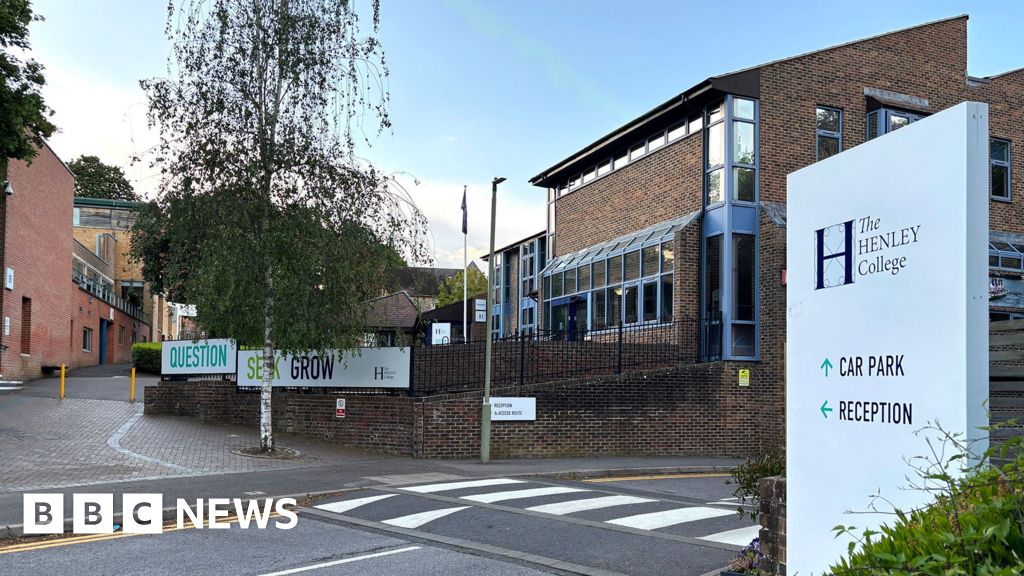
The UKHSA announced yesterday that a sixth-form pupil at Henley College in Oxfordshire had died earlier this week - and that it had identified a social network that connected the three young people.
Close contacts linked to all three are being offered antibiotics as a precaution.
In a statement, Henley College said its "thoughts and sincere condolences are with the student's family and friends at this extremely difficult time".
"We are supporting those affected within our college community and are following the advice and guidance given by the UK Health Security Agency," it added.
"Out of respect for the family, we will not be providing further detail at this time."
The UKHSA said it had identified a social network connecting the three cases but has not given fuller details on what links them.
It said one case had been confirmed as Meningitis B (MenB) and it was awaiting further testing results.
It confirmed the case is not the same strain as MenB outbreaks earlier this year.
Two months ago, two people died of MenB in Kent, linked to a nightclub in Canterbury, and in April, three young people contracted meningitis in Dorset.
The agency said it was sharing information about the infection with students and parents at all affected schools. It added the risk to the wider public was low.
Dr Shamez Ladhani, consultant epidemiologist at the UKHSA, told the BBC it was "really unfortunate" to have had three separate outbreaks in such a short space of time.
"This is a very rare disease but when it strikes it can be very lethal," Ladhani said.
He said the picture in Reading was an "evolving situation".
"Just like Kent was, just like Dorset... it is difficult to know where it is going to go from here," he said.
"Hopefully it will settle down. At the moment, every indication is that there is no increased risk to any of the students in Reading, but the situation is evolving and if that changes we will take action if needed."
Ladhani told BBC Radio 4's Today programme: "We have the strain from one of the three cases [in Reading] and we know that it is completely distinct to the one that caused the outbreak in Kent and the one that caused the outbreak in Dorset.
"We have identified a social network where these three are connected and we are almost certain that this is going to be the same strain.
"The fact that they have the infection means that we have the same preventative measure and will try and identify the contacts and protect them with antibiotics and vaccines."
There are about 300 to 400 cases of meningococcal disease diagnosed in England every year.
It is most common in babies, young children, teenagers, and young adults.
Meningitis symptoms can develop suddenly - and can include:
a rash that doesn't fade when pressed with a glass
The UKHSA said young people should check they are up to date with vaccinations, including the MenACWY vaccine offered to pupils in Years 9 and 10.
It remains free on the NHS for people until the age of 25 but does not protect against all strains of meningitis.
The UKHSA said other strains, like MenB, can circulate among young people.
Get our flagship newsletter with all the headlines you need to start the day. Sign up here.
Source: https://www.bbc.com/news/articles/ce8p6m4r0p3o?at_medium=RSS&at_campaign=rss
Tech
Meningitis cases in Reading are pupils at two schools, UKHSA says
Article Top Ad Zone
Article Middle Ad Zone
Article Bottom Ad Zone
Original Source: www.bbc.com
Share
Comments
Comment system is currently disabled.