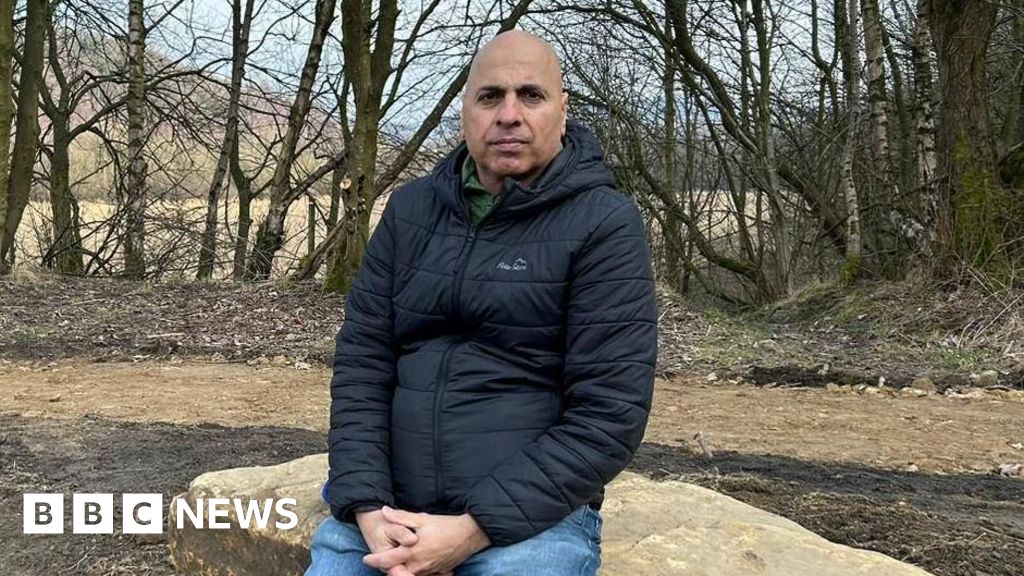
In the hours after he was re-elected, councillor Shazad Fazal scrolled through the messages he had been sent on Facebook.
Several were congratulatory - he's a popular figure in the Park ward of Calderdale, West Yorkshire, having served there for Labour since 2021.
But there were also more than 200 posts containing vile abuse, including branding him a paedophile and a terrorist, with another asking how many women and children he had sexually assaulted.
The Halifax-born politician was also told to "get out of the UK", "speak English" and another poster said he was a "cancer" who needed to be deported.
"I have been involved in politics since the age of 17 and I have never seen anything like this, not in any of my previous elections," Fazal told the BBC.
Since outing the trolls on his page - who were mainly male but included some women - he has had a wave of support from residents, fellow councillors of different parties and Halifax MP Kate Dearden, who said she was "absolutely appalled".
But Fazal's is not an isolated experience. Councillors of all parties and backgrounds have reported a significant increase in the abuse they have faced both in person and online, with last week's English local elections a tipping point for many.
Earlier this week, councillor Yvonne Gagen said she was stepping down from leading West Lancashire Council, because politics had become "toxic".
"Politics has changed and become quite nasty. I've been spat at in a shop and called a traitor," the Labour councillor said.
"I've been a councillor for 16 years. I don't want to leave local politics, but I don't like the environment any more."
Nosheen Khalid, an independent councillor in Birmingham, said cyberbullies created AI-generated images of her naked, semi-naked and taking her hijab off, all during her successful campaign to win her Alum Rock seat.
"The online abuse was just completely out of this world," she said, adding she was called the P-word as soon as she started canvassing.
"It was the fact that I was a Muslim, attacking my faith, attacking me being a woman."
At a meeting this week, councillors in Portsmouth discussed the abuse they had faced in recent weeks.
Pregnant Charlotte Gerada, leader of the local Labour party, said she had been sworn at and called "Labour scum" by a man, while leaving a branch of Tesco. Police and the store are investigating.
She argued Reform UK was contributing to a culture where "freedom of speech" means abuse had become regarded as acceptable.
But the party's George Madgwich said Reform members had also reported "an incredibly large amount of abuse online and in person".
One had a threat posted through their front door, others have been "physically chased down the street" and their loved ones had also been targeted.
"No matter what your beliefs, you should be able to do your role as a councillor without abuse from the wider public and people should be able to debate without overstepping boundaries," Madgwich said.
Mike Bird was the Conservative leader of Walsall Council until last Friday, when Reform UK romped to victory.
Before losing his seat by just seven votes, he said it had been the "worst election he'd ever fought" and even had to contact police over abusive comments he had received online.
Now settling into life without a position on the council after 46 years, he said it was his views over the controversial closure of Walsall's historic Leather Museum that fuelled his harshest critic.
"It became a personal vendetta and he accused me of all sorts," he said, adding he never responds to abuse on social media.
"It really upsets me and my family – everyone reads it and the questions are put to my daughter and my granddaughter.
"One of the biggest issues in being an elected member is people think you are public property. Social media and politics is brutal."
The Local Government Association's (LGA) Debate Not Hate survey in 2025 found increasing numbers of councillors were being exposed to "high volumes of vitriolic abuse and personal attacks".
The abuse, it said, was "pushing them out of public life and creating a negative effect on democratic participation".
Dr Charlotte Galpin, associate professor in German and European politics at the University of Birmingham, said abuse of politicians had intensified since the Brexit vote in 2016.
She said the vote for the UK to leave Europe, coincided with a growing toxic, aggressive and hyper-masculine discourse that has spread into local politics.
"This behaviour is sanctioned at political level, with the use of aggressive and violent language," she said.
Newspapers and legacy media also played their part in whipping up outrage by inviting comments on negative articles about politicians, Galpin added, which in turn created a norm in social media.
"The legacy media needs those clicks - this means that all of this abuse is monetised," she said.
Galpin's research found that all people in public life were at risk of abuse - but that it was black and ethnic minority groups that faced the worst and, of those, women endured the most "deeply dehumanising" abuse.
An LGA spokesman said councillors expected scrutiny and robust challenge, but "behaviours directed at elected politicians and candidates that cross into abuse, harassment and intimidation, which have no place in our democracy, are becoming a part of public life for many".
New measures had been introduced, including legislation to better protect councillors' home addresses and police forces providing safety advice to elected officials, but more needed to be done, he said.
"We have called on the government to take a much more co-ordinated approach across Whitehall to handle the personal and online abuse that councillors face... and establish consistency of approach in investigating and prosecuting offences against those in public office."
Back in Calderdale, Fazal said there had been a "significant rise in anti-Muslim sentiment and Islamophobia across the country" since Reform grew in popularity.
"The language being used in politics and on social media has consequences," he said.
"When people in positions of influence use divisive and inflammatory language, it gives others permission to behave in the same way."
The spokesman for Reform in Yorkshire has been contacted for comment.
Fazal also called on politicians of all parties to call abuse out clearly and consistently. He also urged social media platforms to take swift action over abusive messages.
"Over 200 abusive comments were posted on my page, and the reporting mechanisms are simply not good enough," he said.
Meta said abusive comments on the councillor's page had been removed, "meaning they have already been actioned by our systems".
A spokeswoman said: "We do not allow hateful conduct on Facebook and Instagram and we remove any language that incites or facilitates serious violence, disable accounts, and work with law enforcement when we believe that there is a genuine risk of physical harm or direct threats to public safety."
Fazal said he had "real hope" after the public's positive response to him naming and shaming the racists.
"The vast majority of people in Calderdale stand together against hate, and that unity is far stronger than the abuse we have seen," he said.
"We are strongest when we stand together, and that is the spirit we must continue to build on."
Additional reporting by Sarah Spina-Matthews and Aida Fofana
Follow BBC Birmingham on BBC Sounds, Facebook, X and Instagram.
Source: https://www.bbc.com/news/articles/crepvpqgz18o?at_medium=RSS&at_campaign=rss
World
I've never seen anything like the abuse during this election
Article Top Ad Zone
Article Middle Ad Zone
Article Bottom Ad Zone
Original Source: www.bbc.com
Share
Comments
Comment system is currently disabled.