Ranvia is still haunted by the memory of being wolf-whistled at by an ice-cream man when she was just 11 years old.
She'd hit puberty a few years earlier, and it was at that point she says the size of her breasts began to impact how she was perceived - and how she saw herself.
At school, boys would give her nicknames about her boobs, and touch and squeeze them without consent.
"I was still a child," Ranvia says, "but suddenly I had these two body parts that brought attention I was not emotionally ready for."
Growing up in a south Asian family in Leicester, Ranvia remembers the embarrassment she felt at not being able to dress the same way as her high school friends.
"I couldn't wear [certain clothes] because my boobs would stick out," she says, "and my mum would gasp and say, 'You cannot wear that.'"
There was a physical impact, too. Ranvia had back pain, her bra straps would dig into her, and exercise was difficult. Her ADHD also meant the "sensory and emotional intensity of constantly being aware of my body was unbearable".
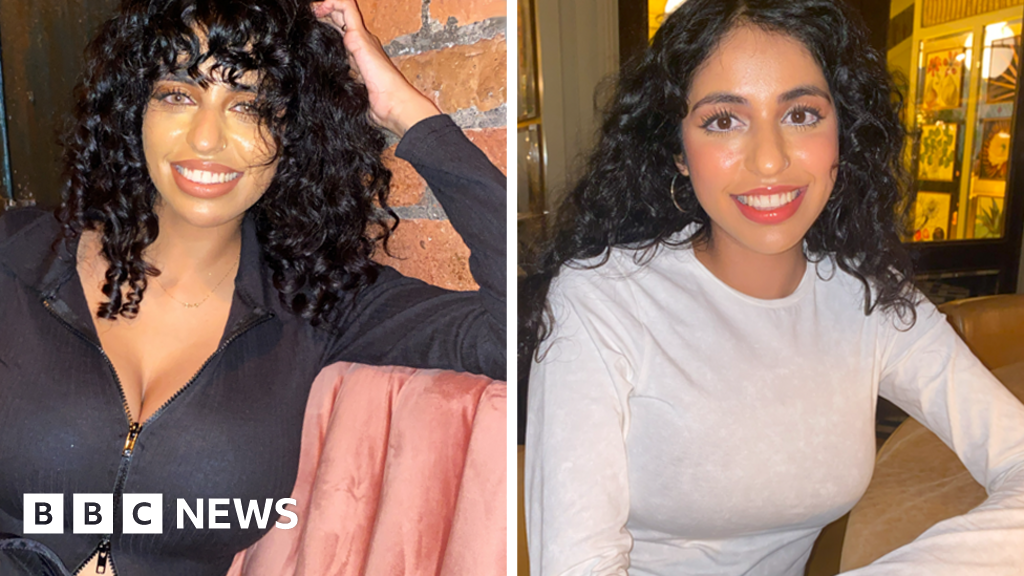
By the age of 25, weighing 50kg with a 32JJ cup chest, Ranvia reached breaking point.
Her lifeline, she says, was discovering a breast reduction Facebook group with nearly 6,000 members. It was through this group she did the majority of her research into the procedure, while waiting to hear back from her GP about having surgery on the NHS.
"Again and again, I saw women saying the same thing: 'I wish I had done it sooner'," says Ranvia.
Six months after the doctor's appointment, and with no word from the NHS, she decided to go private.
A few months after her surgery, Ranvia was then told she was eligible for the op on the NHS - which only happens in "exceptional circumstances", says breast surgeon Lyndsey Highton - because of her low BMI.
Ranvia is one of thousands of women in the UK who have paid for private breast reductions - an increasingly popular procedure, according to the British Association of Aesthetic Plastic Surgeons (BAAPS).
"When I woke up after surgery and looked down, I could see my stomach for the first time," she says. "I broke down in tears. I had been carrying this physical and emotional weight for so many years - and suddenly I could see myself."
Data from BAAPS in April says for the first time, the number of people having breast reductions and implant removal procedures combined has surpassed those opting for bigger boobs.
The number of breast enlargements in the UK in 2025 was down by 8%.
BAAPS president, Nora Nugent, believes the data reflects "a broader shift away from exaggerated curves towards a more natural silhouette - one that better complements active lifestyles and the continued rise of athleisure fashion".
The rise in weight-loss drugs has also caused "a trend towards much smaller bodies" according to Prof Meredith Jones, presenter of The Beauty Chronicles podcast.
Highton, an NHS breast consultant in Manchester who also conducts private breast surgeries, says this shift is "a little bit" trend driven, but the priority for most women nowadays is function - being able to move and feel confident.
Sue, 54, from Greater Manchester felt she had outgrown her implants - which she had put in after years of breastfeeding.
"They just felt very heavy," Sue says. "I wanted to get back into being fit again, and I felt like these things were just stuck on."
But private breast surgery doesn't come cheap, with prices varying across the country.
In Manchester, Sue paid around £9,500 to have her implants removed in 2025. While Ranvia's reduction surgery cost her roughly £8,000, which she paid in monthly instalments over three years.
The NHS says a private breast reduction procedure in the UK costs "around £6,500", not including consultations or follow-up care. Reduction is considered a cosmetic procedure on the NHS, and while it is available, Highton says it's "almost impossible" to access.
NHS guidelines say you may be eligible for reduction surgery if your breasts are causing health problems, and if other options - like a professionally fitted bra - haven't helped. Your breast size, weight and general health may also be considered.
"The process is just a little bit survival of the fittest," Highton says.
"It's who's pushy enough, educated enough, to see the process through. And then ultimately the answer is generally 'No'."
"There are obviously funding difficulties in the NHS, but I think this is just an easy one to say no to," she adds.
She believes when women suffer from clear physical symptoms as a result of having large breasts, reduction should be recognised as functional surgery, "not dismissed as cosmetic".
The BBC contacted NHS England which declined to comment.
The BBC has been in contact with more than a dozen women who have undergone private breast reduction surgery in the past few years.
Katie, from Stockport, says her life before the surgery was "dominated by the size of [her] breasts". After being turned away from the NHS, private surgery removed 3kg - the same birth weight as her first child
Cindy, from Norwich, says she was told by a doctor aged 16: "Start saving for surgery because the NHS won't help you". She is now an avid gym-goer, and says: "My boobs are no longer a stake in the daily decisions I make for my life"
Rhian, 36, put £10 a week into a savings account from the age of 21 to pay for her surgery in 2025. She is now able to weight-train and run four times a week
Sarah, from County Durham, is autistic and identifies as non-binary. The impacts of their large breasts caused them sensory issues, and "felt like public property"
Michelle, from Urmston, recalls her breasts being groped on her 28th birthday. "I didn't go out for a while after that incident," she says. "Breast reduction was never about vanity or image, it was about quality of life"
The difficulty of accessing breast reduction surgery on the NHS and the price of private treatment have increased the number of women travelling abroad for cheaper procedures, Highton says.
Alex - not her real name - paid £16,500 for her reduction in central London at the end of last year, which removed 4.2kg from her breasts. She thinks her operation was particularly expensive because of the size of her breasts - which were a K cup - and because her surgeon is considered "the Michelangelo of boobs".
Alex had been active on a Facebook group with thousands of women discussing travelling across Europe for the procedure - and had considered going abroad herself.
But while she was tempted by a quote of around £4,000 to have a boob reduction op in Lithuania, she felt "terrified" about the idea of having medical issues on the flight home.
If complications do occur, it often falls on the NHS when people arrive back in the UK, Highton says.
The different ways of accessing breast reduction surgery - whether on the NHS, privately, or abroad - are widely documented across social media.
Alex says she knows of women - friends of friends and others she's seen on viral TikToks - who are desperate for the operation but cannot afford to go private, and have already been rejected on the NHS.
"It is quite frustrating to try and communicate to someone why this is so important and how it's not cosmetic," Alex says. "But if, you know, you have a really painful ankle or really painful arm, if it affects your day-to-day life, it needs operating on."
For Ranvia, who speaks to me after her Monday night gym session - something she never did before her breast reduction - there is a much deeper significance than merely achieving a certain look.
"This is not just a cosmetic trend or a simple before-and-after story," Ranvia says.
"For many women, breast reduction is about reclaiming comfort, safety, confidence and ownership over your own body."
Source: https://www.bbc.com/news/articles/c3d2k4xz42no?at_medium=RSS&at_campaign=rss
World
'I wish I had done it sooner': Behind the surge in breast reductions
Article Top Ad Zone
Article Middle Ad Zone
Article Bottom Ad Zone
Original Source: www.bbc.com
Share
Comments
Comment system is currently disabled.