The mother of a boy who died after a severe allergic reaction in school is pressing for new legislation to protect pupils in Northern Ireland schools.
Helen Blythe has been campaigning for a law that would see compulsory training for teachers and a requirement for each school to have a dedicated allergy policy.
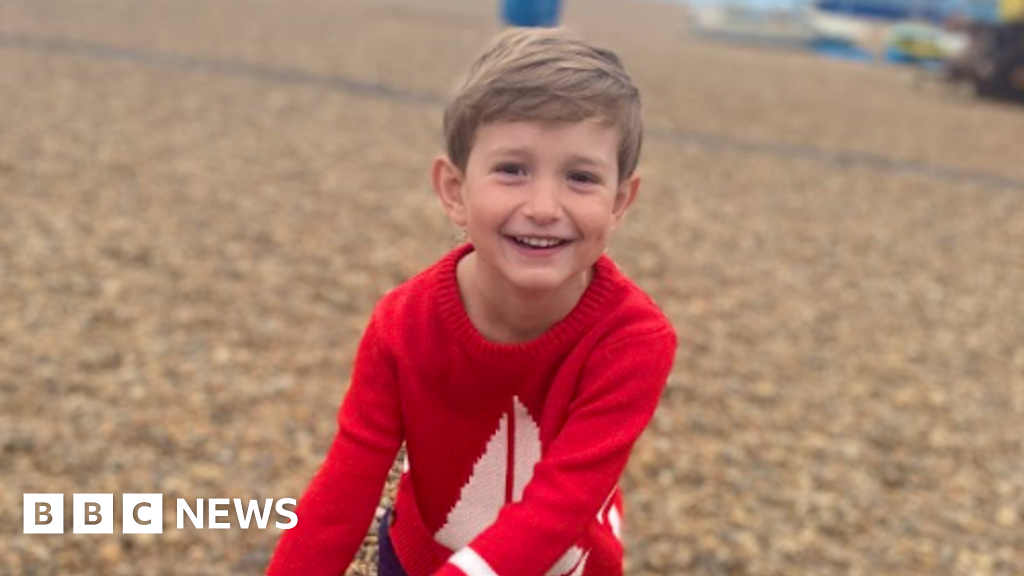
Her five-year-old son Benedict died after accidental exposure to an allergen - cow's milk protein - at a school in England in December 2021. Her campaign has resulted in new legislation, Benedict's Law, for schools in England.
Blythe was due to have a face-to-face meeting with Education Minister Paul Givan on Monday evening but she said she was told he was "too busy" to attend.
"What's difficult for us and for those families is that a lot of this rests on the shoulders of the minister and unfortunately we've not seen the engagement from the minister that we would like," she said.
"We travelled from England to meet the minster as well as to attend this strategy launch and to see that lack of regard for the number of families that are sharing their story and are at home with children with allergies is a really difficult thing to hear.
"Hopefully there is a change and he will come to the table".
The Department of Education said assembly business was delayed and the education minister was in the chamber at 17:00 for the second stage of the Education Inspections Bill.
"Officials met with Helen and explained that, while the minister was unable to leave the chamber, he would be happy to meet after proceedings ended," they said.
"After proceedings finished, the minister was able to meet with parents and representatives from the National Allergy Strategy Group, including Professor Adam Fox and Dr Caoimhe Glancy from Children's Allergy Clinic NI, who were at an event in Parliament Buildings."
According to the Department of Education, Northern Ireland schools currently rely on guidance rather than law, meaning allergy safety measures can vary from school to school. Some families here have called for change.
Blythes' son was a pupil at Barnack Primary School, between Stamford and Peterborough.
An inquest jury found the school did not follow all the measures in place to prevent the fatal anaphylactic reaction - and there were risks of contamination with other milk and delays in administering an adrenaline pen.
"We knew that he had allergies and multiple allergies and we communicated that to the school when he started," she told BBC News NI.
"The plan that we had provided to the school wasn't communicated to the staff members caring for him. There weren't spare adrenaline auto-injectors."
Adrenaline auto-injectors (AAIs) are prescribed to people who are at risk of having a severe allergic reaction and the two most common types in the UK are EpiPen and Jext.
Benedict's Law, which was borne out of the tragedy, is a set of national protections designed to improve allergy safety in schools, meaning it would be compulsory for all schools to have spare EpiPens and trained staff.
According to the Department of Education, Northern Ireland schools currently rely on guidance rather than law, meaning allergy safety measures can vary from school to school.
According to Blythe, that has surprised many people.
And, she said, clearer standards would also help teachers and school staff feel more confident when responding to allergic reactions.
"We know that unions are supportive of these measures... because they recognise that for their members, it gives them the kind of education and support that they need to feel confident," she added.
Stephanie Kerr's four-year-old son Caolán has multiple severe allergies including peanuts, milk and eggs.
She said the anxiety they live with every day intensifies when thinking about school.
"I'm very, very anxious. I'm nervous all the time," she said.
"The phone goes and you see the nursery name and you're just going, 'Is this the day?'"
Stephanie's biggest concern is whether staff will have the knowledge and training needed in an emergency.
"When you're relying on other people, you want them to have all the knowledge and understanding that they need to deal with things," she said.
"Our main concern is around the emergency medication, EpiPens and the policies that are in place at the minute.
"I think they're not tailored specifically to life-threatening allergies and that's sort of where the issue is."
Lesley Burnside, whose 15-year-old son Joe has severe allergies to eggs, nuts and legumes, said the pressure does not ease as children move through the school system.
"I'm relying on Joe to take a lot more responsibility for himself now," she said, adding that awareness is not always guaranteed across staff.
She has found that people often underestimate the seriousness of allergies.
"People think somebody will just feel a bit sick for a while… but the adrenaline pen isn't 100% guaranteed," she cautioned.
Burnside said families are often left feeling isolated in managing the risk.
"It would be so beneficial and reassuring for schools to learn from each other and implement things that are successful across the board," she said.
"At the end of the day, this could be a life or death situation for all of us any day of the week."
Carolyn Benson, from Desertmartin near Magherafelt, said her daughter Hannah's severe allergies have highlighted ongoing concerns about how well schools and catering staff understand allergy risks.
She recalled a distressing incident during a school open day where Hannah was nearly served food containing milk.
"The experience left her extremely upset and very fearful then of being safe when moving to big school," she said.
She added that while her daughter's primary school has been supportive, her confidence can be undermined by mistakes or uncertainty in other settings.
"To have Benedict's Law in place - and it to be a policy that every single member of staff in that school has to know what anaphylaxis is, what it looks like and how to deal with it, would just make kids so much more safe."
The Department of Education in Northern Ireland said schools are advised to develop, and regularly review, policies for supporting pupils with medical needs and to make reasonable adjustments to ensure those needs are met.
"Where a pupil has severe allergies, the healthcare professionals involved in their care will provide a detailed Individual Healthcare Plan (IHP), agreed with both parents and the school," it said.
"IHPs are vital in helping school staff understand a pupil's condition and ensure their safety and inclusion in school activities."
It added that the Education Authority's catering service operates a range of measures including: screening of menus for allergenic content, annual allergen training for catering staff, and special diets.
Blythe hopes that Benedict's Law will be adopted in Northern Ireland.
"We've had cross-party support from MLAs, the education committee has been incredibly supportive," she said.
"The decision sits on the shoulders of one person which is [education minister] Paul Givan to make the decision 'yes or no' about keeping children with allergies in Northern Ireland safe."
Source: https://www.bbc.com/news/articles/cp8pr0gnl7vo?at_medium=RSS&at_campaign=rss
Business
Families call for stronger allergy protections in NI schools
Article Top Ad Zone
Article Middle Ad Zone
Article Bottom Ad Zone
Original Source: www.bbc.com
Share
Comments
Comment system is currently disabled.