Motorcycle travel is something that has never really gone out of fashion, but at the same time, it is fair to say that it has never been more popular. With the world as we know it changing right in front of our very eyes, and largely adding to our stress, getting on a bike and going for a ride is one of the few things that helps. Although it certainly won’t solve our problems, it pulls us away from the world and all its problems for a while.
Follow and Like top authors, topics, and trends
Browse with fewer ads across the site
Personalize your profile to showcase your activity
Get a content feed tailored to your interests
By creating an account, you agree to our Terms of Use and Privacy Policy. You also agree to receive our newsletters; you can unsubscribe any time.
*Required: 8 chars, 1 capital letter, 1 number
If highway stability is your main concern, and both performance and practicality are secondary, then the Kawasaki Ninja 1100 SX is a great option. While Ninja by name, it is certainly not a Ninja by trade. Its beefy inline-four has been optimized for torque delivery and has also been kitted out with a host of comfort features for long-distance touring. It is ever so slightly heavier than the other value-packed sport tourers competing in this space, thanks in part to the added features, which means it will feel a little more planted, but not quite as nimble.
If daily practicality is your main objective, then it is well worth looking at the Yamaha Tracer 9. It is positively feature-rich yet remains nimble enough to handle the daily commute. It is still a competent highway tourer, but with it being a triple, you will feel some level of vibration through the bars at highway speed. Both of these bikes tick every box, but if your priority is overall performance, then the bike in question should have your attention.
Yamaha nails the crossover formula with the Tracer 9 that can do everything right, blending sport, touring, and practicality seamlessly.
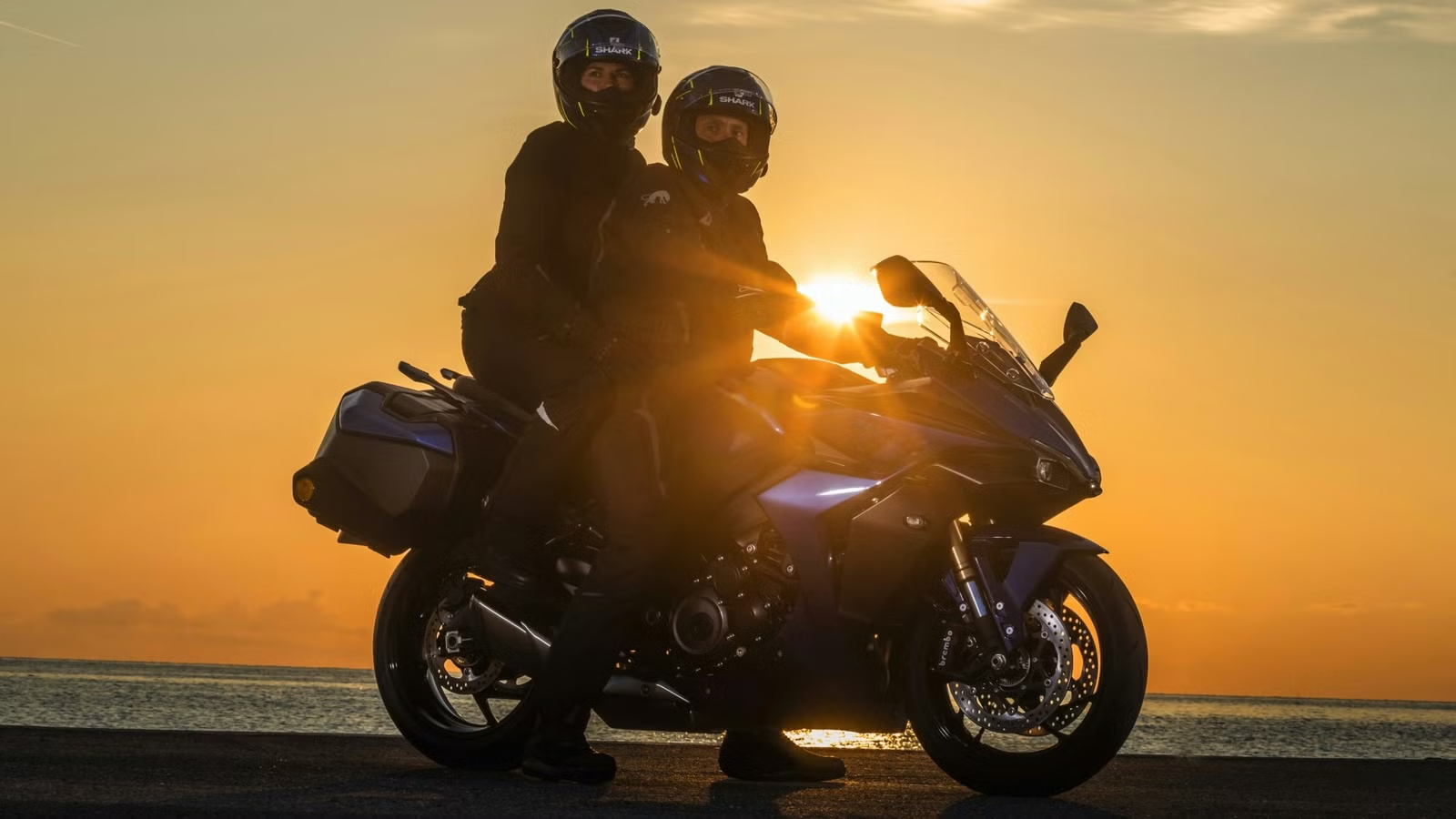
While there may be more comfortable and more powerful options on the market, nothing blends the two quite like the GSX-S1000GT+. It also offers unrivaled value thanks largely to how Suzuki extends the lifespan of all its powertrains. This touring configuration is relatively new and has only been around since 2022. But its beating inline-four heart has been with us for over two decades.
Back in 2005, the K5 GSX-R1000 superbike came out, and it completely changed the liter-class game. It was a wild, untamed 180-horsepower monster that punished even small mistakes with a healthy dose of curb rash. Naturally, it has been thoroughly reworked for this more street-friendly platform and has been optimized for improved midrange performance. Over the years, several electronic aids have also been added, taming the monster, but not dismissing it. If you want to let the superbike lurking within loose, you need only find a long enough straight and open it up a little.
Not everyone is a fan of the strategy Suzuki has adopted. At one point, not long ago, a solid two decades had passed since a new model had been introduced. It felt as though the entire R&D team had been fired. The brand seemed content to recycle all the hits from yesteryear, and this inline-four was one of the pillars of this strategy. Suzuki has since rolled out a few new bikes, but the old, value-packed models are still there for those of us looking for more bang for our buck. The tooling has long since paid for itself, so Suzuki can get away with undercutting the competition.
The constant updating and shaving of ounces seems to be filtering down to all motorcycles, and the SV650 makes you doubt if it's a good thing.
As previously stated, the addition of electronic safety features like ABS and traction control has made all the difference, reining in all the power and making it a far more usable machine. You also get nice-to-have features like ride modes, cruise control, a quickshifter, and a big TFT dash. In terms of physical features, you get great wind protection, a comfy upright riding position, fully adjustable suspension, and hard cases all as standard fitment. Everything you need for long multi-day trips is present, but the biggest asset is unseen.
What makes the GSX-S1000GT+ such a great buy is actually its sports bike-derived chassis. While other bikes in this space will most certainly also handle well, they don’t handle quite as well as this. Underneath all those fairings is a high-performance motorcycle, and this is a key point of difference for those after a more sporty sport tourer. The chassis is also pretty light, and if you remove those saddlebags, the bike slips under the 500-pound mark.
The fact that it is this light (for a tourer) means it can also handle the weekday commute without much fuss. Some will prefer to have the added flexibility of saddlebags through the week, but within the confines of a city, a decent backpack is all you really need. It is also important to remember that this is still an inline-four, so it will get a little hot and will also use more fuel than a smaller bike in stop-and-go traffic.
While there is a lot of value on offer, no motorcycle is perfect. You will be reminded that you chose “value” over “premium” pretty much every day. While the build quality certainly isn’t poor, it just isn’t at the same level as any of the newer premium middleweights. But, none of those bikes has 150 horsepower.
Found an error? Send it info@www.topspeed.com so it can be corrected.
Inverted telescopic, coil spring, oil damped
Link type, single shock, coil spring, oil damped
Source: https://www.topspeed.com/tourer-balances-highway-stability-performance-practicality/
Cars
The Tourer That Balances Highway Stability, Performance, And Practicality
Article Top Ad Zone
Article Middle Ad Zone
Article Bottom Ad Zone
Original Source: www.topspeed.com
Share
Comments
Comment system is currently disabled.